Angel Clare's return from Brazil
Tess of the d'UrbervillesAngel Clare’s return from Brazil is a homecoming shaped by illness, remorse, and missed communication: he comes back ready to reconsider his separation from Tess, only to discover that her love has hardened into anger and that she has left her family’s home. The return promises reunion but delivers uncertainty, making the distance between Angel’s inward change and Tess’s unshared experience the episode’s decisive fact.
Causes and Background
Angel had not originally planned to emigrate to Brazil. His first intention was to find a farm in the north or east of England; he went abroad in desperation, as the migration movement among English agricultural workers happened to coincide with his desire to escape his former life. Once in South America, he suffered a severe illness that never wholly passed. The sickness, together with disappointing prospects for farming, gradually made him doubt whether he could remain, although he concealed that change of mind from his parents while the possibility of staying still existed.
His experience abroad also exposed the cost of the migration on which he had embarked. Agricultural laborers had been drawn overseas by promises of easy independence, but many suffered, died, and dwindled away. Angel saw English farm mothers trudging through the country with infants in their arms; when a child died of fever, its mother dug a grave in the loose earth with her bare hands, buried it, shed a tear, and continued on. The deaths he witnessed did not by themselves bring him home, but they place his hoped-for escape within a wider story of hardship and loss.
On a mule journey through the interior, Angel confided the circumstances of his marriage to an English fellow traveler. The stranger judged Tess’s past by the person she would be, rather than treating it as decisive evidence against her, and told Angel that he had been wrong to leave. The next day a thunderstorm drenched the two men; the companion developed a fever and died by the end of the week. Angel waited several hours to bury him, then continued on alone. Afterward, the stranger’s brief counsel gained force through his death. It made Angel ashamed of the narrow moral assumptions he had applied to Tess, and renewed the memory of Izz Huett’s judgment that Tess loved him more than Izz could.
The Return to England
By the time Tess’s letter was meant to reach him, Angel was traveling by mule from the South American interior toward the coast, looking out over an immense stretch of country. His return did not follow a simple, immediate decision to go back: his illness and uncertainty had delayed him, and the letter he eventually received had reached him only by chance after considerable delay while he was inland. He later told his parents that, had it arrived sooner, he might have come sooner.
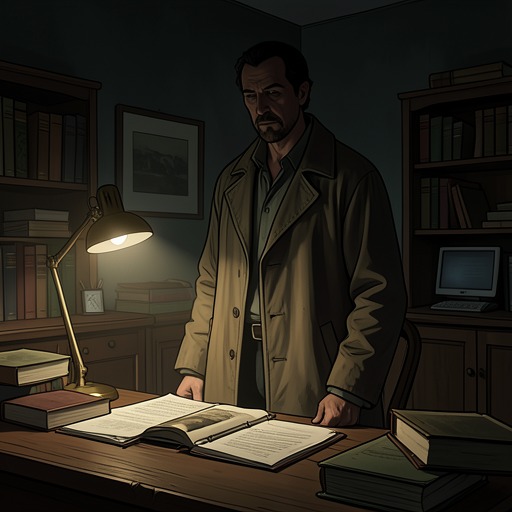
Angel’s arrival at his parents’ house is marked first by recognition and then by shock. An old pony-chaise drew up outside the railings, and his parents saw a figure emerge whom they might not have recognized in the street. His mother hurried through the dark passage to the door and welcomed her son home, initially disregarding the religious differences that had helped separate him from his family. Once they entered the candlelit room and she saw his face, however, she cried that this was not the Angel who had gone away.
His father, too, was struck by how greatly Angel had changed. Worry, illness, and the bad season he had endured abroad had reduced his figure; his sunken eyes and sharpened features made him look almost skeletal. Angel said that he had been ill but was now well, yet his legs gave way and he had to sit down to avoid falling. The faintness was slight and followed a tedious day’s journey and the excitement of arrival, but it contradicted the reassurance he had just offered. The body that came home testified to a return bought at a cost.
Letters and Reversal
Almost immediately, Angel asked whether any letter had arrived for him. His parents confirmed that the earlier letter from Tess had eventually reached him, and he acknowledged that it was hers. They had recently received another letter but had not forwarded it, knowing that he would soon start for home. Angel opened it hastily and was deeply disturbed by Tess’s words. She accused him of treating her monstrously, insisted that she had not meant to wrong him, and declared that she could never forgive the injustice he had done her. The letter closes with her name, turning the accusation into a direct address to the absent husband who has returned too late to meet the loving appeal he remembers.
The letter changes the meaning of Angel’s homecoming. While abroad and in receipt of Tess’s loving letter, he had imagined that he could return to her as soon as he chose to forgive her. Now her latest message showed that his delay had changed her judgment of him, a change he admitted was just. He worried that appearing without warning before her parents might provoke bitter words if her affection had become dislike. His remorse therefore did not produce an effortless reunion: it confronted him with the harm his absence had caused and with the possibility that Tess might no longer welcome him.
Angel chose to prepare Tess and her family by sending a message to Marlott announcing his return and expressing the hope that she was still living there, as he had arranged when he left England. Before the week ended, he received a brief reply from Tess’s mother. It had no return address, and it was not written from Marlott. Mrs Durbeyfield said that her daughter was away, that she did not know when she would return, and that she was not at liberty to say where she was staying temporarily. She added that the family had left Marlott for some time. Angel’s careful effort to make contact thus revealed not where Tess was, but that she was no longer at the home he had assumed would receive her.
Consequences and Significance
The episode stages a failed return in two linked movements. Angel physically reaches home, but his intended return to Tess remains unresolved: he has learned to question the judgment that led him to abandon her, while Tess, having lived through his absence, has come to regard him as cruel and unjust. Her angry letter is not merely a report of feeling; it records the consequence of the delay Angel himself recognizes as his fault. His belated willingness to forgive cannot erase the time in which she had to endure separation without knowing that his convictions might change.
The family’s response underscores how little Angel’s parents knew about the marriage’s rupture. They had not clearly understood what had separated the couple or when the separation began. They had initially suspected a serious aversion, but Angel’s occasional references in later letters to returning for his wife had kept alive their hope that the division was not permanent. Told that Tess was with her relatives, they had avoided intruding because they could see no way to improve the situation. Their reunion with Angel therefore takes place amid incomplete information: his parents can welcome the returned son, but they cannot tell him where his wife has gone.
Angel’s homecoming reverses the expectation attached to return as restoration. He arrives physically diminished, carrying a changed moral understanding, but neither transformation nor the desire to make amends restores the former marriage at once. Instead, the delayed letter and the unsigned-location news from Mrs Durbeyfield place reunion just beyond his reach. The episode leaves Angel facing a new task: not simply to go home, but to find Tess and answer for the separation that his return cannot undo.