Annual migration of agricultural laborers
Tess of the d'UrbervillesAnnual migration of agricultural laborers is the seasonal movement between farms at Old Lady-Day, when agreements made at Candlemas take effect. The novel presents it both as a customary rhythm of rural employment and as evidence of a countryside being reorganized: workers change places, older village communities dissolve, and the Durbeyfield family is left to make its own costly removal.
The hiring cycle and its changing rhythm
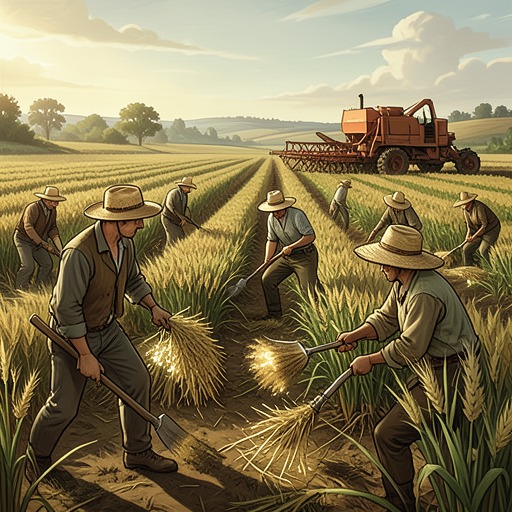
At Old Lady-Day, the agricultural world enters a period of mobility. Laborers who do not wish to remain in their old positions move to the farms where they will work during the coming year, fulfilling agreements entered into at Candlemas. The movement is practical and collective: hired workers are conveyed with their belongings in farm wagons, and the journey is arranged around the needs of the employer who requires their labor.
The custom has grown more common. In the childhood of Tess’s mother, most field workers near Marlott remained on one farm throughout their lives, often succeeding generations of their family there. By the time of the novel’s events, younger households increasingly welcome the excitement of moving, or hope that a new place will prove advantageous. That promise is temporary: one family’s distant land of promise becomes its Egypt after settlement, and the cycle of changing farms begins again.
Removal as a rural spectacle
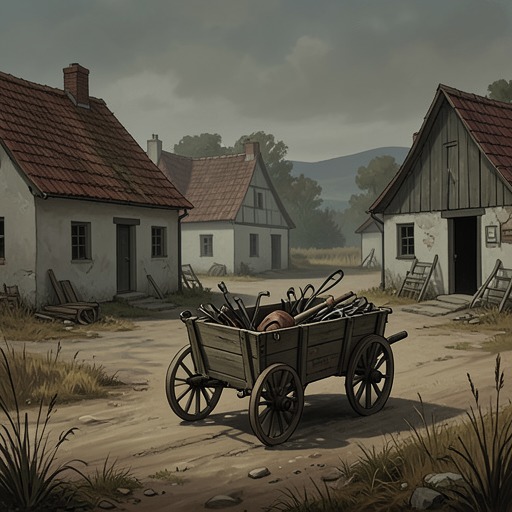
The general movement begins before dawn. In the first week of the month, rumbling wagons pass along the highways through the small hours, going to collect the goods of families on the move. Their early start allows the carters to reach departing households by six o’clock, when loading begins, and to complete the transfer within the day. The traffic makes a private employment arrangement visible as a village-wide event.
On April 6, the Durbeyfield wagon meets many others carrying families and household goods. Their loads follow a recognizable pattern, with a dresser placed prominently at the front, its handles and marks of domestic use facing outward like a family emblem. Some households travel cheerfully, others mournfully; some stop at inns along the way. The scene gives the migration a shared material form, but the loaded wagons also suggest that a household’s most familiar possessions must travel with it because stability at home can no longer be assumed.
Unequal access to the custom
The Durbeyfields’ removal reveals that the migration’s support system depends on a worker’s value to an employer. Unlike regular laborers, Tess and her mother’s household are women and are not considered regular workers or particularly needed anywhere. No farmer sends a team for them: they must hire a wagon at their own expense. What is routine transport for hired men becomes an additional cost for a displaced family without secure employment.
Their departure is therefore not simply another instance of seasonal mobility. The migration carries those who have a destination and a recognized place in the labor force, yet leaves the Durbeyfields to arrange their own passage. Their vulnerable position is visible in the domestic objects packed for the journey and in the contrast between the hired workers’ conveyance and the family’s paid-for wagon.
Agricultural change and the loss of village life
The annual movement belongs to a wider transformation than the hiring calendar alone. Rural depopulation accompanies the increasing restlessness of agricultural labor. Villages once included, alongside farm workers, a more stable class of tradespeople and small holders: carpenters, smiths, shoemakers, hucksters, and other workers whose livelihoods were connected to long tenancies or small property. As those holdings fall vacant, they are seldom let again to similar tenants; many are demolished or absorbed into farms for workers.
The exclusion of cottagers not directly employed on the land drives families away, and their departure weakens the trade of neighbors who then have to leave as well. The people who sustained village traditions and local life are pushed toward larger towns. In this context, annual migration is both a visible labor custom and part of a larger erosion of rural continuity: movement may look like a series of individual choices, but the shrinking range of stable homes and occupations makes leaving increasingly difficult to avoid.