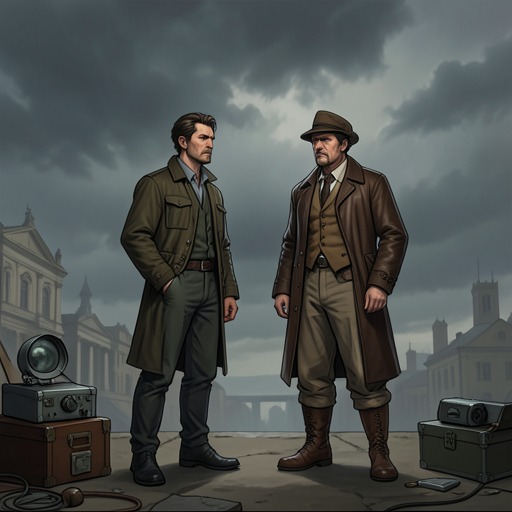
Tess and Angel Clare’s first meeting
Tess of the d'UrbervillesTess and Angel Clare’s first meeting is a brief encounter at a village dance, defined as much by a missed choice as by contact. During a Whitsun walking tour, Angel leaves his brothers at the roadside to join the dancing girls; he selects another partner, notices Tess only as he departs, and regrets not having asked her. The scene introduces a relationship whose meaning will grow far beyond what either person can know at the time, while setting the first meeting against the unequal expectations and limited choices that shape Tess’s later story.
Setting and Circumstances
Angel arrives with two older brothers, all three walking through the Vale of Blackmoor on holiday. Their different appearances distinguish them: the eldest looks like a curate, the second like an undergraduate, and Angel, the youngest, seems not yet settled into a profession. They pause at a gate overlooking the dance and ask what the gathering means. The older brothers appear ready to move on, but Angel is amused by the sight of girls dancing without male partners. He puts his knapsack and walking stick on the hedge-bank, opens the gate, and proposes that the brothers join them briefly.
The dance begins with the girls partnering one another because there are no men present. As the working day nears its end, village men and other passers-by gather and begin seeking partners. Angel’s entrance changes the pattern: invited to choose, he looks over the unfamiliar group but cannot make much of a distinction among them. His arrival supplies a male partner at a moment when the women have been dancing among themselves, but the particular choice he makes is not Tess.
The Missed Choice
Angel takes almost the first girl available, not the shy speaker who had hoped to be selected, and not Tess. The narration emphasizes that Tess’s ancestral descent does nothing to alter this ordinary social moment: her pedigree and family history do not win her a partner over other village women. In the scene’s pointed contrast, inherited lineage offers no immediate advantage without wealth. Angel does not reject Tess after recognizing who she is; he simply does not notice her in time to choose her.
When the church clock strikes, Angel remembers that he must rejoin his brothers and leaves the dance. As he falls out of the figure, he sees Tess’s eyes turned toward him with a faint look of reproach. He is sorry that her reserve kept her from his attention, and sorry that he did not choose her. The encounter thus turns on a recognition that comes too late: Tess has already felt the slight, while Angel only understands that he has overlooked her as he is departing.
Parting and Retrospective Meaning
Angel runs down the lane to catch up with his brothers, then pauses for breath and looks back at the green enclosure. The white-clad girls continue dancing, apparently having forgotten him. One figure, however, stands apart by the hedge. He recognizes her as the young woman with whom he did not dance and imagines that his oversight has hurt her. He wishes he had asked her and learned her name, thinking her modest and expressive. Then he turns back to the road and dismisses the matter from his mind.
The scene grants Tess and Angel sharply different measures of attention. For Tess, the moment carries the immediate sting of not being chosen; for Angel, it is a passing regret that he sets aside. The narrative lingers over his backward glance and the solitary figure, making the small omission structurally significant without presenting it as a promise or a mutual declaration. Their first meeting is therefore less a beginning they consciously share than an asymmetrical encounter whose importance becomes legible in retrospect.
Later Recollection and Significance
Months later, Tess’s mother remembers the occasion when Tess and Angel drove away together and calls them a pretty pair. She treats their earlier association and apparent family connection as grounds for hope, reproaching Tess for not securing a marriage that might have benefited the household. Her recollection transforms the dance into the imagined opening of a family rescue story. Tess, however, does not share her mother’s understanding of what followed, and the difference between the mother’s hopes and Tess’s experience underscores how little the original meeting could guarantee.
Tess later tells her mother that she was a child when she left home and had not been warned about the dangers of men. Her mother admits that she withheld a warning because she feared it would make Tess lose her chance. This exchange gives the first meeting’s seemingly innocent setting a later context: Tess entered adult relationships without the knowledge her mother thought might interfere with social opportunity. During the separation, Angel acknowledges that Tess was more sinned against than sinning, though he says forgiveness is not all. The later judgment exposes the weight of the unequal moral expectations that have come to govern their relationship.
The episode’s early contrast between Tess’s ancestry and lack of material advantage also resonates with the later account of Flintcomb-Ash, an impoverished farm in a village neglected by both its own community and its absentee landlord. There Tess works in harsh agricultural conditions, sustained by patience described as a blend of moral courage and physical timidity. The dance cannot by itself explain that later hardship, but its attention to class and circumstance establishes a social world in which family lineage, gender, and economic security do not offer Tess equal protection. Angel’s first failure to notice her is small; the novel makes its afterimage part of a much larger pattern of missed understanding and unequal consequence.