The Chase
Tess of the d'UrbervillesThe Chase is the primeval woodland beside The Slopes and the setting of the episode that divides Tess Durbeyfield’s life into a before and an after. Its aged trees and enclosing darkness contrast with the modern, moneyed estate at its edge; when Alec d'Urberville takes Tess into the wood under a false account of their route, that contrast becomes a moral geography of unequal power, exposure, and the consequences imposed on her.
Setting and Contrast
The Chase is described as one of the few remaining English woodlands of undoubted primeval age. From The Slopes, its soft blue landscape stretches behind the newly built house, and the wood’s antiquity is marked by mistletoe on aged oaks and enormous yews that grew before human planting. Yet this ancient terrain lies outside the estate’s immediate boundaries: it can be seen from the house without belonging to its cultivated grounds.
That distinction sharpens the contrast between the places. The Slopes is bright, thriving, and meticulously maintained, with extensive glasshouses, well-appointed stables, and an ornamental tent on its lawn. The Chase, by contrast, carries a history deeper than the estate and resists its neat, prosperous order. It is at once a picturesque feature of the view and a vast, poorly legible space beyond domestic protection.
The Wood as a Scene of Deception
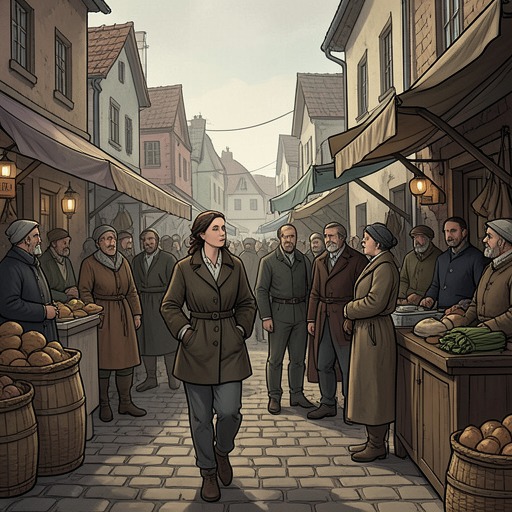
Tess first encounters The Chase as a landscape associated with the d'Urberville property and its approach. Later, after a September market and fair, she finds Alec at a street corner while looking for the Trantridge villagers. When she rides with him, he takes a route through the wood and calls it a lovely night, presenting the detour as a harmless prolonging of their journey. Tess recognizes the deception, protests that she trusted him, and asks to be set down so that she can walk home.
Alec tells her they are miles from Trantridge and that, in the growing fog, she could wander among the trees for hours. The geography now serves his control: the very scale and obscurity that give The Chase its ancient grandeur leave Tess isolated and dependent on the man who has misled her. He rides at random for more than an hour, attending to her rather than the route, and only later establishes where they are by climbing over a hill to a highway whose contours he recognizes.
Darkness and the Irreversible Rupture
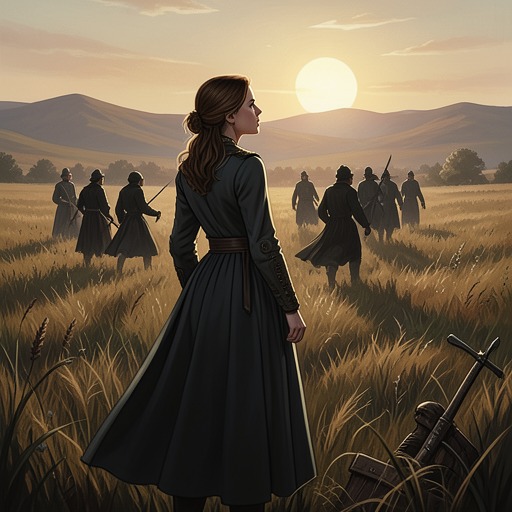
After Alec leaves Tess beneath a tree, wrapped in his overcoat, to search for landmarks, the moon goes down and the fog thickens. He returns unable to find the exact place, groping among branches until he hears the horse and catches his sleeve on it. Tess is asleep on the dead leaves; he sees her pale figure in the darkness and hears her regular breathing. The surrounding wood is rendered as a world of silence and blackness beneath primeval oaks and yews, with roosting birds overhead and rabbits and hares moving nearby.
The narrator’s account turns from the immediate scene to an indictment of the order that permits the stronger to appropriate the more vulnerable. It questions why a woman described as fine and sensitive should receive such a coarse pattern in her life, and rejects the idea that any inherited ancestral wrongdoing could make this catastrophe just. The villagers’ fatalistic phrase, “It was to be,” supplies no consolation: the episode leaves a social chasm between Tess as she was before leaving home and the person the world will thereafter judge.
The Wood’s Afterlife in Tess’s Story
The Chase remains bound to the event in Tess’s memory. While staying at home through the winter, she marks the date of the night at Trantridge alongside the dates of her child’s birth and death, her birthday, and other days made distinct by experience. The wood is therefore not merely a location passed through; it becomes part of the calendar by which she understands her altered life and the unseen date of her own eventual death.
The forest’s name also returns in later conversations about the d'Urberville identity. Angel Clare recalls that Alec, who took that family name, lived near The Chase and had quarrelled with Angel’s father. Angel treats Tess’s ancestry as a social advantage and a “grand card” to present after their marriage, while Tess would rather not take the name and fears it may be unlucky. In this recurrence, the estate and its woodland connect Alec’s assumed status to Tess’s family history, even as the name that Angel imagines as a credential remains associated for her with danger and painful memory.
Narrative Significance
The Chase’s ancient natural setting intensifies, rather than excuses, the human violence enacted within it. The nocturnal forest is alive with nonhuman creatures and older than the surrounding estate, yet the narrator’s questions about providence and Tess’s absent guardian angel make its apparent grandeur feel indifferent to her suffering. The landscape offers no moral protection; its beauty and age coexist with the vulnerability created by isolation and deceit.
The setting also clarifies the unequal social judgments that follow. Tess’s mother later reproaches her for failing to secure marriage, while Tess answers that she was a child when she left home and had not been warned of the danger men could pose. In Angel’s later judgment, Tess was more sinned against than sinning, but his forgiveness does not undo the separation between them. Meanwhile, the contrast between The Slopes’ wealth and Flintcomb-Ash, a starve-acre farm in an absentee-owner’s village, shows the wider material conditions in which Tess must work and endure other people’s judgments. The Chase thus marks a personal catastrophe whose consequences are carried far beyond the wood, into memory, marriage, labor, and the unequal moral codes governing men and women.