Bee-city (the hive)
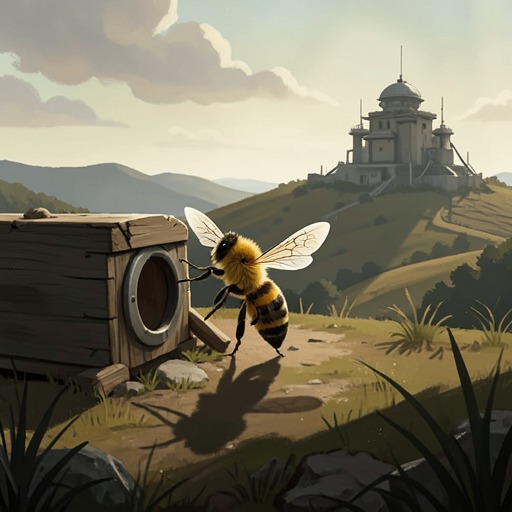
The Adventures of Maya the BeeBee-city (the hive) is both the Bees’ home and the organized community that protects them. Its daily life rests on shared work and the Queen’s active presence; when the Hornets threaten it, the same habits of coordination become a defense of the realm. The hive’s victory is costly, but its return to work and its reception of Maya show that belonging is sustained by service as well as loyalty.
Setting and Communal Routine
On a rainy day, Bee-city (the hive) becomes quiet and almost restful. The Bees sit together, continue some construction on their cells, and feed the larvae. Messengers sometimes fly out to judge the weather and the direction of the wind. Rain changes the pace of communal life, but it does not stop the tasks that maintain the colony.
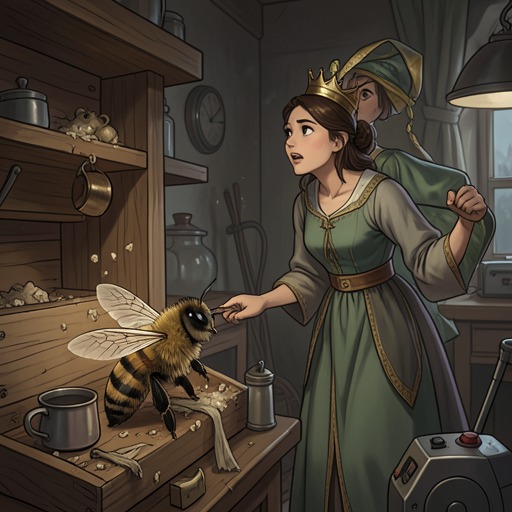
The Queen moves through the hive’s stories, inspecting conditions, laying eggs, and offering praise or blame. She may acknowledge a younger bee’s work with a pat or ask about its experiences. Her authority is therefore presented not only as command: her routine brings encouragement and recognition into the ordinary life of the community. For Maya, remembering this settled, shared world makes the risks of life outside it especially clear. Away from the hive, she is lonely and exposed, cold and short of food; at home, she had belonged to a community whose members respected one another and were protected by the state.
The Queen and the Community
The relationship between the Queen and her subjects combines hierarchy with personal attention. Her presence is a source of happiness to the Bees, while her inspections connect the welfare of the whole state to the condition and effort of individual workers. This image of government gives the hive a social coherence that later becomes practical: its members can respond to danger without losing their sense of order.
That order also shapes the hive’s boundaries. Bee-city in the castle park has red, blue, and green portals, and Maya returns toward the red entrance when she recognizes her homeland near dawn. Two sentinels stop her at the flying-board. A bee cannot force entry into another city without the Queen’s consent; doing so is a capital offense. The rule makes clear that the hive’s protection is inseparable from its authority over admission. It also places Maya’s return in a painful tension: she has come to warn her people, yet the very law designed to protect the community initially bars her from reaching them.
Mobilization and Defense
After Maya reports the imminent attack, Bee-city (the hive) mobilizes with remarkable speed. The hive is full of excitement, but not confusion: each soldier takes a place and a task, and volunteers are sent to watch for the approaching Hornets. The Queen’s call for defenders brings the community’s shared purpose into focus. When scouts confirm that the enemy is near, the hive falls into an expectant silence.
At the entrance, soldiers form three closed ranks while officers arrange reserves behind them. Wax-generators work in silence to narrow the passage, raising two thick wax partitions that reduce the opening by almost half. The fortification is intended to delay the attackers and make entry costly. Meanwhile, the Queen takes an elevated position inside the hive to survey the battle, and her aides carry out their duties around her. The defense thus joins preparation at the threshold with command from within: the hive’s architecture, workers, soldiers, and leadership all contribute to the same effort.
The fighting tests that coordination against the Hornets’ greater physical strength and experience. The Bees’ first attack disrupts the invaders, but the battle moves into the hive’s dark streets and corridors. The defenders use reserves to reinforce the entrance and confront attackers who press farther inside. As the struggle continues, the Hornets’ advantage diminishes; their retreat is cut off, and their sting loses its potency. The Bees’ persistence and numbers eventually turn the battle toward victory. The Hornet leader withdraws with his remaining force, and the attack ends without the invaders taking honey or prisoners.
Cost, Recovery, and Belonging
Victory leaves Bee-city (the hive) with a severe loss. Twenty-one Bees lie dead beneath the city, and inside, fallen bodies and wounded members require attention. The account emphasizes the contrast between this grief and the lovely summer morning: the colony must dispose of its dead and nurse the wounded even as it resumes the work on which its survival depends. Before noon, regular tasks have begun again. The Bees neither celebrate nor abandon their duties to mourn publicly; pride and grief remain with them as they return to work.
The Queen’s response to Maya completes the hive’s movement from defense to restored belonging. She recognizes that Maya did not forget her home or her people, and appoints her to stay by her side and help conduct the affairs of state. Maya’s experiences outside the hive, once associated with desertion, are to serve the welfare of the community. The Bees approve the decision, and Maya becomes respected and loved among them. In later years she visits Cassandra and tells young Bees about her adventures. Bee-city (the hive) is therefore more than the place Maya returns to: it is a community capable of defending itself, resuming its shared labor after loss, and incorporating hard-won experience into its future.