Experience and Exploration
The Adventures of Maya the BeeExperience and Exploration is the principle that gives meaning to Maya’s wandering beyond the hive. Her curiosity exposes her to risk and loneliness, but it also brings knowledge unavailable within a settled routine. The story treats experience not as adventure for its own sake, but as hard-won understanding: Maya’s encounters teach her to question appearances, weigh danger, and eventually put what she has learned in service of the Nation of Bees.
The Value and Cost of Leaving
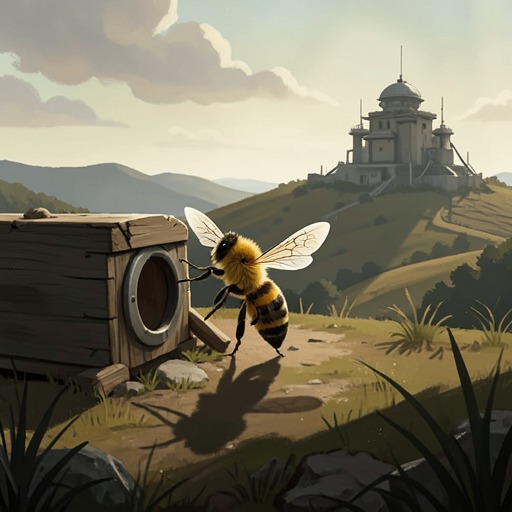
Maya’s first reflections on life outside the community establish the tension at the heart of exploration. She misses the respect, shared belonging, and protection she had known among her people; alone in the wider world, she faces exposure, cold, and uncertainty about food. A rainy spell could leave her without enough honey-juice or pollen. The freedoms of wandering therefore have material costs, not just emotional ones.
At the same time, Maya recognizes that sunlight makes a vagabond life possible, and that the memory of it renews her spirits. She takes pride in having dared to begin on her own and measures her early travels by what she has seen and undergone. In her judgment, experience is life’s most precious possession and worth sacrifice. That conviction is not presented as proof that every risk is wise. Rather, it explains why she continues to seek knowledge even when she understands that the journey can leave her vulnerable.
The narrative repeatedly holds homesickness beside appetite for discovery. Maya’s spider adventure makes her resolve to be more cautious, and twilight, when she is alone, gives her worries room to gather. Yet a sunny morning can loosen those fears, and her eagerness for experience draws her back into the world. Over time, her travels bring both occasional danger and many joys, while her longing for her former companions and for useful work among her own kind remains real. Exploration does not erase belonging; it complicates Maya’s understanding of what belonging can mean.
Encounters as Lessons
Maya’s education comes through encounters whose value is not always obvious at first. Watching Bobbie and Effie, she sees a dispute shaped by reputation, differing expectations, and a disagreement over what Bobbie had led Effie to believe about his identity. The scene exposes a social world with judgments and conventions of its own. It also cautions against assuming that an encounter will be straightforward simply because its participants speak openly.
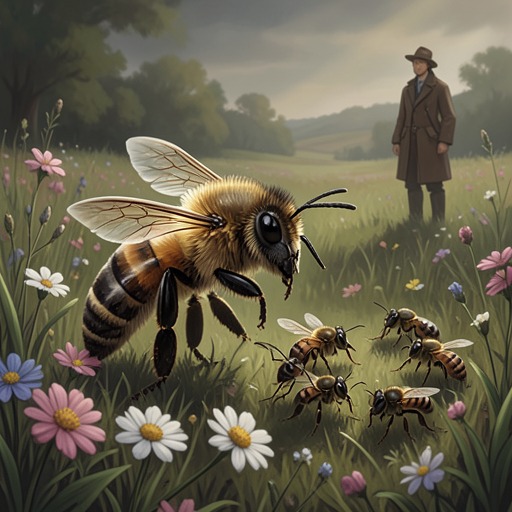
A conversation with the Grasshoppers offers a different test. Maya admires the speaker’s wide information and worldly wisdom, and recognizes how much she has learned from a brief exchange. But she also doubts his reliability. His knowledge of human beings prompts her to wonder whether they understand one another through language, and whether a bee might safely approach them or enter a human dwelling. The answer she receives is less a dependable account than a comic speculation: the Grasshopper questions whether human sounds amount to language, while describing two boys making a whistle with a blade of grass. Maya learns from the encounter without having to accept its confident speaker as an authority. The narrator makes the distinction explicit: people may have experiences without being well equipped to profit from them.
Other meetings broaden the range of what Maya can observe. A butterfly explains that stink-bugs use an odoriferous drop to make themselves noticed and remembered, even though they are unpopular. The explanation gives Maya a glimpse of how an unfamiliar creature’s behavior can make sense from its own perspective. When she listens to a story about a human being’s carelessness from the point of view of a Daddy-long-legs spider, she encounters another account of human conduct, this time from someone who has suffered its consequences. These conversations do not provide a single authoritative picture of the world. Together, they train Maya to take in different perspectives and to keep learning from creatures unlike herself.
From Curiosity to Caution
The spider adventure marks a change in how Maya approaches risk. She resolves not to rush into things so recklessly and recalls Cassandra’s warnings about dangers to Bees. She also recognizes that the world contains many hazards she has not yet imagined. This is a practical consequence of exploration: experience can restrain as well as encourage, turning untested eagerness into a more alert awareness of what may go wrong.
That caution remains in tension with Maya’s temperament. She is described as restless and not ready to settle permanently into the community of the Bees, even though she sometimes longs for its companionship and purposeful work. The narrative resists reducing this difference to laziness or stubbornness. It presents her desire to see more as a genuine hunger for knowledge and for the beauty of the wider world. Her path therefore tests two possible mistakes: condemning the wanderer for being different, or treating every adventure as automatically beneficial. Maya’s experience matters because it changes what she can understand and do, not simply because it takes her away from home.
Knowledge in the Service of the Community
The decisive transformation occurs when Maya’s experiences become useful to others. Captive in the Hornet fortress, she learns of the planned attack on the Bee-city in the castle park. The order specifies that the hive is to be plundered, that prisoners are to be taken, and that a Hornet who captures Queen Helen VIII alive will be rewarded. Maya’s knowledge comes from having entered a world she could not have understood from within the hive; once she escapes, she can carry that warning back to her people.
The Bees’ response gives the story’s idea of experience a collective dimension. The hive mobilizes with speed and discipline, and its defenders reinforce the entrance with wax as the approaching Hornets are reported. In the battle, individual courage matters, but the Bees’ unity and loyalty allow them to withstand a physically powerful enemy. A Hornet later identifies this solidarity as the source of their strength: each Bee serves the common good rather than seeking personal advantage. The episode sets Maya’s individual exploration beside the community’s coordinated defense without treating them as opposing virtues. Her wandering supplies knowledge; the community’s organization turns that knowledge into protection.
When Maya tells the Bees how she discovered the plan and escaped from the fortress, her account includes the varied creatures and people she has encountered, among them Loveydear, the Grasshopper, Thekla, Puck, Bobbie, a Flower Sprite, and human beings. Her adventures are no longer private episodes. The Queen appoints her to remain at her side and help conduct the affairs of state, explicitly so that her experiences and learning may serve the greatest good of her people. Maya’s ending thus joins exploration to belonging: she is valued not despite having gone beyond the hive, but because she brings back knowledge that can benefit it.
Narrative Significance
The concept links the book’s episodic encounters to Maya’s eventual return to public life. Each meeting enlarges the world she can interpret, although some speakers are fallible and some discoveries increase her awareness of danger. The episodes collectively make experience a form of judgment: curiosity initiates contact, listening gathers knowledge, and reflection determines how much confidence that knowledge deserves.
The story also distinguishes personal growth from mere accumulation of adventures. Maya’s travels bring homesickness, uncertainty, and risk; they do not make her independent of others or render the hive obsolete. Their lasting worth emerges when she can apply what she has learned for the community that once gave her protection. Experience and Exploration therefore names both a personal education and its eventual social use: the wanderer returns with a wider understanding, and the society makes room for that understanding to contribute to its common life.