Maya’s life outside the hive
The Adventures of Maya the BeeMaya’s life outside the hive begins in chosen independence and becomes a prolonged education in the costs and possibilities of life beyond her own community. The wandering gives her knowledge unavailable to her at home, but it also leaves her cold, vulnerable, and increasingly hungry for companionship. Its decisive outcome is not a rejection of the hive: when danger threatens the Nation of Bees, Maya returns, and Queen Helen VIII gives her experience a place in the service of her people.
Departure and the Cost of Independence
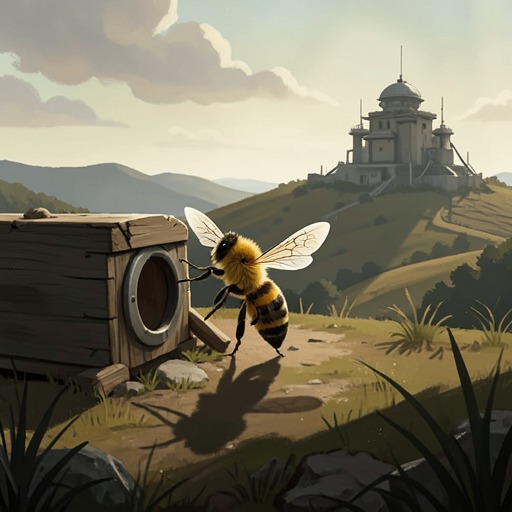
Away from the protection of the hive, Maya learns that freedom depends on conditions she had not previously needed to consider. On a rainy day she imagines the Bees resting together, tending cells and feeding larvae, while the queen moves through the hive and encourages or corrects its inhabitants. Against that picture of shelter and shared purpose, Maya’s own situation is exposed: she is cold, alone, and uncertain what she will eat if the rain continues. The canterbury bell offers little honey-juice, and its pollen is running out.
This hardship sharpens rather than erases her pride in having set out alone. Maya recognizes how much a wandering life depends on sunshine, yet also measures its reward in what she has already seen and experienced. She believes that she has learned more than other bees might learn in a lifetime, and comes to value experience enough to accept sacrifice for it. Independence is therefore neither an uncomplicated triumph nor simply a mistake. Its risks are real, but so is the knowledge and sense of possibility it gives her.
As the weeks pass, those two sides of her choice grow more pronounced. Maya misses the companions of her early life and sometimes longs for useful work among her own kind. At the same time, she is restless and not ready to settle permanently into the hive’s routines. The narration treats that difference sympathetically: a young wanderer may be driven by a desire to find something beyond everyday life, rather than by mere stubbornness. Maya’s curiosity about creation is presented as sincere, and her experience gradually makes her a stronger, more knowledgeable bee. Even when she imagines returning to ask the queen’s pardon, her unresolved desire to understand human beings holds her back.
Encounters and the Search for Understanding
Maya’s interest in people is shaped by competing accounts. Cassandra has described an arrangement of mutual aid: human beings protect Bees and provide shelter, while the Bees share honey. Cassandra warns that a bee-city left without such protection may be destroyed by creatures seeking its honey. Maya wants to retain this favorable belief until experience proves otherwise. After meeting Puck, however, she cannot accept his judgments about humans or their relationship with other creatures. His comic skepticism includes doubt that humans possess a language, though he concedes that two boys made a whistle from a blade of grass. Maya remains unconvinced, but his account deepens her uncertainty rather than resolving it.
That uncertainty is reinforced by what Maya observes among insects. She watches Bobbie, a beetle, approach Effie with extravagant politeness, only for Effie to reject him after learning that he is a tumble-bug rather than the rose-beetle she had believed him to be. Effie objects both to the talk their relationship has caused and to what she regards as Bobbie’s deception; Bobbie, in turn, protests that he wants to be loved for himself rather than for his work. The encounter gives Maya an example of how social reputation and mistaken assumptions can shape relations even among the creatures she meets outside the hive.
Other encounters disclose different forms of adaptation. A butterfly explains that stink-bugs use an odoriferous drop to make themselves noticed: unpopular and easily forgotten, they leave a reminder of their existence because they want to be remembered. This account gives Maya a small but pointed lesson in how a creature can answer its social invisibility. Such episodes make her wandering more than a succession of sights. She listens to other lives and ways of surviving, adding their explanations to her own store of experience.
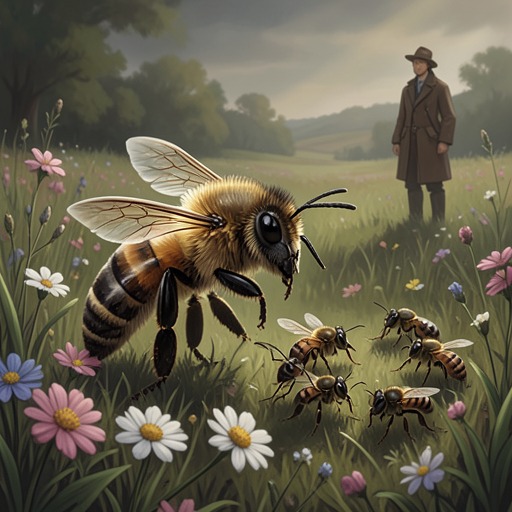
Her fascination with human beings nevertheless remains unsettled because she has mostly seen them from a distance. On one occasion she discovers a sleeping child among flowers beside a brook. The child appears gentle to her, and the sight conflicts with hostile stories Maya has heard. When a mosquito approaches the child, Maya leaves rather than stay to witness the harm or risk stinging a human being, which Cassandra has warned would kill her. The incident does not satisfy her wish to know people; it makes her resolve to be bolder and continue seeking that knowledge. Her longing is not a passing fancy but the force that keeps her from returning to the hive before she is ready.
Return in the Face of Attack
Maya’s wandering ends under the pressure of a crisis larger than her private search. At the Hornet fortress she hears the queen-hornet announce an attack at dawn against the Bee-city in the castle park. The plan is to plunder the hive and take prisoners, with a reward for anyone who captures Queen Helen VIII alive. Maya understands that her former home is in immediate danger and sets out to warn her people, even though she expects that they may punish her for leaving.
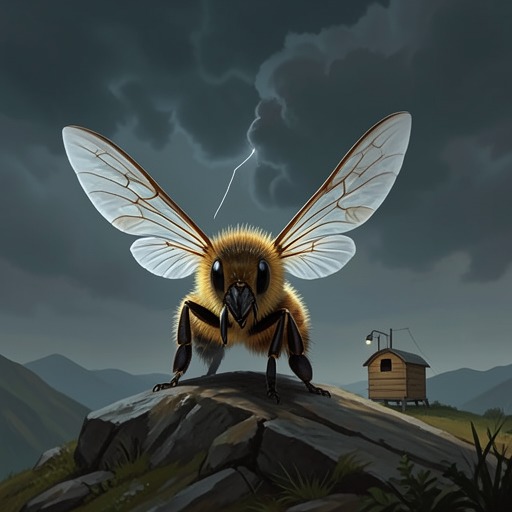
The return flight tests the independence she has gained. Maya has lost the habit of navigating by the landmarks used by working Bees, and the cold and dim light make it difficult to recognize what lies below. Homesickness, which had been a source of private pain, now guides her toward the castle park. The familiar lindens and then the red, blue, and green portals of her home bring her close enough to recognize the way in. At the red entrance, however, sentinels stop her. Entering another bee-city without the queen’s permission is a capital offense, and the guards threaten her rather than immediately accepting her warning. Her knowledge may be urgently needed, but her earlier departure has left her outside the protections and trust she once took for granted.
Maya does reach the queen with news of the planned attack. The Bees mobilize with discipline: sentries report the enemy’s approach, soldiers take their positions, and wax-generators narrow the entrance with two thick partitions. The contrast with Maya’s solitary life is stark. Away from the hive, she had borne danger alone; here, individual action is joined to a coordinated defense. During the battle the Bees’ unity and readiness to sacrifice themselves are presented as their answer to the Hornets’ greater physical power. A Hornet acknowledges that the Bees’ loyalty to their people and state makes them formidable. Maya’s return thus brings her private experience into a collective emergency, although the evidence does not make her a combatant in the fighting itself.
Reconciliation and the Use of Experience
After the danger, Queen Helen VIII does not treat Maya’s departure as proof that she has forgotten her home. She embraces her and recognizes that Maya remained loyal in her heart. The queen appoints her to stay at her side and help conduct the affairs of state, explicitly turning the knowledge gained during her wandering toward the good of the people and the country. The reconciliation resolves the tension that had long held Maya between homesickness and curiosity: she need not erase what she learned outside in order to belong again.
Maya’s later life confirms that her return is not a simple reversal to her former self. She becomes respected and loved by her people, and her work is said to contribute greatly to the nation’s welfare. On quiet evenings she visits Cassandra, now living on pension honey, and tells young Bees the stories of her adventures. What began as experience gathered for Maya alone becomes something she can pass on. Her life outside the hive matters, finally, because it enlarges her understanding and then brings that understanding back into a community capable of using it.