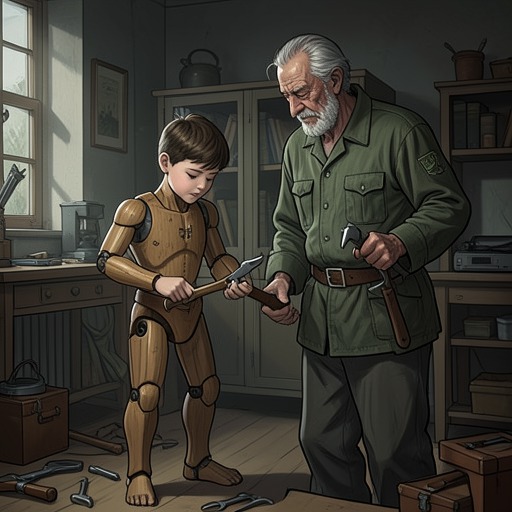
Care for Aged and Ill Parents
The Adventures of PinocchioCare for Aged and Ill Parents is the story’s explicit statement that looking after parents in old age and sickness has moral worth in its own right, even when the child has not been a model of obedience. Its force comes from the contrast between Pinocchio’s earlier rejection of advice and his final pledge of attachment to Geppetto, followed by a dream that names parental care as the ground of forgiveness and reward.
The Rule and Its Distinction from Obedience
The Fairy with Azure Hair tells Pinocchio in a dream that boys who love and take good care of their parents when they are old and sick deserve praise, even if they have not been models of obedience and good behavior. The qualification matters: the rule does not erase Pinocchio’s past mischief, nor does it declare obedience irrelevant. Instead, it recognizes care for a vulnerable parent as a distinct moral achievement, worthy of praise despite earlier failures.
Earlier Resistance and Regret
The principle gains meaning against Pinocchio’s habit of resisting guidance. After disregarding the Talking Cricket’s advice, he dismisses the danger of the Assassins and treats warnings as an attempt by adults to frighten children who want to run away. His confidence in his own judgment leaves him exposed to the very misfortunes he has been warned about.
A later crisis makes that pattern painful to him. After Eugene is struck and the other boys flee, Pinocchio stays beside his injured schoolmate, wets his handkerchief in the sea, and tries to revive him. In his distress he regrets not going to school and recalls that both his mother and teacher warned him against bad company. He recognizes his own stubborn pride and the consequences of choosing as he pleases. This scene does not itself enact care for an aged or ill parent, but it shows how remorse over rejected guidance prepares the story’s later distinction between past disobedience and present responsibility.
Reunion with Geppetto
After leaving the Tunny, Pinocchio follows a distant light through slippery, fish-scented water and finds a little old man eating live fish at a table lit by a candle in a glass bottle. He recognizes Geppetto, embraces him, and declares that he will never leave him again. The reunion turns the idea of parental care into a personal bond: the father Pinocchio had lost is found, and Pinocchio voices a commitment to remain with him.
Dream, Reward, and Transformation
The story places Pinocchio’s dream after a night of extraordinary labor: instead of going to bed at ten and making eight baskets, he stays awake until midnight and makes sixteen. In the dream, The Fairy with Azure Hair praises his kind heart, forgives his old mischief, and connects happiness with continuing to care for parents who are old and sick. The rule thus arrives not as a demand for flawless past conduct but as recognition of a changed disposition and an ongoing duty.
Pinocchio wakes to find that he is no longer a Marionette but a real boy. The transformation is accompanied by a change in his surroundings: the straw-walled room has become a beautifully furnished room, and a new suit, hat, and pair of shoes are waiting for him. By placing this reward directly after the dream, the ending makes filial care—not a spotless record of obedience—the decisive sign of the goodness the story now recognizes in him.