Farmer John’s Farm
The Adventures of PinocchioFarmer John’s Farm becomes a place where care is measured in work: Pinocchio earns milk for Geppetto by drawing water, then recognizes his former companion Lamp-Wick in the farm’s failing donkey. The well and stable turn the farm into the setting for a reversal. Pinocchio, who has himself been exhibited as a donkey, now works to support his father and meets another suffering animal with compassion.
Setting and Working Arrangement
Farmer John’s Farm lies three fields away from the place where Pinocchio is caring for Geppetto. When Pinocchio asks the Talking Cricket how to find milk for his father, the Cricket directs him to Farmer John, who keeps cows. The farm is introduced not through a broad description of its landscape but through the practical places and resources that shape the encounter: Farmer John’s house, a well, the cows that provide milk, and a stable where the farm donkey lies on straw.
The farm is initially governed by a plain exchange. Farmer John tells Pinocchio that without a penny he cannot have milk, but then offers another way to pay: Pinocchio can draw water from the well. The terms are specific—one hundred buckets of water in return for a glass of warm, sweet milk. This arrangement makes the farm a working environment rather than a place of effortless charity. Pinocchio accepts the task because his father needs milk, and the farm’s resources become accessible to him through labor.
The Well and the First Day’s Work
Farmer John takes Pinocchio to the well and shows him how to draw water. Pinocchio begins as best he can, but the hundred buckets prove exhausting: before he has finished, he is dripping with perspiration and worn out by work harder than any he has done before. The number of buckets gives the bargain its weight. Milk is not simply handed over; Pinocchio must complete a substantial task to obtain it for Geppetto.
During this first visit, Farmer John explains that the donkey used to draw the water, but is now dying. Pinocchio asks to see the animal. In the stable, he finds a little donkey lying on straw, weakened by hunger and excessive work. After studying him, Pinocchio recognizes Lamp-Wick, his former companion, and asks who he is. Lamp-Wick answers in the same tongue that he is Lamp-Wick. The stable thus reveals a personal connection hidden inside the farm’s everyday labor: the animal whose work had helped run the farm is now too depleted to continue, and Pinocchio discovers that the familiar face belongs to the boy he knew.
A Place of Recognition and Reversal
The meeting with Lamp-Wick changes the meaning of Pinocchio’s own work at the farm. Pinocchio has recently been presented in public as a donkey, but here he is not being trained or displayed: he chooses to draw water so that Geppetto can have milk. The contrast is not that the farm is free of hardship—the dying donkey’s condition makes its costs visible—but that Pinocchio’s labor is now directed toward another’s care. He also responds to Lamp-Wick not as an anonymous animal but as a former companion whose suffering he recognizes.
After receiving the milk, Pinocchio returns to Geppetto. Farmer John laughs at Pinocchio’s shame and hurt when the Marionette recalls that he had donkeys in his school, but Pinocchio does not answer him. The brief exchange places the farm’s work alongside an encounter with humiliation: Pinocchio has to accept the farmer’s terms and endure the joke, yet he carries the milk home rather than allowing the insult to distract him from his father’s need.
Repeated Labor and Its Consequences
The first trip becomes a routine. For more than five months, Pinocchio rises each morning at daybreak and goes to the farm to draw water; each day Farmer John gives him a glass of warm milk for Geppetto. The repeated journey makes the farm part of a longer change in Pinocchio’s life, not merely the backdrop to one act of generosity. The milk helps Geppetto grow stronger and better, while Pinocchio’s continued attendance shows that his care is sustained through daily effort.
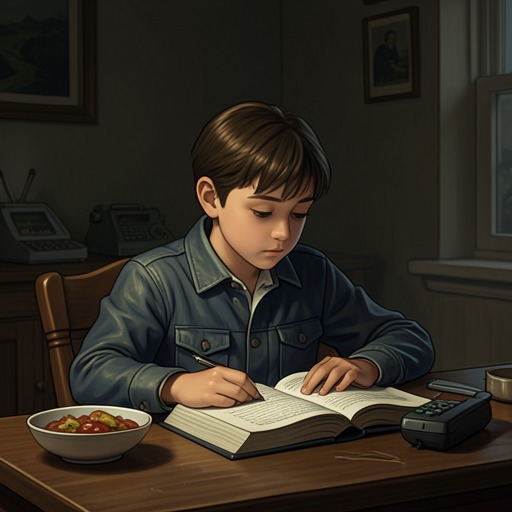
The farm’s role sits within a broader pattern of work. Pinocchio also learns to make baskets of reeds and sell them, and he later builds a strong, comfortable rolling chair to take his father out on bright days. In the evenings he studies by lamplight, using a secondhand book with missing pages and a pointed stick with blackberry or cherry juice for ink. These activities are not all performed at the farm, but the regular work there is one part of the discipline through which he helps keep the two of them from starvation and gives Geppetto the milk he needs. Farmer John’s Farm therefore marks a concrete turning point: Pinocchio’s labor becomes dependable, useful to his father, and inseparable from the compassion that makes him stop to recognize Lamp-Wick’s distress.