Geppetto sells his coat to buy Pinocchio a primer
The Adventures of PinocchioGeppetto sells his coat to buy Pinocchio a primer in a small domestic scene where a child’s wish to attend school meets the reality of poverty. The transaction supplies the A-B-C book Pinocchio says he needs, but its deeper force lies in what Geppetto gives up and in Pinocchio’s sudden understanding of that gift. The book’s near-immediate resale makes the episode both an intimate expression of fatherly care and an early measure of the distance between the education Pinocchio intends to pursue and the choices he actually makes.
The Need for a Schoolbook
Pinocchio has just remarked on his fine clothes, and Geppetto cautions that clothes do not make a person unless they are kept neat and clean. Pinocchio agrees, then points out that school requires something more important: an A-B-C book. When Geppetto asks how they will get one, Pinocchio treats the answer as simple: they will go to a bookstore and buy it. The exchange gives the purchase a clear purpose. The book is not an ornament or an abstract token of good intentions; it is the necessary object Pinocchio identifies for going to school.
That straightforward plan meets a constraint the boy has not considered. The narration notes that even a usually happy, mischievous boy understands when poverty becomes visible. Geppetto and Pinocchio have neither the book nor an easy means of obtaining it. The scene’s stakes therefore turn on a humble object: school depends on a purchase, and the household cannot make it without sacrifice.
Geppetto’s Sacrifice
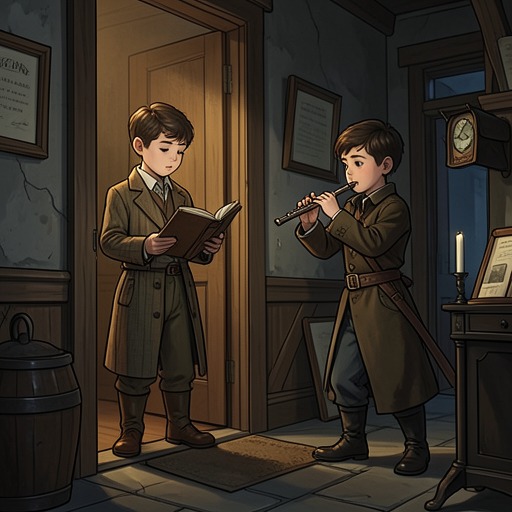
Geppetto abruptly rises from his chair, puts on his old coat, patched and darned, and runs out without another word. He returns with the A-B-C book in his hands and without the coat. The day is cold; he is left in his shirt sleeves. The physical contrast makes the cost legible before he explains it: the schoolbook has arrived, while the garment that had protected him is gone.
When Pinocchio asks where the coat is, Geppetto says he sold it. Asked why, he answers that it was too warm. The explanation is plainly at odds with the cold day and his shirt-sleeved state, but the narration does not leave the meaning obscure: Pinocchio understands at once. Geppetto’s deflection keeps the exchange brief, while the visible evidence around it—the missing coat, the book, and the cold—shows what his answer conceals. His action, rather than a declaration, establishes the extent of his care.
Pinocchio’s Recognition
Pinocchio responds not with another question but with tears. Unable to restrain himself, he jumps onto Geppetto’s neck and kisses him repeatedly. This is the scene’s decisive change: a practical errand becomes an encounter in which the child recognizes what his father has given up for him. The narration links that recognition directly to the visible poverty of the household, presenting even a mischievous boy as capable of understanding sacrifice when it is made concrete.
The gesture also gives the event its emotional weight without making the book’s purchase a simple moral lesson. Geppetto acts; Pinocchio grasps the meaning; affection is expressed physically, in an embrace and repeated kisses. The sequence turns an absent garment into evidence of a present bond. The schoolbook matters because it can take Pinocchio to school, but the scene first shows what it has cost Geppetto to put it in his hands.
The Book’s Immediate Aftermath
The sacrifice does not secure the purpose for which it was made. The next chapter identifies Pinocchio’s decision to sell his A-B-C book to pay his way into the Marionette Theater. The book changes hands, while Geppetto remains at home in his shirt sleeves, shivering after selling his coat to buy it. The juxtaposition makes the consequence unusually sharp: the object purchased through paternal self-denial is exchanged for admission to a performance, not used to begin school.
Pinocchio enters the theater, where the Marionettes recognize him as their brother and greet him with cheers. Their welcome quickly gives way to danger when the theater’s director, Fire Eater, appears and Pinocchio nearly loses his life. The episode therefore places the coat sale at the start of a chain in which Pinocchio’s immediate attraction pulls him away from the education his father’s sacrifice was meant to support. Much later, after a schoolmate is injured, Pinocchio grieves and regrets having listened to boys who were a bad influence rather than going to school. That later regret sharpens the contrast already established here: the schoolbook was available, but obtaining it could not by itself make Pinocchio choose the path it represented.
Significance
The scene’s force rests on the difference between what Geppetto says and what the circumstances show. He calls the coat too warm on a cold day, but the book in his hands and his bare shirt sleeves make the sacrifice unmistakable. Pinocchio’s immediate comprehension bridges that gap, shifting the moment from a purchase to a recognition of care. The subsequent sale of the book prevents the scene from becoming a tidy account of sacrifice rewarded: Geppetto provides the means for school, while Pinocchio’s next choice diverts it. In that reversal, the episode establishes both the tenderness of their relationship and the recurring tension between the support offered to Pinocchio and his impulse to follow immediate pleasures.