Lazy Boys Become Donkeys
The Adventures of PinocchioLazy Boys Become Donkeys is a rule of transformation in which prolonged idleness takes visible, irreversible form: boys who despise books, school, and teachers and spend their days playing eventually become donkeys. The warning is given a concrete setting and a timetable in the Land of Toys, where Pinocchio’s own change from a boy-like puppet into a donkey connects the pleasure of escaping discipline to the cost of that escape. The rule is not merely a threat of punishment; it is also the mechanism by which the Little Man turns children’s refusal of work and learning into a lucrative business.
Definition and Conditions
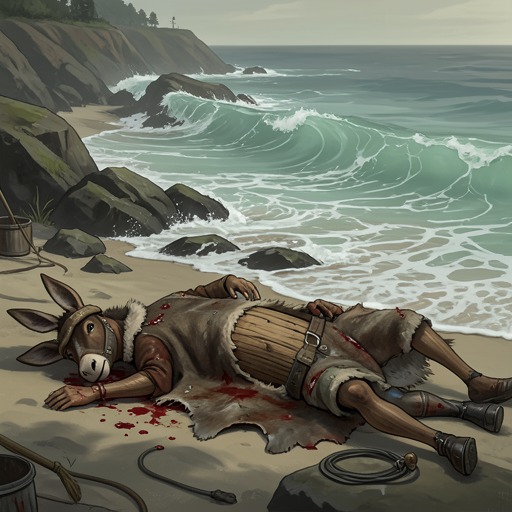
The rule is explained by the Dormouse after Pinocchio discovers that his ears have become donkey-like. Within two or three hours, the Dormouse tells him, he will no longer be a puppet or a boy but a real donkey, like those that pull fruit carts to market. The transformation thus has a staged onset: the altered ears announce the change before it is complete, and Pinocchio can feel that something has already happened to him even before the final form arrives.
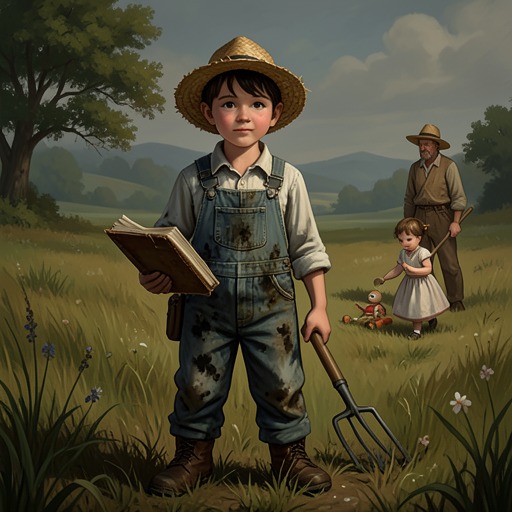
The Dormouse describes the cause as a pattern of conduct rather than a single offence. Boys who hate books, schools, and teachers, and pass their days among toys and games, are destined sooner or later to become donkeys. The condition is therefore cumulative: the prolonged refusal of learning and work matters, not simply the enjoyment of play. The rule’s stated interval is measured in months of unbroken amusement, while the final physical change, once underway, advances within hours.
The Land of Toys as Its Testing Ground
The rule is prepared by the landscape of the Land of Toys. Its population consists entirely of boys, from about eight to fourteen years old, and its streets are filled with games, noise, and spectacle: boys play marbles, ball, and tag, ride bicycles and wooden horses, stage circus performances, and parade with cardboard soldiers. The squares hold small wooden theaters crowded from morning to night. On house walls, charcoal slogans celebrate the Land of Toys and reject arithmetic and school. The place makes a child’s fantasy of freedom from lessons seem to have become a whole society.
Pinocchio and Lamp-Wick arrive there with the other boys and explore its houses and theaters, quickly becoming friends with everyone. For five months they continue playing from morning to night without seeing a book, desk, or school. That duration is crucial: the rule does not interrupt their pleasure immediately. Instead, the apparent holiday lasts long enough to feel like a settled way of life, and the transformation arrives as a surprise on a morning when Pinocchio wakes and finds his ears changed.
Pinocchio’s first response is not calm acceptance but alarm and anger. When he understands that he is becoming a donkey, he grasps his long ears and pulls at them as if they belonged to someone else. He asks what he has done, then sobs at the Dormouse’s confirmation that the change is real. His distress registers the reversal at the heart of the rule: what had seemed like liberation from books and school has become the loss of the human form he took for granted. The Dormouse answers that tears cannot undo what has happened; Pinocchio should have considered the consequence earlier.
The Little Man’s Trade
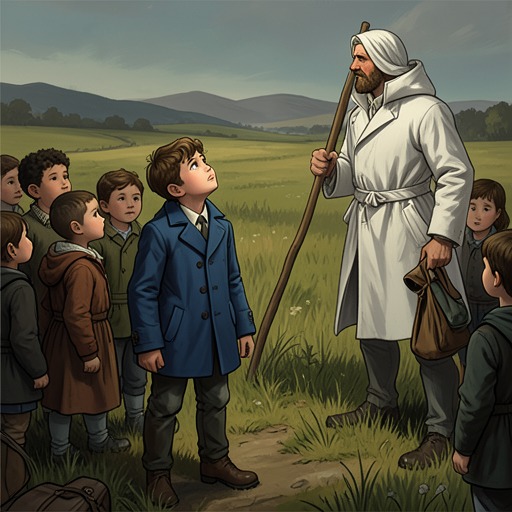
The Little Man makes the transformation more than a private punishment. He takes the boys from their homes to the Land of Toys, lets them play for months, and then sells them once they have become little donkeys. His public appearance is deceptive: his face shines with kindness, and at first he pets and caresses the two animals, smooths their coats, and curries them until they shine. The grooming is not care for its own sake but preparation for the market. He bridles them and takes them to a distant marketplace, hoping to sell them at a good price.
The outcome for the two friends makes the trade explicit. A farmer buys Lamp-Wick because his own donkey has died; a circus owner buys Pinocchio to teach him tricks for audiences. The Little Man’s apparent kindness thus belongs to a system of capture and sale. He seeks out boys who are lazy, hate books, want to run away from home, or are tired of school; after their months of play, he sells their altered bodies. The narrator states that the trade has made him a millionaire within a few years. The metamorphosis is therefore both a moral consequence within the story and the instrument of an exploitative business.
Warning, Choice, and Narrative Function
The rule sharpens a recurring conflict between advice and self-will. Before his misfortunes with the Assassins, Pinocchio dismisses warnings as inventions by parents meant to frighten children who run away at night. In another crisis, after his schoolmate Eugene is struck down, he mourns that he should have gone to school and recognizes that he listened to bad companions despite warnings from his teacher and mother. These episodes do not state the donkey rule itself, but they establish the pattern it punishes: Pinocchio repeatedly treats guidance as an obstacle, then understands its value only after danger or loss has made the cost plain.
The narrator addresses young readers directly around these adventures, acknowledging the appeal of play while announcing its consequence. In the Land of Toys, the lesson is made unusually vivid: anti-school slogans and five months without books or desks give the boys’ rebellion an attractive public shape, while the donkey ears expose what that apparent freedom conceals. The transformation compresses a long period of neglected study into a sudden bodily revelation. By placing the rule in a comic, extravagant world of theaters, games, and noisy parades, the story makes its warning memorable without leaving it abstract: the boy who wants only toys does not simply fall behind in school but risks being converted into a beast to be sold and made to work.