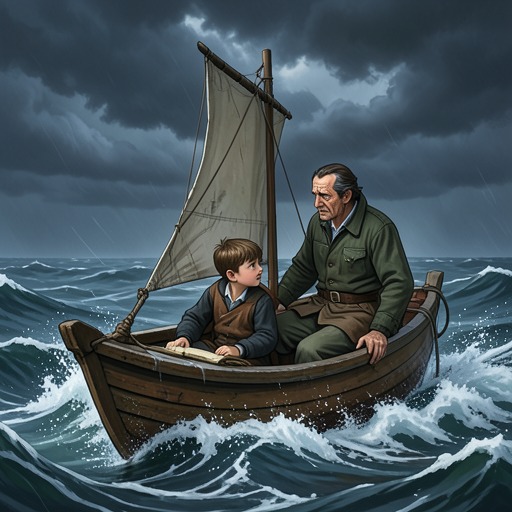
Pinocchio and Geppetto escape from the Shark
The Adventures of PinocchioPinocchio and Geppetto escape from the Shark in a two-stage ordeal that turns confinement into a test of initiative and filial care. Pinocchio first proposes a dangerous route through the monster’s body, then persists when their first attempt fails; carrying Geppetto on his back, he finally dives from the Shark’s mouth into the sea. The escape shifts the father from skeptical dependence to the care of the son who once needed his protection.
Conditions and Stakes
After finding Geppetto inside the Shark, Pinocchio recognizes that they must leave before the monster wakes. Their proposed route is direct but perilous: they will climb out through the Shark’s mouth and dive into the sea. Geppetto doubts that a small Marionette can carry him and swim, treating the plan as a dream. Pinocchio answers not with a guarantee of success but with a willingness to face the danger together: if they must die, he says, they will at least die together. The exchange makes the stakes intimate as well as physical. Escape means preserving both lives, while the possibility of failure cannot be separated from the father-son bond.
The Shark’s condition creates their opportunity. Very old and suffering from asthma and heart trouble, it has to sleep with its mouth open. From within this unlikely shelter, Pinocchio can see the star-filled sky through the jaws. The open mouth offers a view of freedom, but it is also the threshold of a living danger: the fugitives must move through the monster without waking it. Pinocchio waits until the Shark is fast asleep and the sea is calm; he judges the night bright enough to make their attempt possible and urges Geppetto to follow closely.
The First Attempt and Reversal
Pinocchio takes a candle and goes ahead to light the way. Father and son travel a long distance through the Shark’s stomach and body before reaching its throat, where they pause for the right moment. The candle gives their slow passage a fragile measure of security, while the journey through the creature’s interior makes the escape dependent on both timing and silence. When they climb toward the open mouth, they tread carefully across the enormous tongue, which is wide and long enough to resemble a country road. A tickle might wake the Shark, so even the last stretch demands restraint.
They are almost out when the Shark suddenly sneezes. The force jolts both fugitives, throws them onto their backs, and sends them unceremoniously into the stomach again. The reversal comes at the instant success seems within reach: the open mouth had promised an exit, but the sleeping monster’s involuntary movement closes it. Worse, the candle goes out, leaving Geppetto and Pinocchio in darkness. Geppetto concludes that they are lost. The failed attempt therefore strips away not only their near escape but also their light and their immediate sense of direction.
Pinocchio Leads the Second Attempt
Pinocchio refuses to treat the setback as final. He takes Geppetto by the hand and tells him to be careful not to slip; when his father asks where he is being led, Pinocchio insists that they must try again and not be afraid. The change is visible in their roles. Geppetto had questioned whether Pinocchio could manage the escape at all; now Pinocchio supplies the direction and steadiness on which his father must rely.
They climb the Shark’s throat once more, still walking on tiptoes, cross the tongue, and jump over three rows of teeth. Before the last great leap, Pinocchio gives Geppetto a practical instruction: climb onto his back and hold tightly to his neck. He promises to take care of everything else. The plan no longer asks Geppetto to make the escape under his own power; Pinocchio makes his own body the means by which they can leave together.
Once Geppetto is seated securely on his shoulders, Pinocchio dives into the water and begins to swim. The sea is described as smooth as oil beneath the moon’s full light, while the Shark sleeps on, too soundly to be awakened even by a cannon shot. The calm surroundings contrast with the hazardous passage through the creature’s mouth, but they do not diminish the physical burden Pinocchio has taken on: he must carry his father and swim away from the monster at once.
Consequences and Significance
The escape is completed through persistence rather than through an uninterrupted plan. Pinocchio’s first attempt is defeated by the Shark’s sneeze, and the loss of the candle leaves both characters in darkness; his response is to find Geppetto’s hand, retrace the route, and adapt the plan so that he carries his father. The decisive action is therefore not merely reaching the Shark’s mouth. It is Pinocchio’s choice to take responsibility for what happens next, even after the evidence of danger and failure has grown clearer.
The scene reverses the usual direction of care between father and son. Geppetto once acted to provide for Pinocchio; here the son guides, reassures, and physically bears his father. Their escape makes that reversal concrete in the image of Geppetto holding on around Pinocchio’s neck as the Marionette swims into the sea. It also turns the pair’s reunion inside the Shark into an active bond: being together is not enough unless they can act together, and Pinocchio’s renewed attempt makes their survival a shared undertaking.