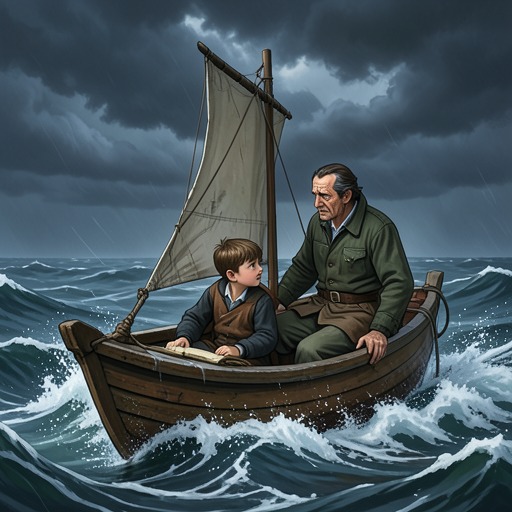
Pinocchio and Geppetto’s first escape attempt fails
The Adventures of PinocchioPinocchio and Geppetto’s first escape attempt fails when a sudden sneeze from the sleeping Shark turns a carefully timed passage toward freedom into a return to darkness. Pinocchio takes the lead, carrying a candle through the monster’s body and guiding his father toward its open mouth; at the threshold, the Shark’s involuntary movement sends both fugitives tumbling back inside. The sequence makes escape depend not only on courage and planning but also on the unpredictable body of the creature that holds them captive.
Circumstances and the Decision to Escape
The attempt follows the reunion between Pinocchio and Geppetto inside the Shark. Pinocchio has found his father at a little table lit by a candle in a glass bottle, eating live fish. Their reunion changes the immediate problem from Pinocchio’s individual survival to their shared confinement: escape must now carry both father and son out together. Geppetto doubts that a small Marionette can have the strength to carry him and swim, but Pinocchio urges him to try, accepting that if they cannot survive, they will at least face that fate together.
Pinocchio then acts rather than prolonging the disagreement. He takes the candle and goes ahead to light the way, telling Geppetto to follow without fear. The candle is both a practical aid and the small resource on which their plan depends: it lets them move through the Shark’s interior and gives their progress a visible point of orientation. Pinocchio’s leadership here is concrete. He does not merely promise rescue; he leads his father through the route himself.
The Route Through the Shark
Father and son walk a long distance through the Shark’s stomach and body before reaching its throat. They stop there to wait for the right moment, making the escape a matter of timing as well as movement. The opening is not immediately usable; they must approach it cautiously and take advantage of a temporary opportunity.
That opportunity comes from the Shark’s condition. Very old and suffering from asthma and heart trouble, it has to sleep with its mouth open. Looking up through the jaws, Pinocchio can glimpse a sky filled with stars. The view gives their passage a striking point of contrast: they remain inside the creature, yet the outside world is visible above them. Pinocchio judges that the Shark is fast asleep, the sea calm, and the night bright enough for them to try. He turns the signs he can observe into a plan, asking Geppetto to follow closely.
They climb through the throat toward the immense open mouth. At the final stretch, caution becomes physical: they walk on tiptoe so that they will not tickle the Shark’s long tongue and wake it. The tongue is so wide and long that it resembles a country road, an image that enlarges the obstacle even as it makes the route imaginable. They are close enough to be just about to dive into the sea, but have not yet crossed the threshold into safety.
The Failed Escape
The decisive interruption is sudden and involuntary. The Shark sneezes, jolting Pinocchio and Geppetto backward and throwing them unceremoniously into its stomach again. Their careful approach has not been defeated by an argument between them or by a deliberate attack; the creature’s bodily reflex overturns the timing on which their escape depended. A passage that had seemed open becomes inaccessible in a moment.
The sneeze also destroys the means by which Pinocchio has guided them. The candle goes out, leaving father and son in the dark. This consequence makes the setback more severe than a simple retreat: they have lost both their position near the mouth and their light. Pinocchio asks what comes next, and Geppetto answers that they are lost. The exchange marks the immediate outcome plainly. Their attempt has failed, and the scene ends without an escape or a new plan being achieved.
Narrative Significance
The scene is shaped around a reversal between apparent opportunity and renewed confinement. The open jaws, calm sea, bright night, and visible stars all support the expectation that the escape can succeed. Yet the same route requires them to pass close to a sleeping creature, so their progress remains vulnerable until they are fully outside. The sudden sneeze turns the Shark’s sleeping body from a temporary opening into an unpredictable force that can send them back where they began.
Pinocchio’s role is defined by his practical care for Geppetto. He carries the candle, leads the way, and asks his father to stay close; his earlier confidence meets a setback that neither of them can control. The extinguished flame gives that reversal a precise final image: the route toward freedom had been lit, but the attempt ends with both characters inside the Shark and unable to see. The episode therefore closes not with release, but with the immediate consequences of failure—darkness, uncertainty, and the need for escape to be attempted again.