Pinocchio discovers the Fairy’s supposed death
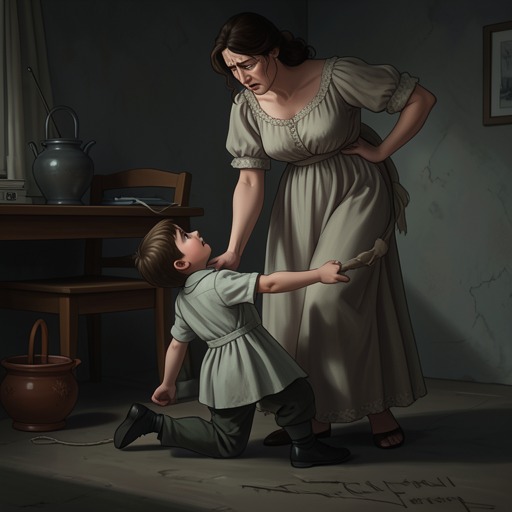
The Adventures of PinocchioPinocchio discovers the Fairy’s supposed death when he returns to the place where he expects to find her home and encounters a grave in its stead. The announcement that she died of grief because he abandoned her transforms his past disobedience into an apparent, irreversible loss. His grief is bound up with guilt, fear for his missing father, and the question of how he can survive alone; later, the story overturns this apparent death when he recognizes the Fairy alive at his circus performance.
The Search and the Empty House
The discovery begins as a flight toward the Fairy. Once the dog collar has been removed from his neck, Pinocchio runs across fields and meadows without stopping until he reaches the road leading to her house. The collar’s release is more than a physical change: it lets him leave the farm and resume a journey toward the person he hopes to find. The urgency of his running carries him through a landscape already marked by earlier misfortunes.
From above the valley, he sees the wood where the Fox and the Cat once encountered him and the tall oak tree where he had been hanged. These landmarks make his approach a return through the geography of danger and betrayal. But the destination he seeks is missing. At the spot where the Fairy’s house once stood, he finds only a small marble slab. The sudden subtraction is stark: familiar signs of past events remain, while the home he came to reach has vanished.
The Inscription and Pinocchio’s Grief
The slab supplies an explanation in the form of an epitaph: “HERE LIES THE LOVELY FAIRY WITH AZURE HAIR WHO DIED OF GRIEF WHEN ABANDONED BY HER LITTLE BROTHER PINOCCHIO”. Its wording does not merely report a death; it assigns Pinocchio responsibility for it. Calling him her little brother places the loss within a family bond, while the claim that she died of grief makes his abandonment the stated cause. The inscription therefore confronts him with a consequence that appears to outlast any promise to behave better.
Pinocchio falls to the ground, kisses the cold marble, and weeps bitterly. He remains there through the night. By dawn his tears have dried, but hard sobs still shake his wooden frame, loud enough, the narration says, to be heard by the distant hills. The scene holds physical comedy and sorrow in uneasy proximity: he tries to tear his hair, only to discover that it is painted onto his wooden head and cannot be pulled. His body cannot perform even the ordinary gesture of grief he attempts, yet the grief itself is unmistakable.
Guilt, Loneliness, and a New Resolve
In his lament, Pinocchio wishes that he had died instead of the Fairy, whom he calls good while describing himself as bad. He asks where his father is and begs the Fairy to tell him, promising that he will never leave his father again. The promise follows directly from the apparent loss: the epitaph has made abandonment feel not like a childish mistake that can be repaired, but like an act with fatal consequences.
His questions also turn grief into a fear of practical helplessness. With the Fairy believed dead and his father lost, he wonders where he will eat and sleep and who will make his clothes. He imagines the Assassins returning to hang him again from the giant oak tree, and finally says that he wants to die. The passage gathers together several forms of insecurity—bereavement, danger, homelessness, and dependence—rather than letting his sorrow remain abstract. His longing for his father becomes especially pointed because he has just been confronted with the apparent death of another caregiver.
The chapter’s account places a Pigeon above the weeping Pinocchio immediately after this lament. It carries him toward the seashore, where he throws himself into the sea to help his father. That movement gives the discovery a consequence beyond mourning: Pinocchio’s promise not to leave his father again is followed by action directed toward finding and rescuing him.
The Apparent Death and Its Later Reversal
The grave announcement is not the Fairy’s actual end. Later, during Pinocchio’s public performance as a donkey, he sees a beautiful woman in a theater box wearing a gold chain and a large medallion bearing the picture of a Marionette. He recognizes the picture as himself and realizes that the woman is his Fairy. The later recognition changes the meaning of the grave scene: Pinocchio’s grief was genuine, but the claim of death that prompted it was not true.
The reversal gives the episode a double force. At the moment of discovery, the marble slab appears to make the Fairy’s absence permanent and to place responsibility for it on Pinocchio. Later, her appearance exposes the gap between what the inscription led him to believe and what has actually happened. The episode remains decisive even after that correction: it makes abandonment visible to Pinocchio as a devastating breach of affection, and his desperate promise to stay with his father marks a change in how he understands separation and care.