Pinocchio gives his savings to the Fairy
The Adventures of PinocchioPinocchio gives his savings to the Fairy with Azure Hair at a turning point in his conduct: when he learns that she is ill and has no money for food, he relinquishes the fifty pennies he had saved for clothes and chooses to work for her as well as for Geppetto. The gift turns the habits of labor and care he has built for his father outward, making an act of sacrifice—not a promised reward—the decisive measure of his change.
The Savings and the Planned Purchase
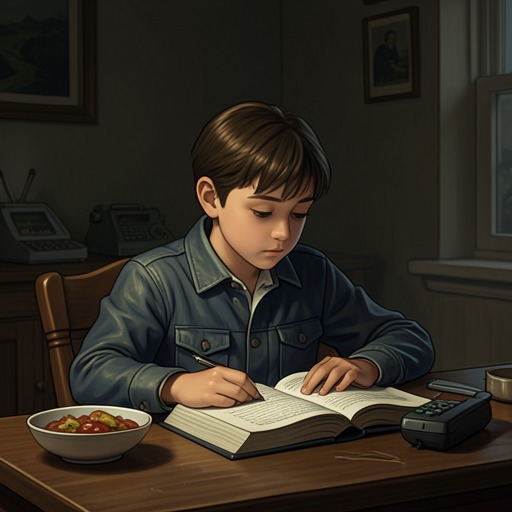
For more than five months, Pinocchio has risen at dawn to draw water at a farm, earning warm milk for Geppetto, whose health improves day by day. He supplements that work by making and selling reed baskets. He also builds his father a strong, comfortable rolling chair for outings on sunny days, and studies by lamplight with a secondhand book missing some pages. To write, he uses a pointed stick and the juice of blackberries or cherries. His work and study gradually provide for the household and leave him with fifty pennies.
The money has a specific purpose: Pinocchio intends to buy a coat, cap, and pair of shoes. He leaves home laughing and singing, imagining how well dressed he will look when he returns. The planned purchase is modest, but it represents something he has earned for himself after a long stretch of labor. The encounter that interrupts it therefore asks whether the new savings will remain a personal reward or become help for someone in greater need.
The Snail's News
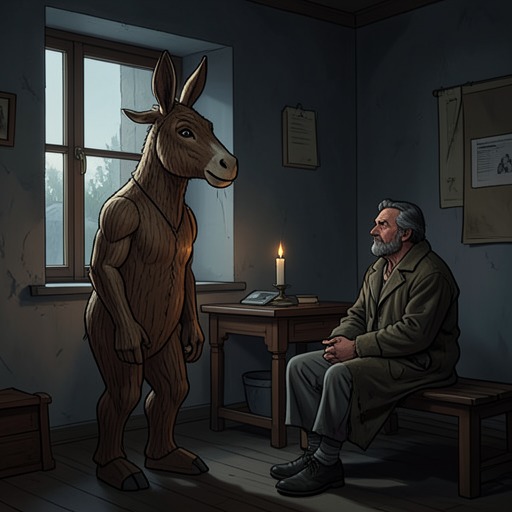
On the road to the village, Pinocchio hears his name and sees the Snail emerging from some bushes. At first he only partly recognizes her; she reminds him that she once lived with the Fairy and opened the door for him one night, giving him something to eat. Recognition quickly gives way to urgent questions. Pinocchio wants to know where the Fairy is, whether she has forgiven him, whether she remembers and still loves him, and whether he can see her.
The Snail answers that the Fairy is lying ill in a hospital. She adds that illness and hardship have left the Fairy without even a penny to buy bread. The news changes the meaning of the fifty pennies at once. Pinocchio had been on his way to purchase clothes, but the Fairy's need is immediate and basic: she has no money for a bite of food. His response is not to bargain, save part of the sum, or postpone help until he has bought what he wants.
Giving Up the Clothes
Pinocchio hands all fifty pennies to the Snail and asks her to take them to the Fairy. When the Snail asks about the clothes, he says that they do not matter and that he would even sell the rags he is wearing if that would help the Fairy more. He tells the Snail to hurry and asks her to return within a couple of days, hoping he will have more money by then. He explains the change in his responsibilities plainly: until that day he had worked for his father; now he will have to work for his mother too.
Calling the Fairy his mother gives the act a familial meaning, but the gift is also material and exact. It is not an abstract promise of affection: the entire amount he has saved for a coat, cap, and shoes is redirected to meet her need. The Snail, usually calm, runs off unusually fast, like a lizard under the summer sun. Her departure carries the money toward the Fairy while Pinocchio returns home without the purchase he had announced.
Extra Work and the Meaning of the Gift
When Geppetto asks where the new suit is, Pinocchio says he could not find one to fit him and will have to look another day. That evening, instead of going to bed at ten, he stays up until midnight and makes sixteen baskets rather than eight. The additional labor follows directly upon his decision: giving away his savings does not end his responsibility but prompts him to earn more. His generosity is joined to a practical willingness to work.
The event also reverses an earlier pattern in which Pinocchio benefited from other people's sacrifices and assistance. Geppetto had sold his patched coat to buy Pinocchio a schoolbook, and Fire Eater had given Pinocchio five gold pieces after hearing about his father's poverty. Pinocchio had already acted on Geppetto's teaching that a kind deed is never lost when he rescued Alidoro from drowning. Here, however, the help is directed toward the Fairy, and it costs Pinocchio the purchase he had anticipated for himself.
That night Pinocchio dreams of the Fairy, beautiful, smiling, and happy. In the dream she kisses him, forgives his past mischief, and praises boys who love and care for parents when they are old and sick, even if they have not been models of obedience and good behavior. The dream gives the gift an emotional consequence, but the act itself comes first: Pinocchio gives away the money before receiving the dream's praise. His savings thus mark a change in what he considers worth earning and keeping, while the doubled basket-making shows how that choice continues into his work.