Pinocchio refuses to help the Fox and the Cat
The Adventures of PinocchioPinocchio refuses to help The Fox and The Cat when, newly escaped from the Shark with Geppetto, he finds his former deceivers begging for alms. The encounter makes their fraud’s consequences visible in their ruined bodies and poverty, while Pinocchio’s firm refusal marks a change from the credulous boy they once exploited: he recognizes them, rejects their appeal, and walks on with his father.
An encounter on the road
After leaving the Shark, Pinocchio and Geppetto set out looking for a house or hut where they might be given bread and straw for the night. They have not gone a hundred steps when they see two rough-looking people sitting on a stone and begging. The brief distance between their own need and the beggars’ plea places the decision in sharp relief: Pinocchio and Geppetto are also seeking shelter and food, but the people asking them for help are not strangers. They are the partners who once cheated Pinocchio.
The timing connects the encounter to the pair’s escape and reunion. Pinocchio had found Geppetto in the Shark’s stomach, where the old man was eating live fish by candlelight; he had recognized his father and embraced him in sudden joy. Now, as the two make their way toward a place to sleep, their first encounter on the road is with the pair whose earlier deception helped send Pinocchio into danger. The reunion has restored the father and son to one another, but it has not removed the practical hardship before them: they still need food and shelter.
The deceivers’ changed fortunes
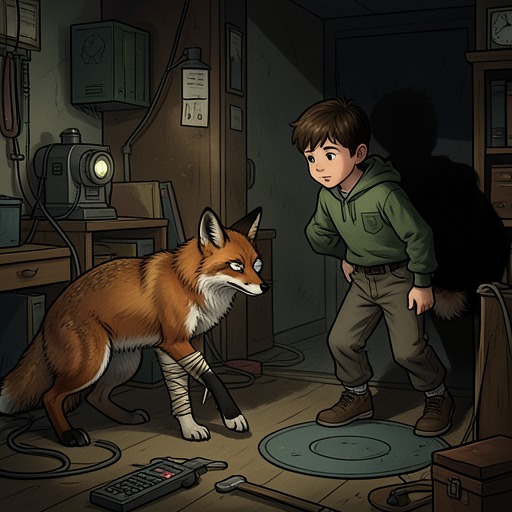
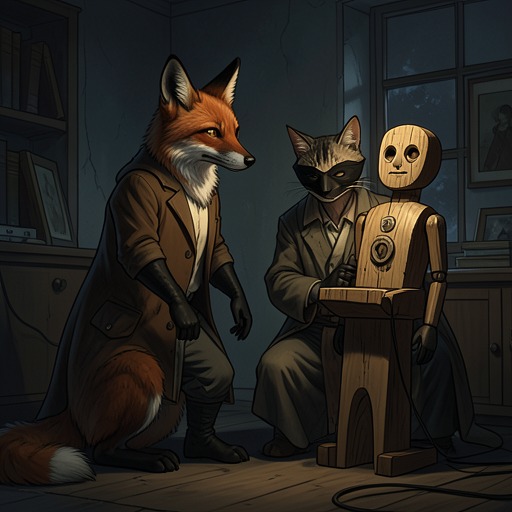
Pinocchio recognizes The Fox and The Cat, though their appearance has changed so much that they are difficult to know. The Cat, who had pretended to be blind for years, has actually lost the sight of both eyes. The Fox is old, thin, and almost hairless, and has lost his tail. Once a sly thief, he fell into deep poverty and was eventually forced to sell that tail for a bite to eat. The story gives each figure a distinct bodily consequence, making their present distress a concrete reversal of their former confidence and trickery.
The two plead that they are old, tired, and sick, and insist that they are now truly poor and starving. The Cat repeats key words from The Fox’s appeal—first his claim of sickness, then his hunger—as if echoing the plea rather than adding a separate account. They ask Pinocchio for alms and later beg him to have mercy and not abandon them. Their need is real in the scene, but the narration also makes their history unavoidable: these are the false friends who once took advantage of him.
Pinocchio’s refusal
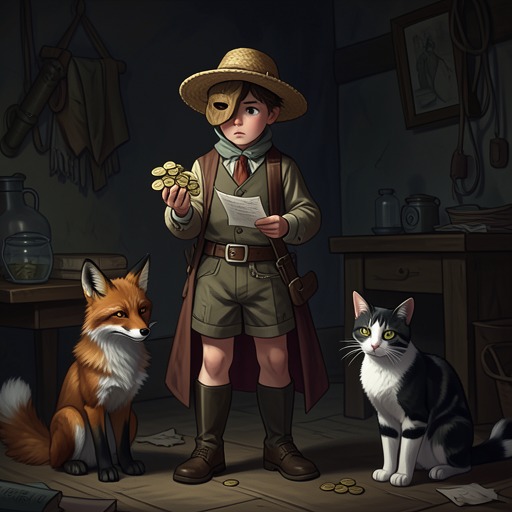
Pinocchio answers that they cheated him once and will not catch him again. He does not accept their appeal as grounds for renewed trust, nor does he pretend to have forgotten what they did. Instead, he answers each renewed plea by recalling a proverb. Stolen money, he says, never bears fruit; bad wheat makes poor bread; and the person who steals a neighbor’s shirt may end up without one of his own. The three sayings give his refusal a measured, almost formal rhythm: each appeal is met not with an argument over their suffering, but with a judgment on the conduct that brought them there.
The exchange also distinguishes refusal from retaliation. Pinocchio does not attack or punish the pair; he waves good-bye, and he and Geppetto calmly continue on their way. The Fox asks them not to abandon the beggars, while The Cat repeats the final appeal, but their words do not change Pinocchio’s decision. The scene’s outcome is simple and definite: he withholds assistance from the two who previously deceived him and leaves them where they are.
Reversal and moral contrast
The refusal gains force from the contrast with Pinocchio’s earlier choices. When warned by the Talking Cricket, he dismissed the possibility of danger and imagined that he could outwit any threat. Later, after his schoolmate Eugene is struck and left pale and motionless, Pinocchio grieves, recognizes that he followed bad company, and regrets not going to school. Those episodes show a boy who repeatedly understands warnings only after their consequences arrive. Here, by contrast, he identifies The Fox and The Cat at once and does not repeat the trust that made their deception possible.
The scene does not erase Pinocchio’s earlier vulnerability or establish that he has become indifferent to suffering. Its evidence is more specific: he remembers these particular beggars as the people who cheated him, refuses their request, and continues with Geppetto. The transformation of The Fox and The Cat into a blind beggar and a nearly hairless, tail-less one supplies the encounter’s sharp reversal, while Pinocchio’s remembered proverbs turn that reversal into an explicit reckoning with theft. Their ruined condition is not a new promise of wealth or a fresh trick; it is the present reality against which Pinocchio sets the history of their false friendship.