Pinocchio–Geppetto relationship
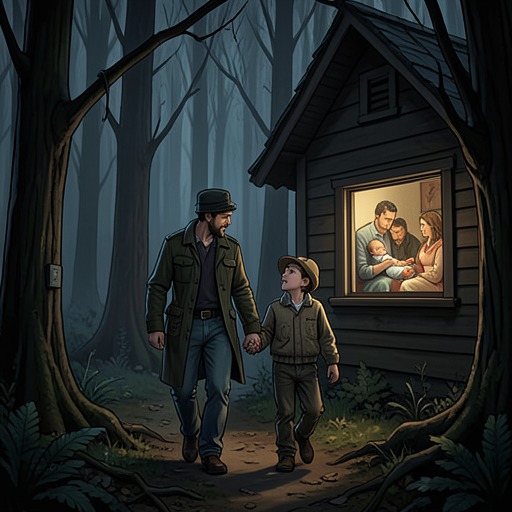
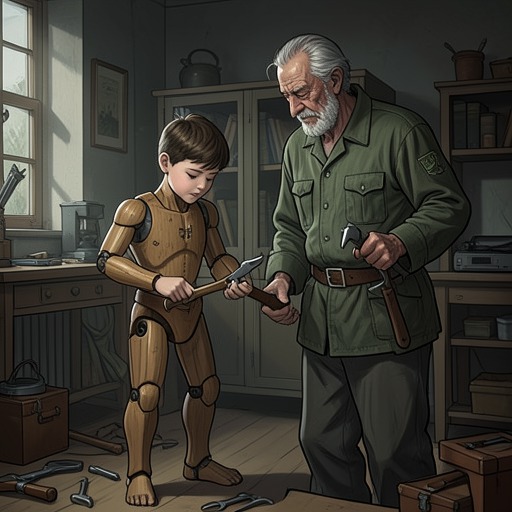
The Adventures of PinocchioPinocchio–Geppetto relationship is the emotional thread running through Pinocchio’s passage from a wayward wooden creation toward filial care. Geppetto’s devotion is made visible in costly acts of protection and provision, while Pinocchio’s repeated departures turn that care into a bond tested by absence. Their story moves from a father making a child to a child seeking, rescuing, and embracing his father.
Origin and Unequal Responsibilities
The relationship begins with an ordinary piece of firewood, not a royal inheritance: after receiving the wood from Mastro Antonio, Geppetto takes it home and fashions the Marionette, naming him Pinocchio. The humble material matters to the bond’s shape. Geppetto creates and cares for a child who is capable of speech and action, but not yet of the judgment that would make his father’s guidance easy to accept.
That imbalance is especially clear when Pinocchio asks for new feet after his hunger has been relieved. Geppetto first lets him wait as punishment for his mischief, then makes him a new pair. The episode combines discipline with practical care: Geppetto does not simply grant every demand at once, but neither does he withdraw the help Pinocchio needs.
Care Given, Care Misunderstood
Geppetto’s most tangible sacrifice comes when he sells his old coat to buy Pinocchio an A-B-C book. He leaves home wearing the patched garment, returns without it, and explains its absence by pretending it was too warm. Pinocchio understands what the excuse conceals. He jumps onto his father’s neck and kisses him repeatedly, a spontaneous recognition of the cold and poverty Geppetto has accepted for his sake.
The tenderness of that moment is set against Pinocchio’s next choice. Although the book has been bought through Geppetto’s sacrifice, Pinocchio sells it to pay his way into the Marionette Theater. Geppetto remains at home in his shirtsleeves, shivering in the cold, while the book changes hands. The contrast gives the relationship a recurring pattern: Geppetto’s care is concrete and costly, but Pinocchio’s impulses can undo its immediate purpose before he has learned to value what it costs.
Disobedience and Longing
As Pinocchio repeatedly rejects advice and pursues his own wishes, the father–son bond is strained by more than physical distance. On the road, he dismisses warnings as attempts by parents to frighten children who want to run away, and imagines that he can outwit any danger. His confidence is followed by misfortune. Later, after further hardship, he admits that he has been stubborn, has refused to listen to those who love him, and has learned that disobedient boys lose out. This recognition is not abstract: he longs to see his father, wonders whether Geppetto is waiting for him, and misses his father’s love and kisses.
The shift from resistance to longing changes the emotional meaning of separation. Pinocchio no longer treats his father’s absence as merely an obstacle to doing as he pleases. He names the affection he has been missing and fears that his past conduct may have put the Fairy’s forgiveness beyond reach. His regret connects family love with the consequences of his own choices, without erasing the earlier pattern of flight.
Geppetto’s Search and Pinocchio’s Rescue
The scale of Geppetto’s devotion becomes clear when a pigeon tells Pinocchio that his father has been searching for him for four months, wandering around Europe. Still unable to find his son, Geppetto has decided to cross the ocean in a little boat and continue the search in the New World. The news turns a father’s absence into evidence of sustained action: Geppetto has not abandoned Pinocchio but has made the search itself his purpose.
When Pinocchio spots the tiny boat on the rough sea, he recognizes it as his father’s and waves from the shore with his hand, cap, and even his nose. The boat disappears from view. As the fisher folk turn away, Pinocchio dives into the water, declaring his intention to save his father. His wooden body lets him float and swim through the rough sea until he is lost from sight. The child who once ran from adult warnings now acts in response to the danger facing Geppetto; his love takes the form of a rescue attempt, not just regret.
Reunion and the Relationship’s Meaning
Much later, after saying goodbye to the Tunny, Pinocchio follows a distant light through slippery water. He finds Geppetto at a small table lit by a candle in a glass bottle, eating live fish. Recognition overwhelms him: he can scarcely speak before opening his arms and throwing them around his father’s neck. He tells Geppetto that he has found him at last and will never leave him again.
The reunion gathers the relationship’s repeated separations into a single embrace. Geppetto’s search and Pinocchio’s journeys have kept the two apart, but each has moved toward the other: the father crosses distances to seek his son, and the son eventually risks himself to reach and protect his father. The promise not to leave again gives their bond a forward-looking resolution, while the story’s repeated reversals make clear why that promise matters. Filial affection becomes more than a feeling when Pinocchio begins to recognize care, accept its cost, and answer it with action.