The Fox–Cat partnership
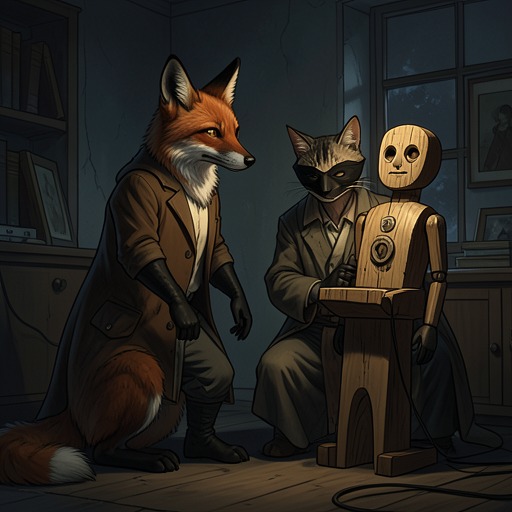
The Adventures of PinocchioThe Fox–Cat partnership is a recurring confidence trick in which apparent mutual dependence conceals a shared design to exploit Pinocchio. The Fox leads with stories and promises; The Cat supports the act through visible gestures, repetition, and, when challenged, violence. Their return to Pinocchio after an earlier failed warning shows the partnership’s central method: adapt the performance, renew his trust, and turn his hope of becoming rich into a chance to rob him.
First Appearance and Performed Dependence
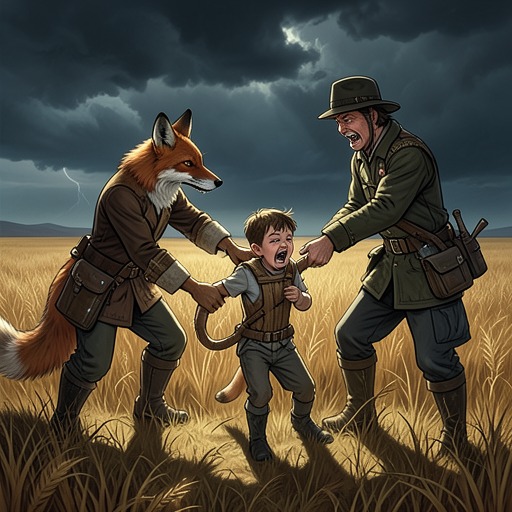
The Fox and The Cat first approach Pinocchio on the road after he has received five gold pieces from Fire Eater. Their entrance is staged as a picture of reciprocal care: The Fox is lame and leans on The Cat, while The Cat is blind and lets The Fox guide him. The arrangement makes each seem to supply what the other lacks, presenting them as companions who need one another rather than strangers with an interest in Pinocchio’s money.
They quickly exploit that first impression. When Pinocchio displays the coins and calls himself rich, The Fox laughs, and The Cat joins in while trying to conceal his amusement by stroking his whiskers. Their shared reaction makes the boy’s boast seem naïve, then gives The Fox an opening to turn the encounter toward a scheme. The disabilities also become part of their persuasion: The Fox claims that studying cost him a paw, and The Cat says the same pursuit cost him the sight of both eyes. Their invented personal histories recast education as a danger, just as Pinocchio is being tempted away from the responsible use of the money intended for his needs.
A Blackbird warns Pinocchio not to heed bad advice. The Cat immediately leaps on the bird and eats it, while The Fox’s pitch continues. The episode makes their complementary roles stark: The Fox works through verbal persuasion, while The Cat can silence a warning by force. The violence does not end the enticement; it clears space for the partners to resume it together.
The Field of Wonders Scheme
The Fox presents the Field of Wonders, outside the City of Simple Simons, as a place where a buried coin will grow into a tree loaded with gold. He gives the promise a practical-looking procedure: dig a hole, bury the coin, cover it, water it, add salt, and wait overnight. The absurd certainty of the instructions helps disguise the fraud as a repeatable method rather than a gamble. The Fox even calculates that Pinocchio’s five coins will produce twenty-five hundred, and The Cat echoes the promised sum, making the partnership sound like two witnesses confirming one opportunity.
The offer depends on Pinocchio’s wish to multiply his money without labor. The partners do not merely promise wealth; they present themselves as guides who know a secret place and a reliable process. Their teamwork lends the lie an appearance of corroboration, while the field’s ordinary appearance offers no proof of the supposed marvel. When Pinocchio later meets them again near the Giant Oak Tree, the Fox and Cat return to the same proposal even though he has already spent one coin at the Inn of the Red Lobster. The Fox urges him to sow the remaining four before it is too late, converting delay into a reason to obey at once.
At the field, The Fox directs Pinocchio to bury the coins and fetch water. Pinocchio has no pail, so he fills his shoe at a nearby brook and sprinkles the earth himself. His careful compliance sharpens the contrast between the labor he performs and the partners’ dishonest promise of effortless gain. While he is away in the city, The Fox and The Cat return, take the four buried coins, and flee. The Parrot exposes the theft; Pinocchio digs up the spot and finds nothing. The partnership’s promised multiplication ends in the complete loss of the money entrusted to their scheme.
A Second Performance of Sympathy
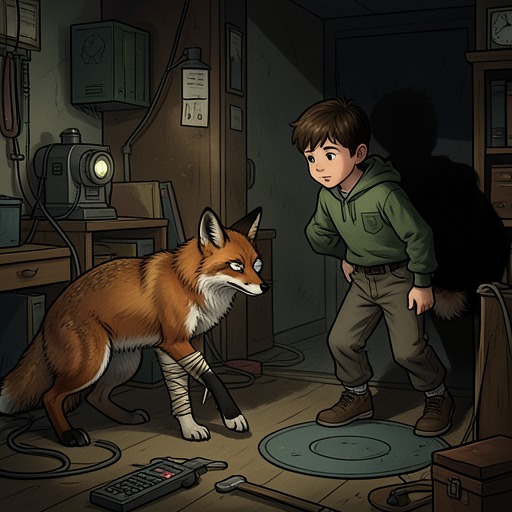
At their later meeting in the wood, The Fox embraces and kisses Pinocchio, and The Cat repeats the greeting. Their warm welcome disguises the fact that they are resuming contact with someone they have already deceived. The Fox presents their apparent misfortune as a reason for sympathy, while Pinocchio notices that The Cat’s right paw is now in a sling. When The Cat struggles to answer, The Fox speaks for him and claims that The Cat bit off his own paw to feed a starving wolf.
The story turns an injury into evidence of extravagant generosity. The Fox even wipes away a tear as he tells it, directing Pinocchio’s attention away from the contradiction and toward pity. Pinocchio responds with concern and asks after the partners’ gold; The Fox redirects him to the Field of Wonders, insisting that his remaining four coins could become two thousand the next day. The Cat’s sling and The Fox’s sentimental account thus renew the same confidence trick with a changed appeal: this time, apparent sacrifice makes the pair seem worthy of trust, while urgency pressures Pinocchio to act before he can reconsider.
Partnership and Narrative Function
Across both encounters, The Fox and The Cat divide the work of deception without needing to present themselves as separate schemes. The Fox invents explanations, calculates returns, and urges action. The Cat reinforces the pitch, performs alongside him, and in the first encounter violently removes the Blackbird’s opposition. Their staged dependence and apparent misfortunes give the partnership a changing surface—first a lame guide and blind companion, later a wounded benefactor and his eloquent defender—while its aim remains Pinocchio’s coins.
Their episodes also make the difference between honest effort and promised wealth concrete. The Fox describes money that will multiply overnight; the actual result is that Pinocchio follows instructions, leaves the coins unattended, and loses them to the very guides he trusted. The partners’ recurring appearance shows that their deception is not a single improvisation but a sustained relationship with a victim they know how to approach again. The evidence establishes their repeated fraud and coordinated performance, though it does not show what ultimately becomes of the pair.