Weasels
The Adventures of PinocchioThe Weasels are recurring nighttime raiders of Farmer John’s henhouse, and their attempted bargain with Pinocchio reveals that the thefts have depended on a corrupt arrangement with the watchdog before him. When Pinocchio refuses their offer and traps them inside the coop, their scheme is exposed, the Farmer catches them, and Pinocchio regains his liberty.
Identity and Place in the Story
The Weasels are described as small animals fond of eggs and chickens. They come to the farm after dark, when they can whisper and move stealthily in the yard, and their repeated visits have made the henhouse a target. The narrative introduces them first through the trap intended to catch the animals that come every night to steal the Farmer’s chickens. Pinocchio, hungry and tempted by grapes, enters the field and is caught in that trap instead; the Farmer then makes him serve as a watchdog.
This reversal places Pinocchio in the very position from which the Weasels have been operating. The trap meant for them leads not directly to their capture but to the arrival of a replacement guard, whom they soon test. Their appearance in the story thus connects Pinocchio’s hunger and punishment to a separate, ongoing theft at the farm.
The Arrangement with the Former Watchdog
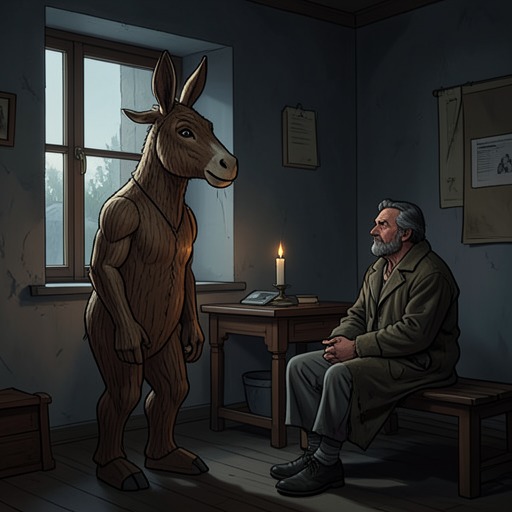
The Weasels approach the doghouse around midnight, speaking in whispers. One addresses Pinocchio as Melampo, the dead watchdog, assuming that the animal in the doghouse is the same accomplice as before. When Pinocchio corrects her, she asks whether he has taken the watchdog’s place and learns that he is being punished.
She then offers to continue the terms the Weasels had made with Melampo. Their plan is precise: they will visit the henhouse as before and take eight chickens, keeping seven for themselves and leaving one for the watchdog. In return, the guard must pretend to sleep and refrain from barking to alert the Farmer. The promised chicken is presented as a reward for cooperation, but it is also a bribe designed to turn the guard into a partner in the theft.
The offer exposes the former watchdog’s role in the raids. Melampo had not simply failed to notice the Weasels: according to their account, he had agreed to let them steal and had received a chicken for doing so. The bargain makes the theft a coordinated operation, dependent on the animal charged with protecting the coop. The Weasels treat the arrangement as familiar and dependable, expecting that a replacement guard can be drawn into it in the same way.
The Attempted Theft and Capture
Pinocchio does not accept the proposed bargain. Once the Weasels have finished discussing it, they go to the nearby chicken coop and use their teeth and claws to open its little door. They slip inside, but Pinocchio shuts the door behind them and drags a heavy stone in front of it, blocking their exit.
He then barks loudly enough to wake the Farmer and report that thieves are in the coop. The Farmer runs to the yard, opens the door, and pulls the Weasels out one by one. He ties them in a bag and announces that he will take them to the inn in the morning, where they will make a meal for hungry diners. That is the Farmer’s stated intention; the account does not describe what ultimately happens to the captured animals.
Pinocchio’s intervention reverses the terms of the Weasels’ offer. They had proposed that he help them take chickens in exchange for one of the stolen birds; instead, he secures the coop, raises the alarm, and enables their capture. The very conduct they hoped to buy—silence—becomes the point at which their plan fails.
Consequences and Narrative Significance
The Farmer rewards Pinocchio for exposing the thieves by declaring him free immediately and removing the dog collar from his neck. His captivity at the farm therefore ends through a specific act of watchfulness: although he had been put on guard as punishment, he refuses the Weasels’ bribe and carries out the duty the old watchdog had betrayed.
The episode distinguishes a tempting offer from the conduct it conceals. The Weasels make complicity sound like a small, favorable exchange, dividing the stolen chickens so that the guard receives a share. Their confidence rests on an earlier agreement, but Pinocchio’s response breaks that pattern. In the plot, they are both the intended targets of the Farmer’s trap and the thieves whose capture releases Pinocchio; their failed raid turns an accidental punishment into the occasion for his freedom.