What is done cannot be undone
The Adventures of PinocchioWhat is done cannot be undone is a recurring maxim that gives Pinocchio’s mistakes a hard boundary: regret may bring recognition, but it cannot erase what has already happened. As the story repeats the thought in different voices and circumstances, it shifts from a lesson Pinocchio learns too late into a rule made visible by his transformation into a donkey.
Form and Meaning
The saying appears in two forms: Pinocchio tells himself that what is done “can’t be undone,” while the Dormouse gives the more formal version, “What is done cannot be undone.” Its force comes from the gap between hindsight and action. The maxim is clearest after a consequence has arrived; before that, Pinocchio repeatedly treats warnings as obstacles he can ignore.
The phrase is not simply a command to give up. In its earliest explicit use, Pinocchio’s self-reproach leads him to accept his immediate predicament with patience. Later, the Dormouse uses it to explain that tears cannot prevent an impending transformation. Across both scenes, the maxim marks the limit of wishing: remorse can acknowledge the past, but it cannot reverse it.
Regret After Disobedience
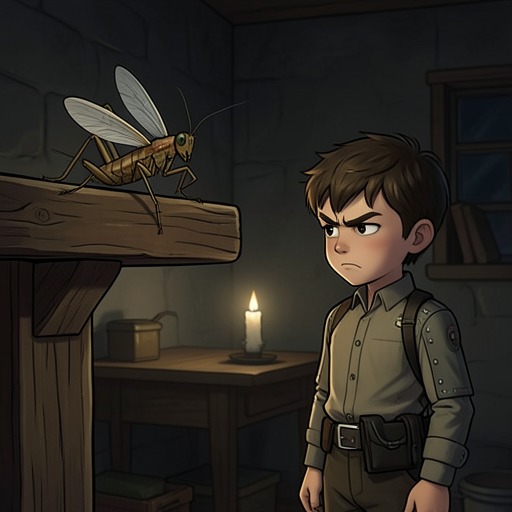
Before encountering the Assassins, Pinocchio mocks the warnings he has received, including advice from the Talking Cricket. He dismisses the Assassins as a story invented by parents to frighten children who sneak out at night, and imagines that he could either scare them off or run away. His confidence makes the danger he is about to face an ironic consequence of refusing advice, even though he has not yet learned to call the past irreversible.
That recognition comes when he is left guarding a farm as a watchdog. Cold, hunger, fright, and the collar at his neck reduce his bravado to a confession: he says he has been truant and disobedient, and imagines how differently things might have gone had he studied, worked, and stayed with his father. His reflection ends with the maxim and a decision to be patient. The saying here is spoken inwardly, as a hard-won acknowledgment that wishing for another start cannot restore the choices already made.
After a schoolmate, Eugene, is struck and lies pale and motionless, Pinocchio again looks backward. He tends to Eugene with a wet handkerchief and cries that he should have gone to school rather than listened to the boys he calls a bad influence. The phrase itself is not repeated in this scene, but the same pattern returns: a warning ignored, a consequence unfolding, and regret arriving only after the damage. His distress is sharpened by fear of facing his mother and by the thought that he has never had peace since he was born.
The Maxim Made Bodily
Later, the Dormouse tells Pinocchio that he will soon become a real donkey. Pinocchio grasps his long ears and pulls at them as if they belonged to someone else, but the Dormouse explains that boys who hate books, schools, and teachers and spend their days at play sooner or later turn into donkeys. The maxim gives this warning its finality: tears cannot change the consequence once it is at hand.
The transformation makes the expression grotesquely literal. Pinocchio and Lamp-Wick fall onto all fours; their arms become legs, their faces lengthen into snouts, and gray hair covers their backs. When their tails appear, they try to moan and cry, but what is done cannot be undone: their voices emerge as donkey brays. The shift from human speech to animal noise turns the maxim from advice into spectacle. The characters cannot even voice their grief as they intend.
Irreversibility and the Possibility of Change
The saying concerns the past, not every action that follows it. Pinocchio cannot undo his disobedience, the danger it brings, or the transformation; nevertheless, the story continues to give him opportunities to act differently. After escaping the Shark with the Tunny’s help, he follows a distant light and finds Geppetto alive at a little dinner table, eating live fish. Pinocchio embraces his father and says he will never leave him again. The reunion does not cancel the separations that preceded it, but it shows a distinction the maxim leaves open: the past cannot be undone, while a changed course in the future remains possible.