Melchizedek
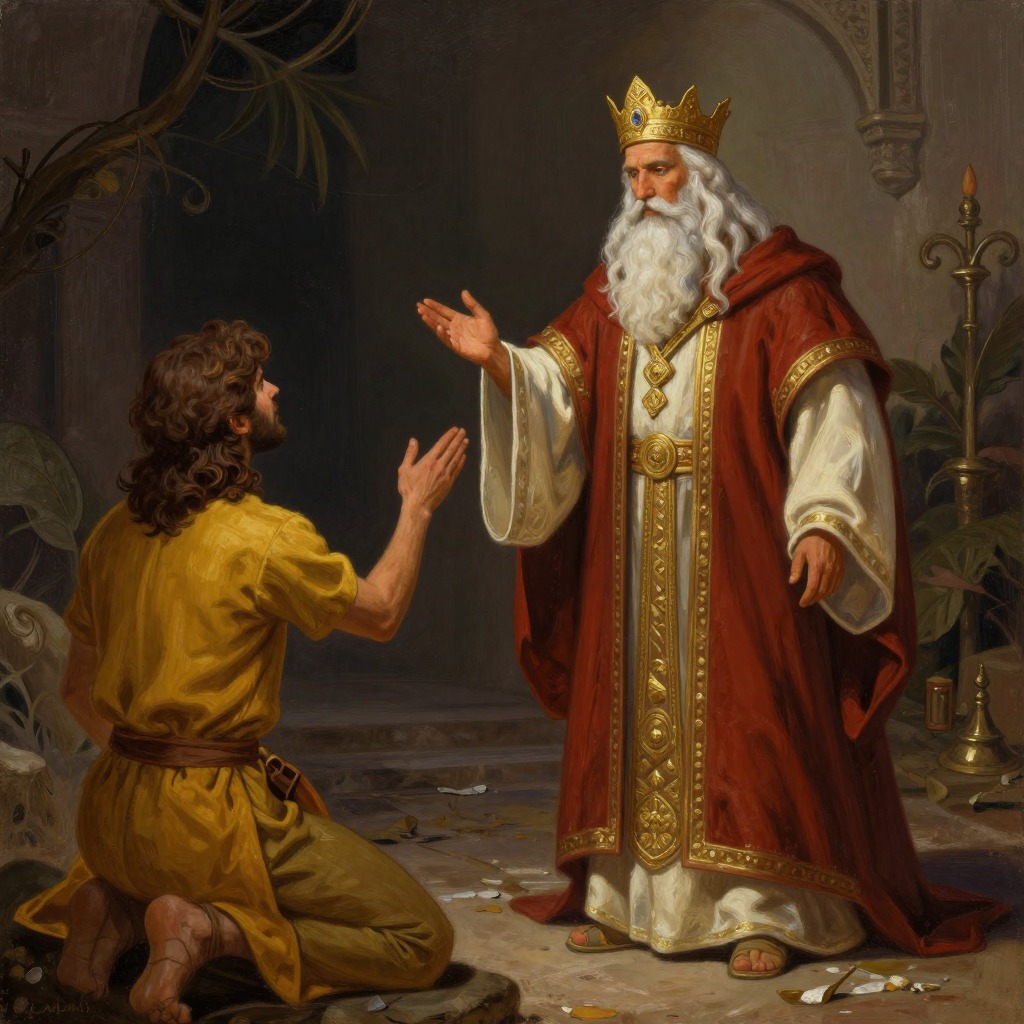
The AlchemistMelchizedek, the King of Salem, is the enigmatic mentor who sets Santiago on the path to his treasure. Appearing first as a tired old man who strikes up a conversation in the plaza of Tarifa, he reveals himself to be a king, and his intervention is the decisive catalyst that transforms Santiago from a shepherd content with his routine into a seeker of his Personal Legend. He embodies the principle that when someone truly desires something, the entire universe conspires to help them achieve it, and his brief but profound encounter with the boy establishes the philosophical and spiritual framework for the entire journey that follows.
Identity and Appearance
Melchizedek first approaches Santiago as an old man who asks for a sip of the boy's wine and comments on the book Santiago is reading. He is dressed in strange clothing that makes him look like an Arab, which is not unusual in Tarifa, a city only a few hours from Africa. He claims to be from Salem, a place he describes only as being "like it always has been." When Santiago presses him, the old man laughs and declares, "Well, I'm the king of Salem!" His true nature is revealed when he leans over to write in the sand with a stick, and something bright reflects from his chest with such intensity that the boy is momentarily blinded. Later, he opens his cape to reveal a breastplate of heavy gold, covered with precious stones, confirming his royal identity. He gives Santiago two stones from this breastplate, Urim and Thummim, which signify "yes" and "no" and are meant to help the boy read omens when he cannot do so on his own.
Role as Mentor and the Personal Legend
Melchizedek's primary function is to awaken Santiago to the concept of the Personal Legend, which he defines as "what you have always wanted to accomplish." He explains that everyone knows their destiny when they are young, but a mysterious force convinces them it is impossible to realize. This force, he says, is actually a positive one that prepares the spirit and the will, because "when you really want something, it's because that desire originated in the soul of the universe." His most famous teaching, which he delivers to the boy in the plaza, is that "when you want something, all the universe conspires in helping you to achieve it." He also introduces the principle of favorability, or beginner's luck, explaining that a force wants a person to realize their destiny and whets their appetite with a taste of success. To illustrate his point, he tells the story of a miner who was about to give up his search for emeralds right before finding the most beautiful emerald in the world, a story that underscores the necessity of persistence.
The Transaction and the Test
Melchizedek does not offer his wisdom for free. He demands one-tenth of Santiago's flock of sheep in exchange for telling him how to find the hidden treasure. When Santiago protests, the old man insists, saying, "If you start out by promising what you don't even have yet, you'll lose your desire to work toward getting it." The next day, Santiago brings six sheep, and Melchizedek inspects them, noting that one is lame. The boy explains that this sheep is the most intelligent and produces the most wool. The king then tells Santiago that the treasure is in Egypt, near the Pyramids, and instructs him to follow the omens, as God has prepared a path for everyone. Before leaving, he tells the boy a story about a shopkeeper's son who learns the secret of happiness: to see all the marvels of the world without ever forgetting the drops of oil on the spoon. This story serves as a final lesson, reminding Santiago that a shepherd may like to travel but should never forget about his sheep—or, by extension, his core purpose.
Departure and Legacy
After giving Santiago the stones and his blessing, Melchizedek takes the sheep and walks away. He is last seen sitting on the wall of an old fort in Tarifa, watching a small ship leave the port. He reflects that he will never see the boy again, just as he never saw Abraham again after charging him his one-tenth fee. He hopes desperately that the boy will be successful, and he feels a touch of vanity, acknowledging to the heavens that an old king sometimes has to take some pride in himself. His influence, however, persists throughout the novel. Santiago carries Urim and Thummim as a reminder of the king, and the king's words echo in his mind at crucial moments, especially the phrase about the universe conspiring to help. At the very end, when Santiago is digging at the base of the sycamore tree in the abandoned church, he shouts to the sky, accusing the "old sorcerer" of knowing the whole story. A voice on the wind replies, "If I had told you, you wouldn't have seen the Pyramids. They're beautiful, aren't they?" This final exchange confirms that Melchizedek's role was not merely to give directions but to ensure that Santiago lived his destiny fully, experiencing the journey itself as the true treasure.