The Soul of the World
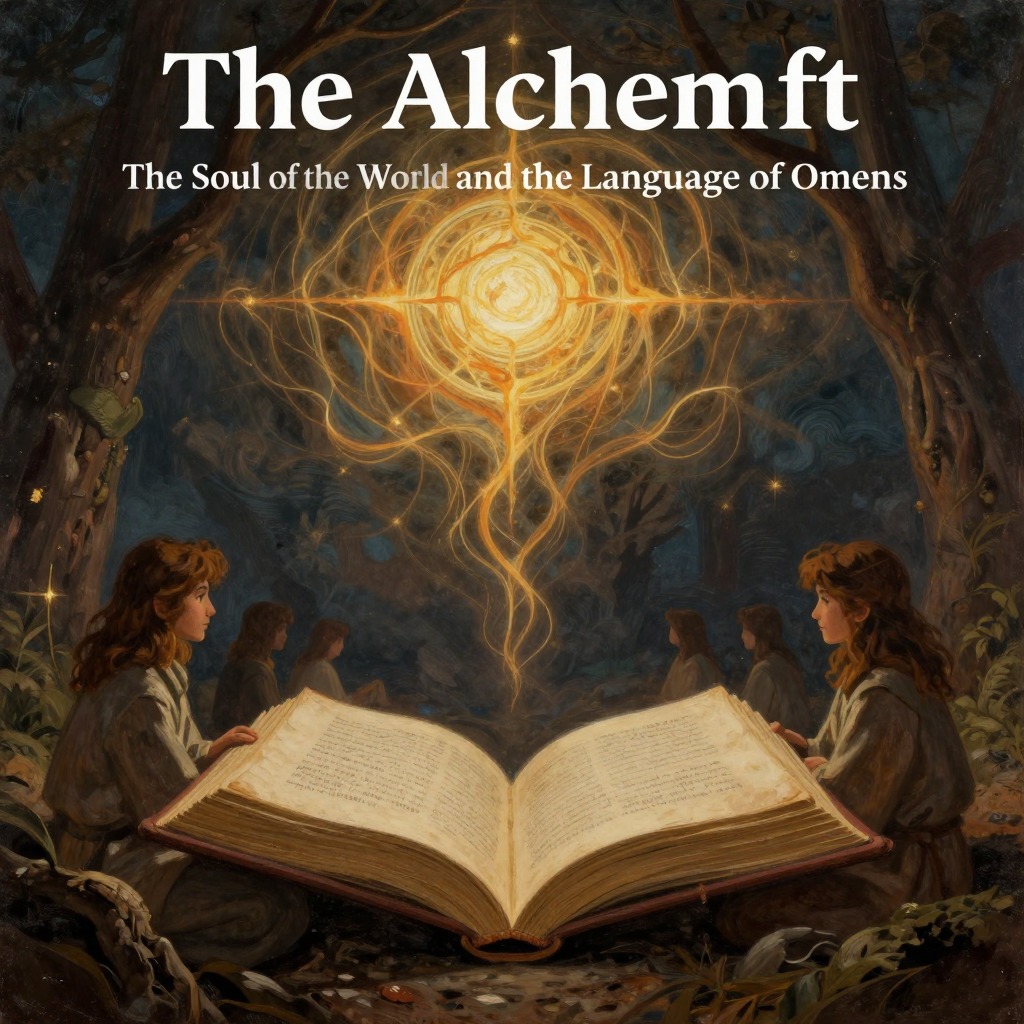
The AlchemistThe Soul of the World is the foundational metaphysical principle in Paulo Coelho's The Alchemist, a living, unifying essence that permeates all creation and serves as the medium through which the universe communicates, guides, and transforms itself. It is the force that makes possible the Language of the World, the network of omens that Santiago learns to read, and it is the source of the truth that when a person truly desires something, that desire originates within the Soul of the World itself, causing the entire universe to conspire in helping that person achieve it.
Origin and Definition
The concept is first articulated by Melchizedek, the King of Salem, who tells Santiago that the Soul of the World is nourished by people's happiness, unhappiness, envy, and jealousy. He explains that to realize one's destiny is a person's only real obligation, because all things are one. The Englishman later elaborates, describing the Soul of the World as the principle that governs all things in alchemy. He tells Santiago that when someone wants something with all their heart, they are closest to the Soul of the World, which is always a positive force. The Englishman further explains that this is not merely a human gift—everything on the face of the earth, whether mineral, vegetable, animal, or even a simple thought, has a soul and is part of this universal essence. The alchemist deepens this understanding by stating that the Soul of the World is the goal of alchemy itself: it is about penetrating to the Soul of the World and discovering the treasure that has been reserved for each person.
Communication and the Language of the World
The Soul of the World is the source of the universal language that Santiago gradually learns to understand. When he first arrives at the Al-Fayoum oasis and meets Fatima, time seems to stand still and the Soul of the World surges within him, teaching him the most important part of the language that all the world speaks—love. This language requires no explanation, just as the universe needs none as it travels through endless time. The camel driver explains that any given thing on the face of the earth can reveal the history of all things; one can open a book to any page, look at a person's hand, turn a card, or watch the flight of birds, and find a connection with one's experience of the moment. It is not that these things themselves reveal anything, but that people, looking at what is occurring around them, can find a means of penetration to the Soul of the World. The alchemist reinforces this by saying that the Emerald Tablet is a direct passage to the Soul of the World, and that one need only contemplate a simple grain of sand to see in it all the marvels of creation.
The Heart's Connection
A central teaching is that the heart knows all things because it came from the Soul of the World and will one day return there. The alchemist instructs Santiago to listen to his heart, for wherever his heart is, there he will find his treasure. Santiago's heart tells him that all people who are happy have God within them, and that happiness can be found in a grain of sand from the desert, because a grain of sand is a moment of creation that the universe has taken millions of years to create. The heart also reveals that everyone on earth has a treasure that awaits them, but people's hearts seldom speak of those treasures because people no longer want to go in search of them. The alchemist warns that when men are at war with one another, the Soul of the World can hear the screams of battle, and no one fails to suffer the consequences of everything under the sun.
Love as the Transformative Force
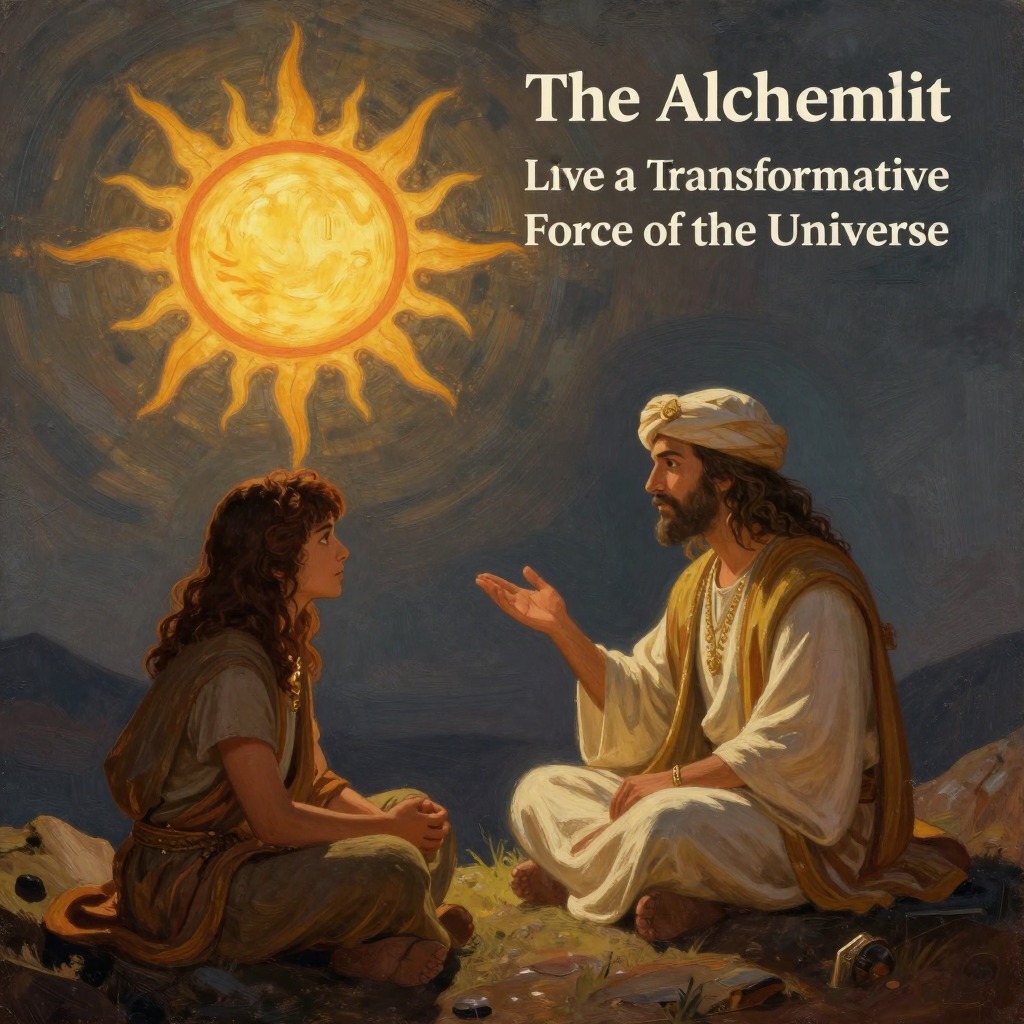
The Soul of the World is not static but is continuously transformed and improved by love. The sun tells Santiago that it can see the Soul of the World from where it stands, and that they communicate with each other, causing plants to grow and sheep to seek out shade. But the sun also reveals the Soul of the World's greatest problem: only minerals and vegetables understand that all things are one, and that everything would be a symphony of peace if creation had stopped on the fifth day. Santiago counters that the sixth day—the creation of humanity—was necessary because love is the force that transforms and improves the Soul of the World. When he first reached through to it, he thought it was perfect, but later he saw that it had its own passions and wars. It is human beings who nourish the Soul of the World, and the world they live in will be either better or worse depending on whether they become better or worse. This is where the power of love comes in: when people love, they always strive to become better than they are.
Ultimate Unity with the Divine
In the climactic scene of transformation, Santiago reaches through to the Soul of the World and sees that it is a part of the Soul of God, and that the Soul of God is his own soul. He understands that the desert, the wind, and the sun were also trying to understand the signs written by the hand, and were seeking to follow their paths. He sees that omens are scattered throughout the earth and in space, with no reason or significance attached to their appearance, and that not the deserts, nor the winds, nor the sun, nor people know why they were created. But the hand had a reason for all of this, and only the hand could perform miracles—or transform a man into the wind. The alchemist later tells Santiago that everything is written in the Soul of the World, and there it will stay forever. This final revelation completes the arc: the Soul of the World is not a distant abstraction but the very fabric of existence, accessible through the heart, expressed through love, and ultimately identical with the divine.