
The Rules and Their Limits
The Amazing Maurice and His Educated RodentsThe Clan’s written principles guide its response to danger, but their meaning changes as the Rats confront fear, violence, and civic responsibility.
increasing Bearing strength in each event
 decreasing
Bearing strength in each eventdecreasingThe First Thought
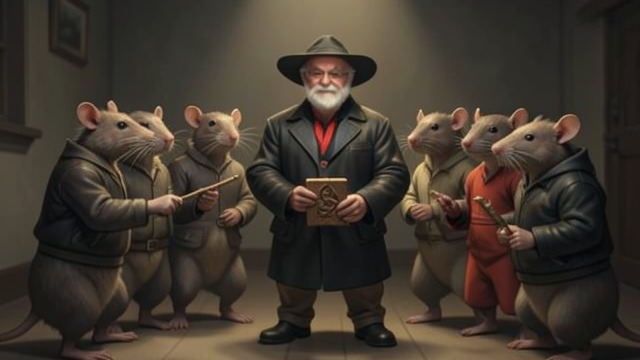
A Principle Recorded
Strength in the Clan
Peaches translates Dangerous Beans’s idea that the group is stronger together into a form the Rats can remember.
Beyond a slogan
The principle begins as a survival lesson but gradually becomes a claim about shared responsibility.
Cooperation or Death
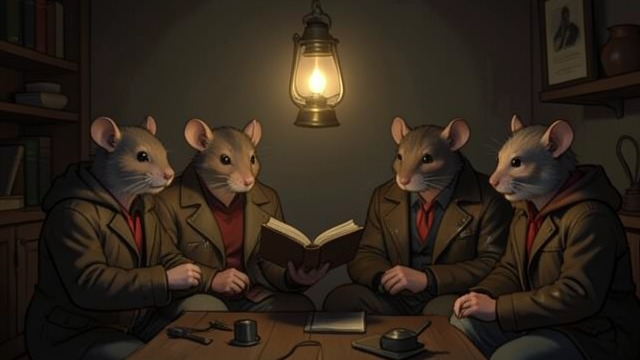
Knowledge Shared
The argument with Hamnpork
Dangerous Beans says the Rats must cooperate or die, opposing Hamnpork’s reluctance to share experience with younger Rats.
A social change
The principle turns knowledge from private property into something the Clan can use collectively.
No Rat to Kill Another
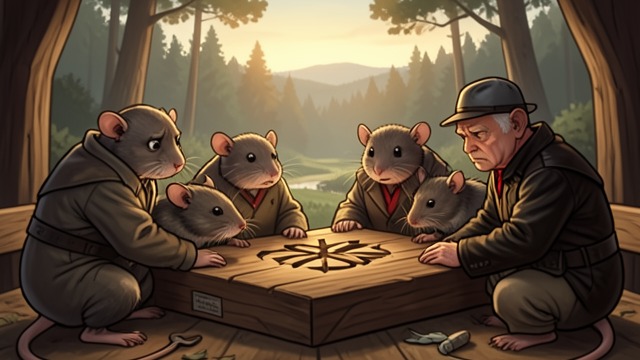
A Difficult Rule
Peaches writes it down
Dangerous Beans asks for a rule against Rats killing one another, and Peaches records it among the Clan’s thoughts.
Practical objections
The ideal is challenged by hunger, old predatory habits, and the Changelings’ treatment of local Rats.
A Rule Meets Fear
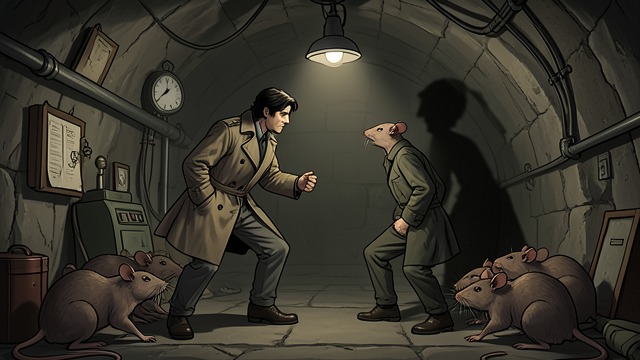
Choosing Discipline
The Clan under threat
The Changelings fight Spider’s controlled Rats, a moment when survival seems to demand violence.
Meaning through limits
Darktan organizes the attack while distinguishing an immediate threat from vulnerable captives who need protection.
Rules Become Law

Shared Obligations
Beyond private memory
The Clan’s ideas become part of negotiations about law, policing, property, and harm.
An imperfect translation
A civic contract cannot make every human or Rat ethical, but it gives the rules consequences outside the tunnels.
After the Rats begin writing down ideas
During the debate over the Clan’s future
During the first stay in Bad Blintz
During the assault on Spider’s Rats
At the council’s final negotiations
