
The Rat’s Right to Be More
The Amazing Maurice and His Educated RodentsDangerous Beans’s question about what lies on top of being a Rat becomes a rejection of both human contempt and Spider’s violent definition of Rat identity.
increasing Bearing strength in each event
 decreasing
Bearing strength in each eventdecreasingHamnpork’s Definition
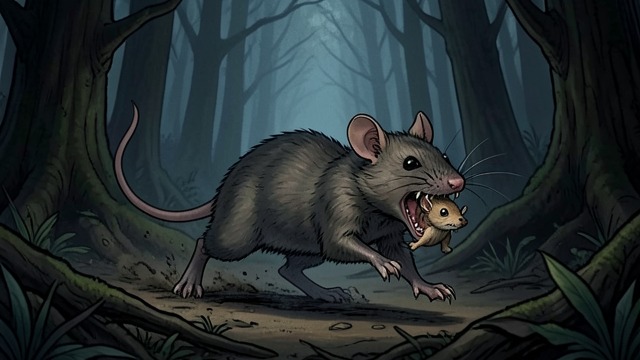
A Rat Described by Survival
The old account
Hamnpork defines a Rat through teeth, claws, running, hiding, eating, and reproduction.
A question opens
Dangerous Beans asks who made Rats and what else they might be, challenging a definition that leaves no room for thought.
The Clan’s Name
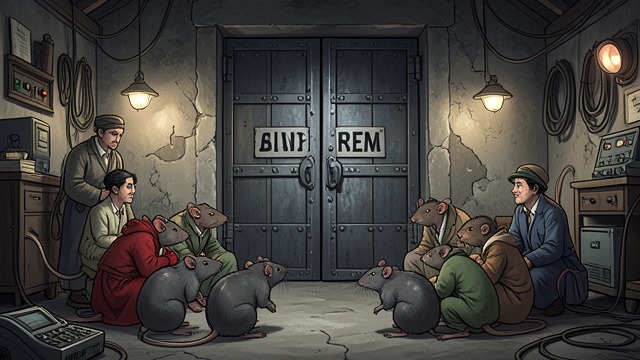
A Difference Claimed
An identity statement
The Clan calls itself changed and not like other Rats, seeking a name for its new capacities.
The risk of separation
The claim can inspire responsibility, but it can also tempt the Changelings to see ordinary Rats as lesser beings.
A Rat Who Cannot Speak
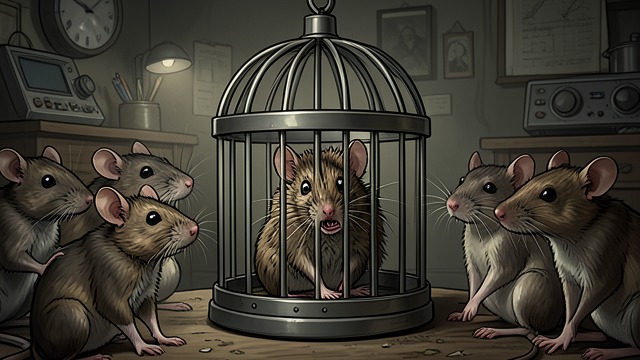
Identity Tested by Care
A vulnerable stranger
The captured local Rat cannot explain her experience in language, but communicates fear through scent and behavior.
More than speech
The Clan’s decision to shelter her suggests that personhood cannot depend only on the ability to talk.
Spider’s Claim to Ratdom
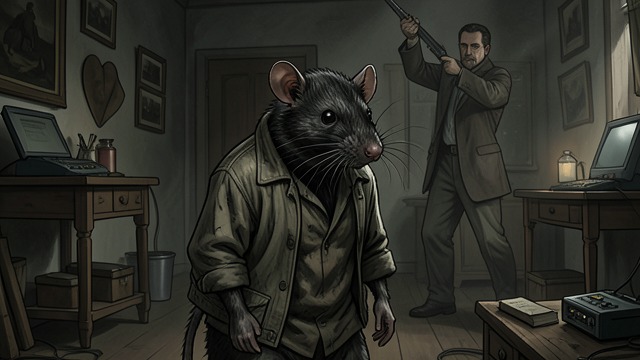
The Worst as the Whole
A voice of revenge
Spider claims to embody darkness, filth, and everything the Rats deny about themselves.
Dangerous Beans refuses
He rejects the idea that cruelty and violence are the truest form of Rat identity, even when Spider can make him feel pain.
A New Answer
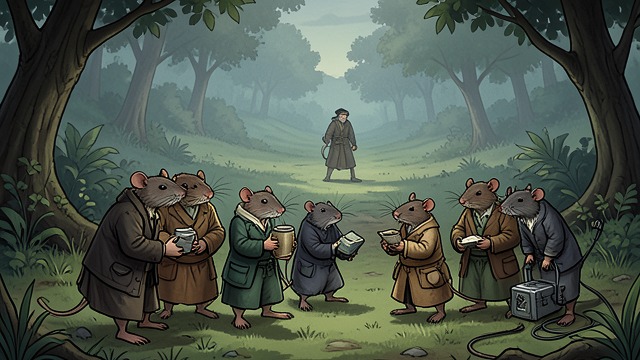
More Than Instinct
Thought becomes practice
The Clan’s actions to protect captives and negotiate with humans give their ideals a material form.
An open question
The Rats remain vulnerable and imperfect, but they can choose what they build on top of being Rats.
During an early argument about identity
As Peaches records the Clan’s early thoughts
After the local survivor is found
During the confrontation in the cellar
After Spider’s defeat
