“I am a rat, but I am not vermin”
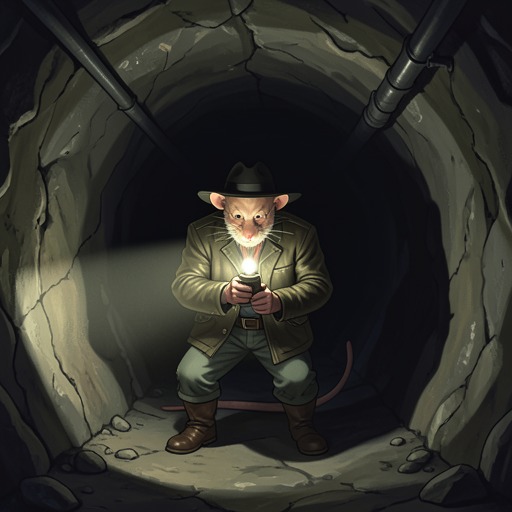
The Amazing Maurice and His Educated RodentsThe expression I am a rat, but I am not vermin is Dangerous Beans’s answer to Spider’s attempt to enter and dominate his mind. It holds together two claims that the story refuses to treat as contradictory: Dangerous Beans remains a rat, yet his species does not define the limits of his personhood. The words turn a struggle over mental control into a declaration of identity, and gather earlier questions about fear, thought, and collective life into a compact refusal.
Identity Against the Label
Dangerous Beans’s declaration is not a denial of being a rat. The distinction matters: he first names the identity he shares with the Clan, then rejects the demeaning category attached to it. In his account, rats once lived in the forest; when humans built barns and pantries full of food, rats took what they could, and humans called them vermin. The name is therefore presented not as an essential truth about rats, but as a judgment formed in a history of human settlement, food, and conflict. Dangerous Beans does not pretend that history away. He challenges the conclusion drawn from it: being a rat does not make a speaking, thinking individual mere vermin.
His argument also refuses to cast Spider as the remedy for that degradation. Dangerous Beans identifies Spider as another harmful thing humans made, one that offers rats nothing but more pain. Spider can enter minds when their occupants are tired, foolish, or upset; at this moment, it is inside Dangerous Beans’s mind. The expression thus answers two forms of reduction at once: the human label that treats rats as pests and Spider’s power to intrude upon another being’s inner life. Dangerous Beans claims a self that neither label nor intrusion can wholly determine.
Earlier Claims of Separation
The declaration develops an idea Dangerous Beans had voiced around a flame. Although he was not completely blind and could distinguish light from dark, Hamnpork distrusted the fire, objecting both to change and to using food as fuel. Dangerous Beans answered that the Clan had to learn to control fire: by making a flame, they could tell the darkness that they were separate, were not just rats, and were the Clan. That earlier statement makes the later expression part of a continuing argument. Identity is not secured by escaping the dark or by becoming something other than a rat; it is asserted through what the Clan can learn, say, and do together.
The fire also anticipates the later struggle over darkness in a more inward sense. Spider taunts Dangerous Beans with the possibility of controlling darkness, recalling what he had told a little rat. Dangerous Beans counters that he can control the darkness inside: though his body shakes and he can feel Spider moving in his head, he can keep a place free from it. The scene joins the physical fear of darkness to the threat of mental occupation, without making courage depend on fearlessness. His body trembles, but he stands his ground. In this context, the expression names a boundary he actively maintains rather than an abstract claim of superiority.
Fear, Speech, and the Mob
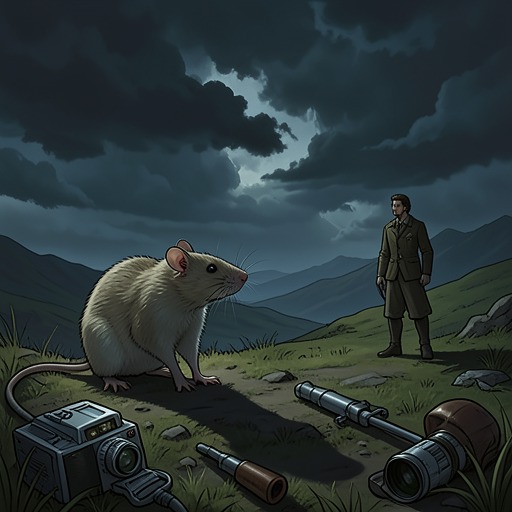
The distinction between a speaking individual and a frightened mass has already appeared in the rats’ response to danger. When rats run past Peaches and Dangerous Beans in terror, one squeals, gibbers, and runs on. Dangerous Beans recognizes the change as more than ordinary flight: they have forgotten how to talk. Peaches takes up her notes as she tries to understand what could have frightened them. The episode shows how fear can undo the very capacity for articulate identity that Dangerous Beans later defends.
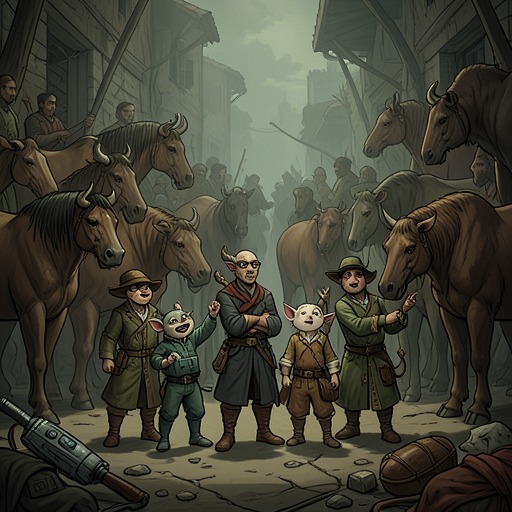
Maurice explains a related difference to Darktan while describing rat-coursing. In the contest, men put rats into a ring with terriers; the rats generally ran around rather than fighting the dogs. Asked why, Maurice answers that there are many rats, all overwhelmed by one another’s fear and panic. One rat may think and act bravely, he explains, but a group can become a mob, “a big animal with lots of legs and no brain.” This account is a sharp contrast to Dangerous Beans’s declaration, but not a simple claim that rats are naturally incapable of collective intelligence. It identifies panic as a force that can replace thought with undirected group behavior. The expression insists that rat identity need not end there.
From Declaration to Collective Action
Later, when Darktan sees his squad’s worried faces, he recognizes the pressure on a leader to sound certain. He begins again by naming something new, tough, and strong, and identifies it as the rats themselves: rats with brains, able to think and not simply turn and run. His speech invokes the Dark Wood and the Bone Rat, addressing the danger through the stories and beliefs available to his listeners. This moment echoes Dangerous Beans’s refusal: identity becomes consequential when it helps others face fear and act rather than surrender to it.
The Clan’s advance against Spider’s controlled rats gives that distinction a visible form. The incoming rats stay together and move forward in a line. When an enemy attacks, the line closes around it and then opens again; when the enemy rats flee, the formation breaks into pairs that pursue them. The fight is brief, but its organization contrasts directly with the panic that makes rats forget speech and the mob that Maurice describes. Dangerous Beans’s words are spoken in a personal mental confrontation, yet their meaning belongs to a wider question in the story: whether rats will be treated, and will behave, as an undifferentiated mass, or recognize themselves as thinking members of a community. The expression’s decisive force lies in its refusal to accept that the name rat must also mean vermin.