Bad Blintz's Rat–Human Coexistence Order
The Amazing Maurice and His Educated RodentsBad Blintz's Rat–Human Coexistence Order is the negotiated arrangement that replaces an inherited cycle of trapping, poisoning, and retaliation with rules the town and The Clan can live under. Its decisive move is to treat rats as thinking parties rather than a problem to be exterminated, while asking both sides to accept limits and responsibilities. The result is deliberately less like a storybook handshake than a difficult civic contract: imperfect, argued over, and worth attempting because the alternatives keep the conflict alive.
From domination to negotiation
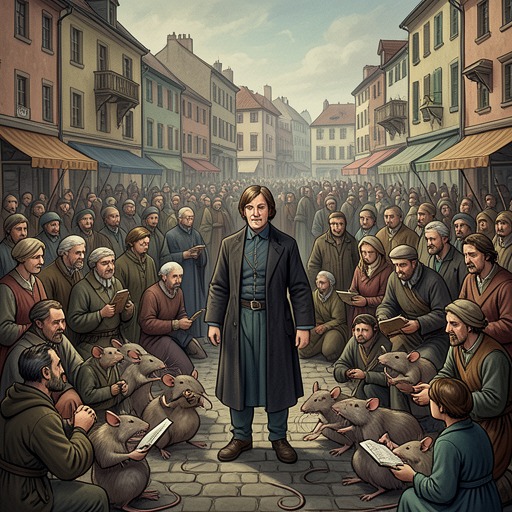
For generations, the human-rat conflict has been conducted through force. The proposed agreement emerges against a background in which rats have been captured alive for rat-coursing, a practice Darktan had never heard of, and in which people can still respond to rats with traps and poison. Keith warns the mayor that driving the rats away will not solve the problem: they will not go far, and they will return. They live beneath the town's floorboards and know how to use fire and poison. The warning makes clear that the old arrangement leaves both sides exposed to escalation.
The scale of the rats' capacities also complicates the mayor's idea of what counts as vermin. Dangerous Beans had earlier described the candle flame as a declaration that the rats were separate, not merely rats, but The Clan. Later, the mayor tells Darktan that Malicia has described the rats as advanced and asks why they did not poison the wells or burn the houses. The question recognizes their ability to retaliate; Darktan's answer shifts the discussion from what either side could do to what either side would have to live with afterward.
The proposed terms and the people who shape them
Keith brings the mayor a choice between renewed disorder and conversation. The town can call out dogs and send people after the rats with brooms, he explains, but they will come back. Instead, the mayor should gather the Town Council of Bad Blintz and talk with them. Darktan, whom the mayor has just learned can speak and think, frames the offer as an opportunity rather than a threat. His proposal is deliberately reciprocal: the mayor can pretend rats can think, and Darktan will pretend humans can think too. The sardonic phrasing does not erase the seriousness of the proposal; it offers a way to begin speaking across mutual distrust without requiring either side to claim complete trust first.
Maurice gives the negotiations a practical structure. He imagines a town where people can ask rats to leave food alone and the rats agree, then proposes wages for vermin control. That change in terms matters: instead of treating the rats only as a nuisance to be removed, the proposal makes their work part of an arrangement for which they are paid. Maurice also presents the arrangement as cheaper than hiring pipers or rat-catchers. He does not describe an already completed list of obligations; rather, he gives the mayor a way to imagine an exchange of services and restraint that benefits both parties.
The path to an agreement is not a smooth conversion to goodwill. Dangerous Beans rejects Spider's invitation to rule the rat world together, recognizing that the supposed cooperation would leave Spider in command and bring mass death. That refusal offers a pointed contrast to the order later proposed at Bad Blintz: cooperation cannot simply be a name for domination. At the public contest, the piper accepts Keith's challenge because winning will give people something to talk about. After Keith wins the pipe, he offers to lead the rats out with the piper, shares the payment rather than denying the piper his due, and insists that everyone can win. The episode models the kind of bargain the town's larger settlement needs: a changed outcome without pretending that the other party's interests do not matter.
A contract, not a storybook ending
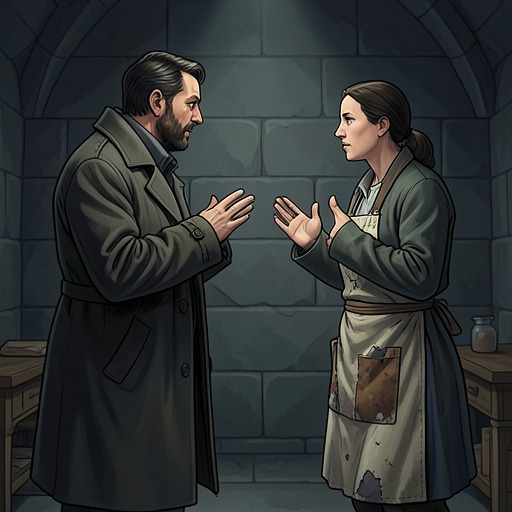
The distinction between an appealing story and a workable settlement is made explicit. Dangerous Beans suggests that a story might serve as a map toward a better future; the narrative then insists that real life requires a contract. The Town Council of Bad Blintz and most of the senior rats form a committee, with Maurice joining the discussion. The negotiations continue for hours, and Darktan sits at the table tired and aching. The detail resists a neat, effortless ending: coexistence requires sustained discussion and decisions about practical matters, not just a declaration of shared goodwill.
The mayor asks why the rats did not poison the wells or set fire to houses, since they owed the humans nothing. Darktan answers in terms of consequences. Killing people would not improve the rats' position; they would eventually have to deal with humans, and it might as well be these humans. The exchange does not claim that the two communities are friends. Darktan nearly answers that they simply do not hate the humans enough to be friends, but he turns instead to what the proposed future can prevent and make possible.
Rules, enforcement, and the projected future
The order's concrete stakes are expressed as things that will end: no more rat pits, traps, or poisons. In return, the rats will live under new Rules. Darktan anticipates having to explain to The Clan what a policeman is and why rat watchmen may chase rats who break those Rules. That prospect will be unpopular, including among rats who have suffered under the old violence, but it shows that the settlement binds the rats as well as the humans. It is not freedom from every constraint; it is a different system of constraint, intended to make coexistence possible. Darktan accepts that the arrangement will not be easy and treats the fact that both sides are arguing as evidence that it might work: the humans will stop poisoning the rats' cheese, and the rats will stop contaminating human jam.
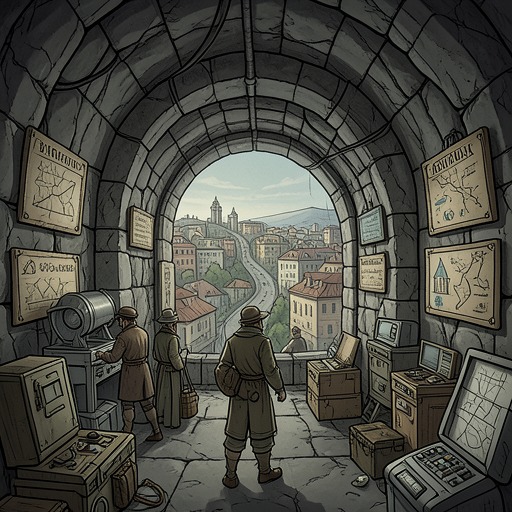
The closing vision extends the experiment into a possible future. A town in Uberwald is shown with rats emerging to strike the bells every quarter hour, visitors buying souvenirs and going to the Rat Museum, and a young Rat Piper playing while the rats dance. The town's system includes a Rat Tax, a rat community beneath the human one, access to the library, and occasional attendance at the school. The narrator does not present this as perfection: some visitors return to their own towns and resume setting traps and putting down poison, while a few see the world differently. The model's importance lies in its limited but durable claim. It is not perfect, but it works, and the story insists that a lasting future depends on choosing a settlement people can keep living by.