Malicia Grim
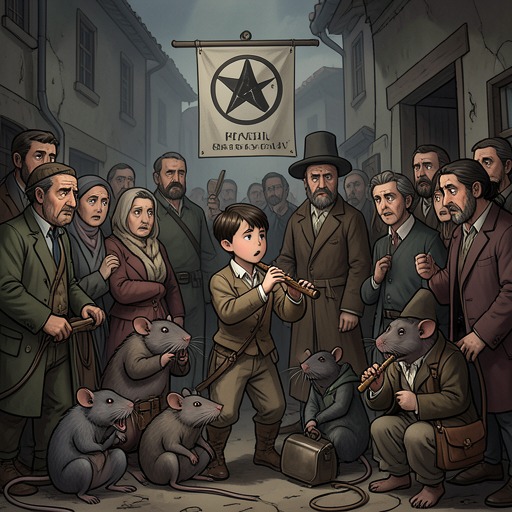
The Amazing Maurice and His Educated RodentsMalicia Grim is a self-fashioned storyteller who makes family history, literary ambition, and adventure plots part of how she understands herself. Her defining move is to treat a real threat not as a reason to retreat but as the beginning of an investigation: when Blunkett and Spears are summoned, she proposes breaking into their shed to solve the mystery of the bootlace tails.
Identity and Background
Malicia identifies herself to Maurice with a pointed request that he promise not to laugh. The reveal marks her as an unexpected presence in the encounter, and her wary question afterward makes clear that being laughed at is a real concern. She soon describes herself as a special person, with unmistakable pride, and explains why: her grandmother and great-aunt, Agoniza and Eviscera Grim, were famous storytellers.
Her family history is not simply a source of prestige. Malicia says that her mother would also have been a good storyteller, but that her father dislikes stories. She has changed her name to Grim for professional purposes, turning the name associated with her grandmother and great-aunt into a chosen public identity. The distinction between her given identity and her professional one shows how deliberately she claims a place in the family tradition.
Stories and Family Conflict
The stories associated with the Sisters Grim are not gentle tales of tiny winged people. Malicia describes them as real fairy-tales, full of blood, bones, bats, and rats, and says she has inherited the storytelling talent. Her description gives her ambition a specific lineage and aesthetic: she values stories with danger and rough edges, not prettified versions of them.
That inheritance sits against a childhood in which storytelling brought punishment. Malicia recalls being beaten when she was small for telling stories. She also explains that being locked out of her room is a punishment because it keeps her from her books. Books are therefore more than a pastime in her account: they are something she wants access to, and a means of sustaining the storytelling identity her father rejects. Her mother's unrealized talent offers a contrasting family history, while her father's dislike of stories makes Malicia's own persistence a form of defiance.
Turning Threat into an Adventure
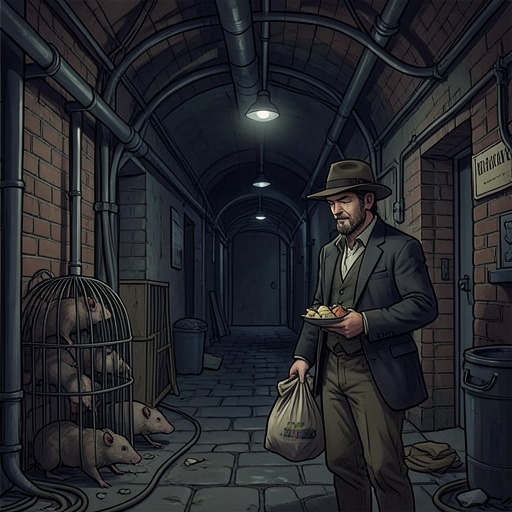
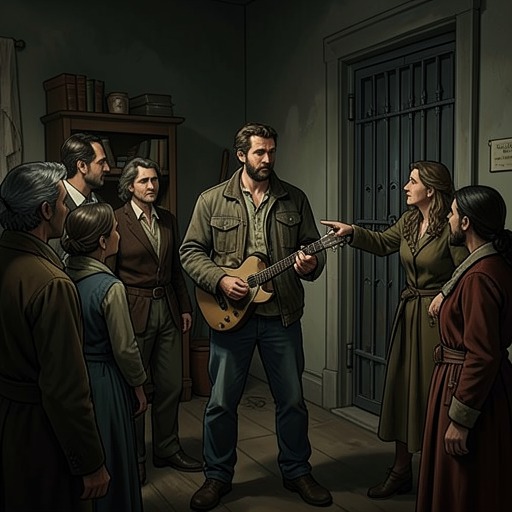
When Malicia says her father shouted and sent for Blunkett and Spears, she treats the rat-catchers' arrival as a clue to follow. She proposes breaking into their shed to solve the mystery of the bootlace tails. The plan is expressed in the language of an adventure: she even observes that the ideal party would consist of four children and a dog, then briskly accepts that the group will have to make do with what it has. The mismatch between that storybook template and the people actually present gives her imaginative framing a comic edge without diminishing her resolve.
Maurice tries to evade her prompt by pretending not to know what the rat-catchers' arrival means; Malicia instead converts it into an objective. Keith's qualification that they steal only from governments that are not people's fathers shows that her plan also draws the others into negotiating the boundary between an exciting adventure and an ordinary personal wrong. Her storytelling instinct thus affects not only how she interprets danger but how she recruits companions to act on it.
Narrative Role
Malicia's story-mindedness is both an inheritance and a practiced response to constraint. She claims the Grim name for professional purposes despite her father's dislike of stories, and she meets the prospect of the rat-catchers by imposing the structure of an adventure on it: a mystery, an illicit entry, and a makeshift party. Her childhood experience complicates any simple idea that stories are merely a game; for her, they are a talent she was punished for exercising and a vocation she continues to assert.
The contrast between the stories Malicia invokes and the circumstances she faces gives her characterization its tension. She recognizes the conventional shape of an adventure, including its expected cast, but must proceed with the companions actually available. Her imagination does not replace action: it supplies a way to name a danger, make a plan, and keep moving toward an answer.