Maurice's Bargain with Death to Save Dangerous Beans
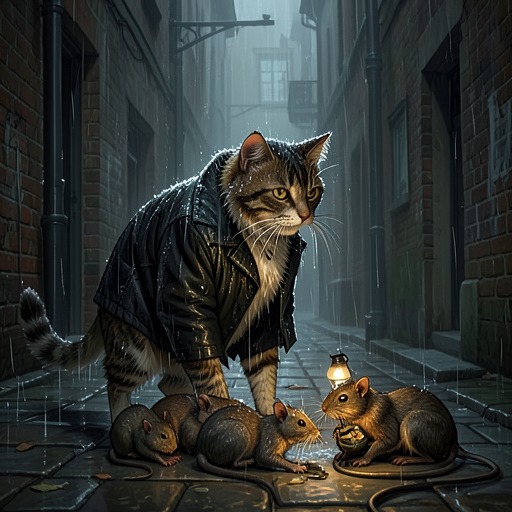
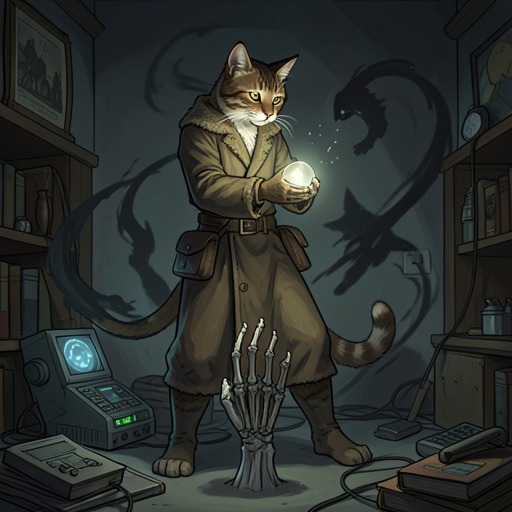
The Amazing Maurice and His Educated RodentsMaurice's Bargain with Death to Save Dangerous Beans is a turning point in which Maurice risks his remaining lives to protect Dangerous Beans. When Death arrives for the rat, Maurice attacks the Bone Rat, Death’s associate, and is forced to face the consequences of intervening. The exchange that follows is not a victory over death but a negotiation within its rules: Maurice offers a price, Death counts what is owed, and Dangerous Beans is carried away from the encounter alive.
Background and Stakes
The bargain follows Dangerous Beans’s refusal of Spider’s offer of cooperation. Spider imagines ruling alongside him, but Dangerous Beans tests the proposal by asking what a hypnotized rat thinks. Spider’s surprise at the question exposes the difference between cooperation and domination: he treats the other rats as beings without independent thoughts. Dangerous Beans concludes that the arrangement would not work. His decision places him in danger, but it also makes his survival matter beyond the fate of one individual; he has refused a future built on treating other rats as instruments.
Maurice is nearby when the danger becomes immediate. He sees the Bone Rat, dressed in a robe and carrying a small scythe, and recognizes the figure as a sign that Dangerous Beans is being claimed. The humans and rats around them pay no attention to this encounter, which takes place apart from their awareness. Maurice responds by springing at the Bone Rat and knocking its scythe away. His intervention is impulsive, but its purpose is clear: he means to stop the figure from taking Dangerous Beans.
Death Arrives
Maurice begins to challenge the Bone Rat, then realizes what he has done. Death appears, lifts Maurice by the back of the neck, and orders him to stop attacking his associate. The contrast is stark: the small figure Maurice has tackled is not Death himself, and the real encounter is with a much larger, human-sized presence. Maurice immediately stops struggling and addresses Death with exaggerated deference. His sudden politeness does not undo the attack; it marks his recognition that he has entered a situation governed by powers he cannot simply fight.
Death recalls that Maurice has not been seen lately, then calculates the cat’s lives. Maurice began with nine and, before this adventure, had five left. Death explains that Maurice can lose only one life at a time, even though he is a cat, and that taking one would leave him with four. The numerical precision gives the scene its terms: Maurice’s courage does not make his lives unlimited, and Death does not treat the proposed sacrifice as an abstract gesture. Each life has a place in an accounting.
The Bargain
Maurice tries to reshape that accounting. Rather than accept the loss Death has named, he urgently offers two of his lives and asks to settle the matter on those terms. At that point, Death and Maurice look down at the faint outline of Dangerous Beans, while other rats gather around and lift him. The image puts the two lives under discussion side by side: Dangerous Beans is present as a vulnerable figure, and Maurice knows that Death has come for him too.
Death questions whether Maurice is sure, pointing out that Dangerous Beans is a rat. Maurice answers that this is precisely where the matter becomes complicated. His choice crosses the boundary that would make a cat’s self-interest seem natural or inevitable. He admits that the decision is unlike him and hopes that no one discovers it, but he does not withdraw the offer. Death accepts the terms, saying that the sum is correct and that, since two were sought, two will be taken; the balance is preserved. The scene therefore presents Maurice’s intervention not as a refusal of death, but as a willingness to share its cost.
Consequences and Significance
Death lowers Maurice to the floor beside his body. The bargain has a physical consequence for him, not merely a verbal or symbolic one. At the same time, the rats are already lifting Dangerous Beans, and later he is present with the others as they consider whether their hopes for a human-rat future are only a story or could serve as a map. His survival allows his ideas to remain part of the events that follow, when Bad Blintz’s humans and rats move from a hopeful image of reconciliation to the difficult work of a contract and committee.
The episode also changes the measure of Maurice’s relationship to the rats. His earlier involvement with them could be understood as practical companionship, but here he accepts a personal cost to save one of them. The offer is striking because Death explicitly tests it against the difference between cat and rat, and Maurice refuses to let that difference decide who is worth saving. In a story that repeatedly distinguishes real cooperation from the language of control, the bargain makes that distinction concrete: Maurice does not merely claim that Dangerous Beans matters; he puts his own lives into the balance.