Mr Bunnsy Has An Adventure
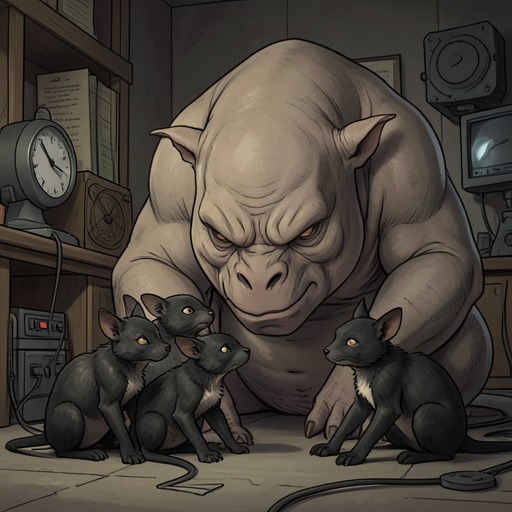
The Amazing Maurice and His Educated RodentsMr Bunnsy Has An Adventure is a human book discovered by the Changelings in a bookshop they invaded every night. Its pictures and imagined society offer the rats more than entertainment: they present a possible answer to what animal life might be, and give Dangerous Beans a source of hope and Peaches a means of comforting him. The book’s bright world remains sharply unlike the dangers the rats encounter, but its presence helps them picture an identity beyond the one imposed by fear and habit.
Discovery and Contents
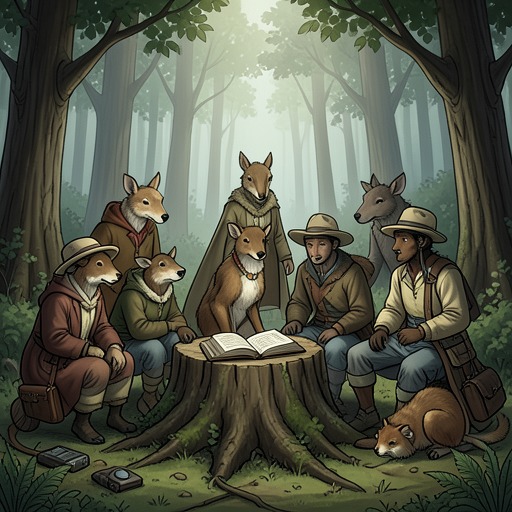
The rats’ discovery of books was difficult for many of the older members of the group to understand. Before Peaches and other young rats could read human words, however, the pictures in Mr Bunnsy Has An Adventure had already caught their attention. The illustrations showed animals dressed in human clothes: a rabbit in a blue suit, a rat wearing a hat, sword, and red waistcoat, and a snake in a collar and tie. Their details made clothing seem both alluring and strange to the watching rats.
More astonishing than the costumes was the social world depicted. The animals spoke, none ate another, and they talked with humans who treated them as smaller people. The book contained no traps or poison. Even when the rabbit became lost in the Dark Wood, the danger amounted only to a scare. For rats accustomed to a world in which animals were hunted, the story’s ordinary ease between species was as startling as its talking characters.
Peaches worked painstakingly through the words and sometimes read passages aloud. Her gradual reading made the book something the rats could revisit and discuss, not simply a sequence of pictures. Its harmless perils and cooperative animal society supplied a sustained contrast with the hazards beyond the bookshop, without making those hazards disappear.
Debate and Imaginative Possibility
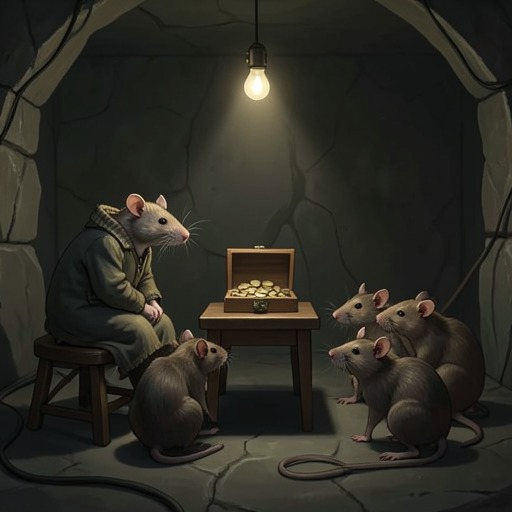
The Changelings argued over what kind of book they had found and why it existed. Dangerous Beans believed it might be a vision of a brighter future. Others wondered whether humans had made it, since the bookshop was intended for humans, yet found it difficult to believe that people would imagine a rat like Ratty Rupert while also poisoning rats beneath their floors. The book therefore unsettled the rats’ assumptions in two directions: it offered a model of animals treated as persons, while raising the uncomfortable possibility that such a model could be only a human fantasy.
That tension mattered amid the rats’ attempts to understand what they were. Dangerous Beans’s belief in a future beyond ordinary rat life resonates with the book’s picture of animals who speak and live alongside humans, though the text does not establish that the book directly causes his ideas. In another discussion, Dangerous Beans describes the flame as a way to tell the darkness that the rats are separate, not merely rats, but the Clan. The book and that declaration belong to the same larger effort to imagine a collective identity that exceeds what the rats have been taught to expect.
The illustrations also prompted practical experiments. Some young rats tried to make waistcoats by biting out patterns, but could not manage the buttons; the clothes caught on splinters, impeded running, and were difficult to wear, while hats simply fell off. The failed attempts expose the gap between an appealing human picture and the physical demands of rat life. Darktan, by contrast, adapted the idea rather than copying it: he wore a flexible network of wide belts with sewn-on pockets, which held metal rods, wire, and other equipment. The pockets functioned like extra paws for the Trap Disposal Squad. What the book supplied was not a workable uniform, but an image that could be translated into a tool suited to the rats’ own bodies and tasks.
Comfort, Memory, and Use
The book also acquired a personal role in the bond between Dangerous Beans and Peaches. Peaches was its official carrier, although carrying it often meant dragging it. Dangerous Beans liked to know where it was and seemed to think better when it was nearby; its presence comforted him, and Peaches accepted that as reason enough to haul it along. The book is thus not only an idea-bearing text but a substantial object whose weight and inconvenience become part of the care Peaches provides.
That care recurs when Dangerous Beans is in one of his dark periods. After fear has spread among the rats and he despairs that they have not become more than creatures who squeak and widdle, Peaches offers to read from the book because it usually cheers him. He nods, and she draws the large volume toward her and begins the tale of Mr Bunnsy and Ratty Rupert visiting Old Man Donkey by the river. The scene does not show the book solving the danger around them; instead, its familiar story gives Peaches a way to reach him when fear has made the future difficult to imagine.
Narrative Significance
Mr Bunnsy Has An Adventure holds together hope and doubt. Its world offers an alternative to predation and human hostility, yet the rats recognize how implausible that alternative seems from their experience. Their unsuccessful clothes-making and Darktan’s useful adaptation show two different responses to the same images: imitation reveals the limits of the book’s human-centered forms, while invention turns its inspiration into something practical. The book’s most lasting use is similarly neither literal nor magical. It gives Dangerous Beans a vision to think with, gives Peaches a familiar story to share, and helps the Changelings consider whether animals might relate to one another and to humans otherwise.