Personhood beyond species
The Amazing Maurice and His Educated RodentsPersonhood beyond species names the moral question at the heart of the story: who counts as a person, and who is treated as an animal? The answer cannot be read straight from bodies or species. Rats and humans may occupy different places in the world, but the decisive tests in these scenes are the capacities to think about conduct, to recognize another’s innocence, and to accept responsibility. The idea takes shape not as a single definition but as a series of arguments whose consequences matter to the vulnerable.
A question that unsettles categories
The story is described as being about people and Rats, with the difficult part being the decision about which is which. That framing makes classification itself unstable: “people” and “Rats” are not simply labels attached to two fixed kinds of body. The question is sharpened by the characters’ actions and judgments, which repeatedly test whether familiar ideas about what a cat or a rat is can account for what they actually do.
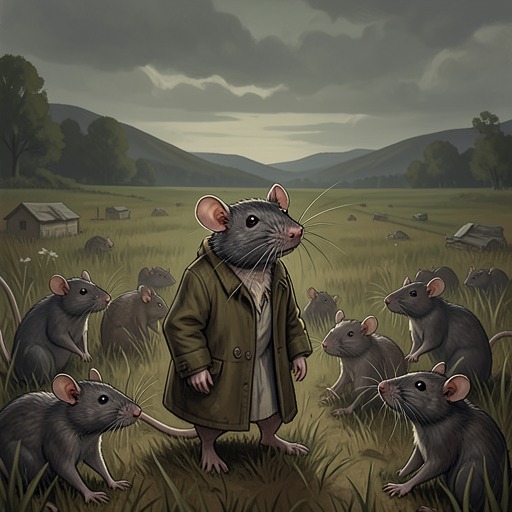
Dangerous Beans gives this uncertainty a philosophical form. Hamnpork reduces a rat’s identity to a practical inventory of teeth, claws, tail, running, hiding, and eating. Dangerous Beans does not deny that Rats possess those features; he objects to treating them as the whole of rat existence. The ability to ask what a rat is already changes the terms of the argument. For him, reflection means that Rats are more than the behaviors by which they survive, and the question opens a space between inherited definition and chosen conduct.
That claim does not resolve every uncertainty. Hamnpork argues that Rats are made to run, squeak, steal, and reproduce, while Dangerous Beans asks who made them that way. The exchange leads to a further argument about a theory of The Big Rat beneath the ground, but the evidence here presents the theory as part of a dispute, not as a settled answer. What matters for personhood is the disagreement itself: a definition once treated as obvious becomes something that can be examined and challenged.
Thought as a change in conduct
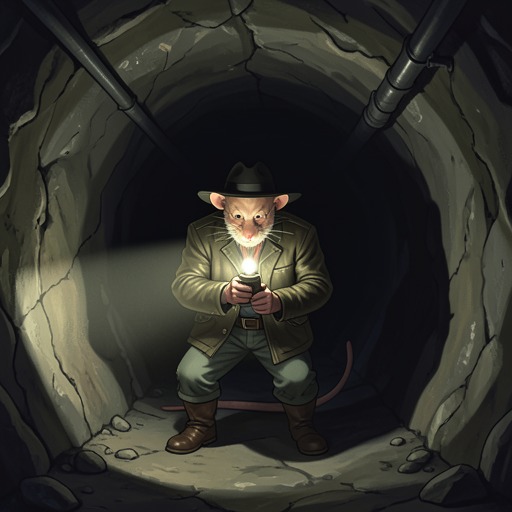
Dangerous Beans’s own life complicates any simple equation between personhood and physical strength. Peaches describes him as neither big nor fast, almost blind, weak, and sometimes forgetful of food because his thoughts carry him beyond what other Rats have considered. These traits mark real limitations, but they do not erase his intellectual force. The contrast between a vulnerable body and an unusually questioning mind makes his claim concrete: significance does not depend on fitting Hamnpork’s image of what a rat is supposed to be.
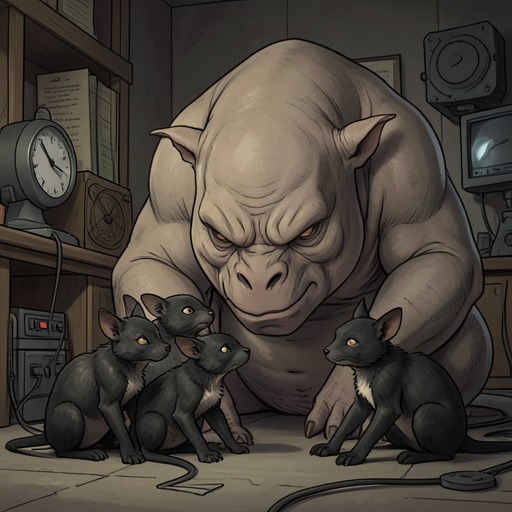
His ideas also have practical consequences. When Hamnpork objects to keeping a non-speaking rat, arguing that she cannot talk or think, Peaches answers that the Rats themselves could not think not long ago. Her comparison turns the group’s recent transformation into a reason for caution: a present inability is not proof that another life is worthless. Dangerous Beans reaches the decision that the rat should stay because she is innocent and means them no harm. Recognition here does not wait for the newcomer to demonstrate the same capacities as the group. Their own altered condition makes them responsible for how they treat a being who has not undergone the same change.
This moment makes personhood an ethical practice as well as a question of mental ability. Hamnpork’s standard threatens to exclude the rat because she cannot perform the qualities he regards as defining. Peaches and Dangerous Beans instead attend to her innocence and the danger of abandoning her. Their response draws on remembered vulnerability: the Rats were once like her. The point is not that all differences disappear, but that difference cannot by itself justify leaving a harmless creature to die.
Maurice and the limits of species identity
Maurice’s conflict gives the same problem a different direction. Dangerous Beans trusts him, with an important qualification: Maurice is not dependable about money, but he is careful not to eat people who talk. He checks each time. That repeated check turns a moral rule into an action, not merely a favorable description of Maurice’s character. Dangerous Beans believes Maurice is decent at heart because he restrains the behavior expected of a cat when faced with someone who can speak.
Hamnpork rejects that trust on species grounds. In his view, a cat remains a cat whether or not it talks. The disagreement is therefore not only about Maurice’s reliability; it is about whether identity determines conduct. Dangerous Beans answers that Maurice is different, just as the Rats are different, and Peaches leaves the judgment open rather than treating it as proved. Her caution preserves the distinction between hope and certainty: Maurice’s conduct supports trust, but his character remains to be seen.
Later, Maurice describes the strain of feeling sorry and guilty as a cat. He is disturbed by the thought of greeting food and discovering that it can talk, because such restraint seems incompatible with what a cat is supposed to do. Dangerous Beans replies that Rats, too, do not behave as Rats are supposed to behave, though he then worries that this difference may only have held until now. Their exchange connects ethical change to an unsettling loss of certainty. Maurice’s guilt does not make him less a cat; it shows that the category cannot dictate everything he feels or chooses.
Recognition and its unfinished test
Across these scenes, personhood is recognized through more than speech or species membership. Dangerous Beans’s intellectual questioning, Maurice’s restraint, and the group’s decision to protect a non-speaking rat each put conduct under examination. The standards are not identical: speech helps Maurice identify someone he must not eat, while the rat who cannot speak receives protection through Peaches’s appeal to shared vulnerability and Dangerous Beans’s judgment of her innocence. The book thus does not reduce moral worth to a single capacity.
The question remains active rather than solved once and for all. Hamnpork’s distrust, Peaches’s reserve about Maurice, and Dangerous Beans’s fear that the Rats may revert to their former behavior all show how fragile changed conduct can feel. Yet the scenes establish a demanding principle: bodily kind is not a complete account of character, and recognized personhood carries obligations. To ask who the people are and who the Rats are is ultimately to ask who will be treated as capable of thought, deserving of pity, and worthy of restraint.