The second mouse gets the cheese
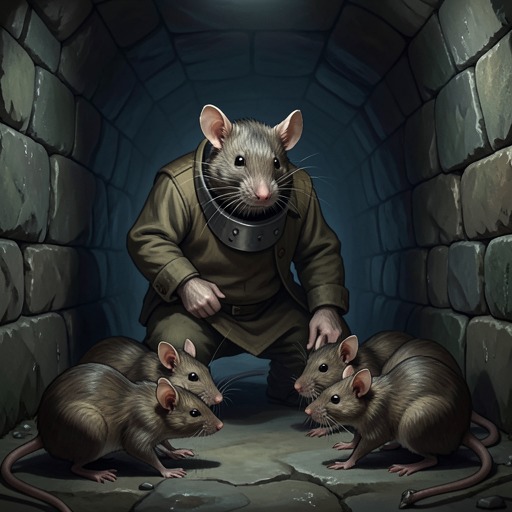
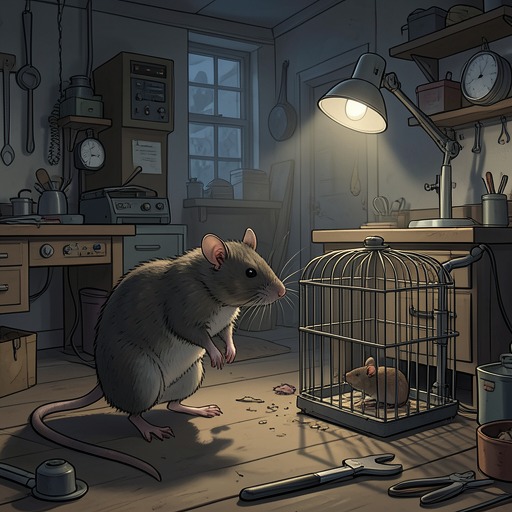
The Amazing Maurice and His Educated RodentsThe second mouse gets the cheese is the Trap Disposal Squad’s rule of caution, turning a simple image of a trap and a reward into a practical lesson about how to survive unfamiliar dangers. Under Darktan’s leadership, the saying is taught as a shared squad motto: the first mouse gets the trap, while the second has the advantage of learning what the first encounter reveals. Its force comes not from daring a rat to be first, but from making patience, observation, and restraint marks of competence.
Meaning and Use
Darktan explains the rule alongside the qualities that make a rat suitable for trap disposal. The work calls for slowness, patience, thoroughness, a good memory, and care. A rat may join the squad by being fast and hasty, but those qualities do not make a long career. The contrast gives the motto its practical meaning: speed is no substitute for noticing what lies ahead, and being first can mean meeting the danger without warning.
The lesson is especially relevant when the squad enters a new town. Darktan warns that its members cannot know in advance what they will find: there may be unfamiliar traps and poisons they have never encountered. His instructions are accordingly to be careful, never rush, and never run. The proverb condenses that advice into an image the rats can remember. It does not promise that the second mouse will find every danger harmless; it teaches that caution gives the follower a chance to benefit from what happened to the one who went first.
The saying also gives the squad a common answer to danger. Darktan asks which mouse they should avoid imitating and which one they should follow; the rats answer together that the second mouse gets the cheese. Their response shows that the phrase is not merely Darktan’s private observation. Repeated as a call-and-response, it becomes a piece of shared training, binding an abstract instruction to a routine the squad can recall when acting together.
Nourishing’s Question
The exchange with Nourishing exposes the other half of the proverb. After Darktan repeats the motto, the young rat asks whether the first mouse gets something too. Darktan is impressed that she meets his gaze rather than cringing, and treats her question as evidence that she may be a valuable member of the squad. When he asks what the first mouse gets, the rats answer: the trap.
The answer makes the danger explicit without changing the rule into a command to sacrifice oneself. The first mouse is not simply a loser in a race for cheese; that mouse is the example from which the others must learn. Nourishing’s question makes the squad state this cost out loud. Darktan’s approval of her willingness to ask also matters: the lesson is a rule to understand, not just a phrase to repeat without thought. Her question tests the saying’s logic, and the squad’s answer completes it by naming what caution is meant to avoid.
Demonstration in the Trap Work
Darktan later makes the rule concrete during a training exercise. When Nourishing is frightened by the prospect of a trap snapping shut, Darktan slips out of the harness, drops onto the trap, and secures it so it cannot go off. He then tells the others that the trap is fixed and can be dragged away. The demonstration moves from words to procedure: a dangerous device must be handled deliberately, made safe, and dealt with before the group proceeds.
Afterward, Darktan places a lump of hairy cheese on Nourishing and repeats the lesson that certainty matters in trap work: a rat must be definite or be dead, and the second mouse gets the cheese. The food turns the proverb’s reward into a comic, tangible teaching device, while Nourishing’s earlier fear keeps the danger behind the joke in view. Darktan does not present bravery as reckless exposure. In this instance, he takes control of the trap himself, secures it, and gives the trainees a safer way to understand the point.
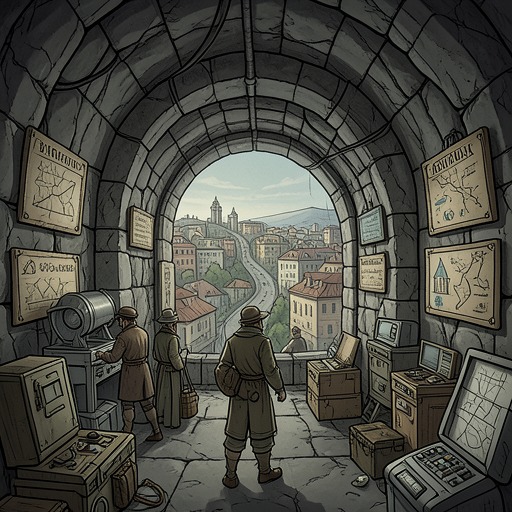
His working habits extend beyond the spoken motto. Though he is a rat of action and is uneasy about pinning the world down in signs, he recognizes that a paper map can preserve a tunnel layout without being confused by new smells. Other rats who can read can use it to reconstruct what its maker saw. That practical record-keeping complements the proverb: experience should not vanish with the first encounter, but should inform the next one.
From Drill to Collective Action
The motto belongs to a wider picture of how the rats respond to risk, though the book distinguishes careful coordination from mere group behavior. When frightened rats run past Peaches and Dangerous Beans, one gibbers and another appears to have forgotten how to talk. In another account, Maurice explains to Darktan that a crowd of rats overwhelmed by fear and panic may act like a mob rather than like thinking individuals. These episodes clarify what the squad’s drill is designed to resist: a danger does not become manageable just because many rats are present.
Darktan’s later leadership draws on the same emphasis on thought and steadiness when the squad faces something new and frightening. He acknowledges that the threat is unfamiliar, then calls the rats to recognize themselves as rats with brains who can think and refuse to turn and run. He invokes the Dark Wood and the Bone Rat to give the danger a shared story, but his immediate appeal is to their capacity to act together. The scene develops the logic behind the earlier training: fear may urge a group into flight, while a common purpose and deliberate action can help it meet a threat.
The Clan’s coordinated attack on its enemies offers a contrasting image of collective action. Its rats advance together in a line; when an enemy attacks, the line closes around it, and the survivors pursue those who try to flee. The account is not a direct application of the cheese proverb, but it distinguishes disciplined cooperation from a panicked mass. Read beside the squad’s call-and-response, it shows why a memorable rule can matter beyond an individual choice: a shared lesson can help organize how a group understands risk and responds to it.
Significance
The second-mouse rule makes survival a matter of learning rather than mere speed. Its simple opposition between cheese and trap is memorable because it names both the hoped-for reward and the cost of careless haste. In Darktan’s hands, it becomes more than a slogan: it is rehearsed by the squad, questioned by Nourishing, demonstrated through the safe handling of a trap, and reinforced by the squad’s wider habits of caution and recording what it has seen.
The saying also fits the rats’ emerging sense of themselves as a community capable of thought. Elsewhere, Dangerous Beans describes a flame as a way for the rats to declare that they are separate and that they are the Clan; Darktan’s repeated lesson likewise gives the squad a shared language, though its immediate concern is practical survival. The difference is useful: a collective identity does not itself disarm a trap. The proverb asks the group to turn what it knows into careful action. Its reward is not guaranteed success, but the chance to avoid repeating the first mouse’s mistake.