Trap Disposal Squad
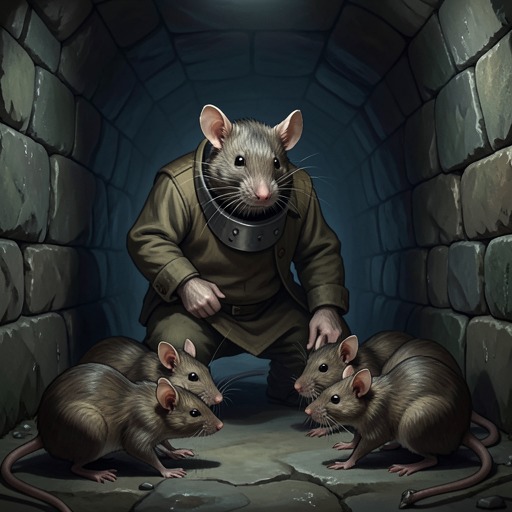
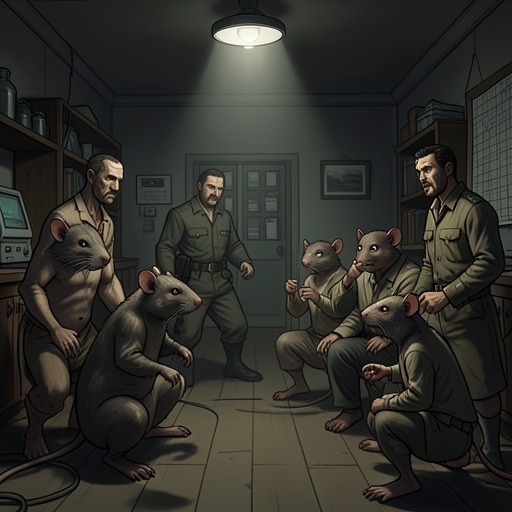
The Amazing Maurice and His Educated RodentsThe Trap Disposal Squad is the Clan’s specialist unit for identifying and dismantling traps, organized around a demanding discipline of patience, memory, and caution. Under Darktan’s leadership, it turns knowledge of human devices into practical survival skills; in Bad Blintz, the squad’s careful procedures also become part of a wider effort to resist fear and establish a workable relationship with humans.
Nature and equipment
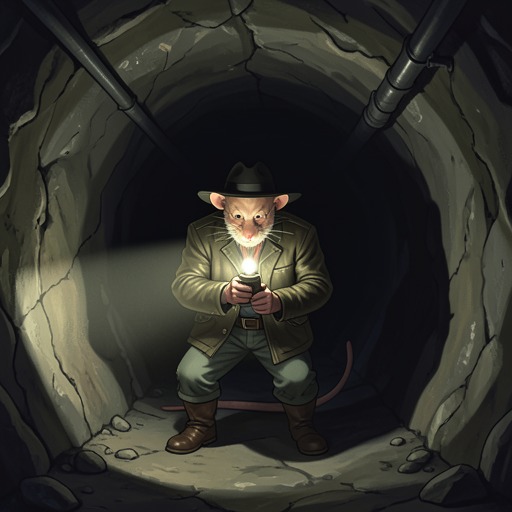
Darktan is a large, lean, tough rat who spends much of his time taking traps apart to learn how they work. The other rats listen to him not simply because he holds authority, but because he is often able to tell them what they need to know to stay alive. His expertise gives the squad a practical center: a trap is not only a danger to avoid but a device whose workings can be studied.
The squad’s equipment reflects this hands-on approach. Darktan wears a network of broad belts rather than a conventional waistcoat, with pockets sewn onto them to carry useful materials such as metal rods and pieces of wire. The arrangement is easy to move in and gives him ready access to tools; some of the other squad members adopt it as well. The idea came to Darktan from the pictures in Mr Bunnsy Has An Adventure, although he regarded humans as both mad and bad. For the squad, the pockets are a practical adaptation to unpredictable work: its members cannot know in advance which tools the next trap will require.
Organization and working discipline
The unit is divided into numbered platoons, each with assigned tasks. Darktan sends Number Three platoon on widdling duty and directs the squad members toward openings in the walls. Sardines, who jokes about wanting more excitement, is told not to go ahead of the trap squad; his response is to dance after the others. The exchange gives the unit a glimpse of the balance Darktan has to maintain between energetic members and the order needed to keep them safe.
Number One platoon is the smallest. Its members have the temperament the work demands: they must be slow, patient, thorough, careful, and able to remember details. Speed and haste do not disqualify a rat from joining, but a fast, slapdash recruit is unlikely to last. The squad’s selection and survival therefore depend less on boldness than on sustained attention.
Darktan’s instructions make that principle concrete. In the unfamiliar town, the rats must expect traps they have never encountered and poisons they have not previously seen. They are told not to rush or run, and to mark suspicious objects—including unfamiliar trays and devices with wires or springs—then send a runner to Darktan. The system makes individual observation useful to the whole unit: members identify a possible danger, avoid handling it carelessly, and pass the information to the leader. Darktan reinforces the lesson through the maxim that the second mouse gets the cheese, turning caution into a memorable piece of squad doctrine.
He also distributes responsibility. Inbrine is assigned to lead squad two, while Bestbefore is promoted to take squad three. Darktan praises Bestbefore’s predecessor, Farmhouse, whose record ended when she forgot how to disengage the trip-catch on a Snippet and Poison Ratsnapper Number 5. He presents overconfidence as the enemy and asks the squads to report anything suspicious rather than act alone. The specific example makes the warning more than a general call for care: a small mistake in understanding a mechanism can undo experience and endanger the worker.
Work in Bad Blintz and the problem of fear
The squads are sent to work in a new town before the rats know whether it is safe. Darktan expects them to learn the local dangers and says that, if the humans are not looking for a good rat-catcher by the following day, the squad will have failed to do its job. Peaches objects that they may need to stay longer because some of the female rats are going to have babies. Darktan answers that the safety of the place has not yet been established. The exchange places the squad’s practical mission alongside the Clan’s need to find somewhere it can remain, without treating immediate shelter as proof of safety.
Darktan’s understanding of collective danger is tested when Maurice describes rat-coursing: rat-catchers bring living rats to a ring, where terriers are set among them. Darktan asks why the rats do not fight the dogs. Maurice distinguishes the courage of an individual rat from the behavior of a frightened mass, explaining that many rats together can become a panic-driven mob. Darktan’s response is to recall having bitten a dog on the nose, but Maurice’s point is not that no rat can be brave; it is that individual bravery can be overwhelmed when fear spreads through a group. The squad’s emphasis on training, signals, and deliberate action offers a contrast to that disorganized panic.
That contrast becomes urgent when frightened rats run past Peaches and Dangerous Beans, one squealing and gibbering rather than speaking. Dangerous Beans recognizes that they have forgotten how to talk, and Peaches concludes that something terrible has frightened them. Later, when the squad itself is afraid of what waits in the darkness, Darktan changes how he addresses his members. He begins by admitting that they do not know what they will find, then reframes the unknown as a challenge for the rats gathered before him: they have brains, can think, and need not turn and run merely because of darkness, fire, noise, traps, or poison. He invokes the Dark Wood from the Book and the Bone Rat, using familiar stories to give the frightened squad a shared way to face an unseen threat. The speech does not supply new technical knowledge; it tries to restore the confidence and common purpose on which the squad’s methods depend.
Darktan’s leadership and the Clan’s future
Darktan’s role extends beyond the squad’s technical work. In the confrontation with Spider, Dangerous Beans refuses the apparent offer of cooperation and asks whether a rat under Spider’s influence has any say in the proposed alliance. He concludes that the arrangement would not work. This challenges Spider’s promise of collective power by making a rat’s capacity to think—and not merely to be commanded—the test of genuine cooperation. The Clan’s later attack is organized differently from the terror-driven mob Maurice described: its members advance together in a line, close ranks when attacked, and pursue their retreating opponents. The contrast makes coordination, rather than numbers alone, the decisive distinction between a mob and a community capable of acting together.
After the fighting, Darktan brings that practical, collective outlook into contact with the town’s political life. He urges the Mayor to speak with the rats through the town council rather than rely on dogs, brooms, and temporary attempts to drive them away; he warns that the rats would return and that they know how to use fire and poison. He calls negotiation an opportunity, not a threat. When the Mayor asks why the rats did not poison the wells or burn houses, Darktan answers that killing humans would not solve the problem of what came afterward: the rats would have to move to another town and face the same conflict again. Sooner or later, he says, they would have to talk to humans, and it might as well be these humans.
The eventual settlement is treated as a contract rather than the easy ending of a story. The town council and senior rats meet to work through its details, while Maurice paces around the table and Darktan sits at one end, tired and eager for rest. The squad is not presented as the sole author of this agreement, but its leader’s conduct carries its central habits into the negotiations: assess the danger, reject a response that only postpones it, and look for a solution that can endure. The unit’s importance thus reaches beyond trap disposal. Its discipline helps show how survival can depend not on solitary bravery or domination, but on information shared, coordinated action, and the difficult work of living alongside former enemies.