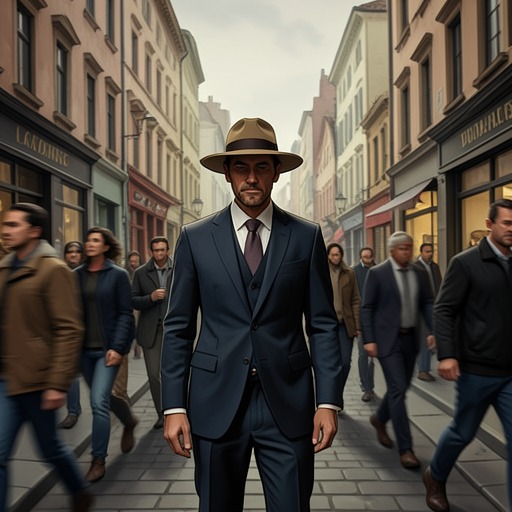
Andy Warhol facing a death threat
The Andy Warhol DiariesAndy Warhol facing a death threat is recorded as a brief but escalating sequence in early May 1981: an ominous note, repeated calls from Joey Sutton, and an accusation about a song Warhol said he did not recognize. The threat turned ordinary acts—going to the office, buying a hat, taking a cab—into questions of exposure and protection. Yet the diary also records how little the danger altered Warhol’s routines: he kept working, encountered people still asking for autographs, and went out to dinner with friends. The account documents precaution, not an attack or a resolution.
The warning and its stated cause
On Monday, May 4, Warhol introduced the matter tersely, saying he had received a death threat and would get to it. The delay gives way to the details of a phone call from his office. Janet Sartin relayed that Vincent and Robyn had called because the matter was urgent; when Warhol returned the call, he learned that Sutton had phoned roughly forty times. The repetition made the threat more than a single alarming message: Sutton was persistently trying to reach him.
Warhol had also received a note the previous week. Vincent had not opened it; Warhol had. Its warning singled out May 5 as a day of life or death. Sutton’s reported explanation was that Warhol had stolen his song “Miss You” and given it to Mick Jagger to record. Warhol said he did not understand the accusation and did not even know whether Sutton really wrote songs. He described Sutton as disturbed, but the diary offers no independent account of Sutton’s claim or state of mind. The threat’s stated motive is therefore preserved as an accusation, not established as fact.
Precautions in public
After his appointment with Sartin, Warhol went to Sporting World to buy a disguise: a camouflage hunter’s hat costing $27. He made phone calls, then called Jon Gould to tell him that someone was threatening his life. The call did not bring the response Warhol wanted; when he finally reached Gould, Warhol recorded that he did not care. Meanwhile, people continued asking Warhol for autographs. He bought more disguises for $15.74 and took a cab to Park and 18th, where Robyn was waiting.
A police detective—whose name Warhol remembered uncertainly as Rooney—came to meet him. Risa Dickstein, Interview’s lawyer, said that she knew a detective Warhol could hire. Warhol instead said he would hire Agosto as a bodyguard to accompany him. These arrangements show the threat entering both his private decisions and the practical orbit of his office: police involvement was discussed, and personal protection became a planned part of getting around. The diary does not say whether Agosto was ultimately hired.
The vest and the return to work
On May 5, Vincent had hired security and did not want Warhol to come to the office. Warhol went anyway because he had work to do. Peter Wise advised him to get a bulletproof vest and knew where one could be bought. Warhol, nervous enough to describe himself as a chatterbox, took a cab to a second-floor shop near 11th Street and University Place. He bought a vest for $270.
The shop’s inventory made protection feel both practical and commercial. Its owner said business had soared after the Attempted assassination of Ronald Reagan, and offered more than vests: dresses and coats were also bulletproof. Warhol asked about other items, but the owner would not discuss them in front of a journalist from Stern. Warhol asked the shop to hold a sports jacket for him to collect later, noting that it seemed warm enough for winter. The account thus moves from the immediate purchase of protection to the possibility of further protective clothing, without establishing that he returned for the jacket.
Exposure, routine, and unresolved danger
The security measures did not make the office feel controlled. It was the busiest day Warhol could remember; even the rented police officer was astonished by the people there, and new Interview staff members were, in his account, continually buzzing visitors in. The detail sits uneasily beside the threat: security had been added, but access remained loose and the office crowded. Warhol also called Gould at Paramount, where he was in meetings, while Bob did not come down to the office. Work and ordinary calls continued inside the same day as the heightened precautions.
Warhol doubted that disguises worked for him and planned to try a fisherman’s hat the following day, recalling the kind Mr. Winters used to wear. The choice is practical but faintly comic beside the bulletproof vest: one measure tried to change his appearance, the other to shield his body. Neither is shown to have resolved the danger. In the recorded sequence, Warhol’s life remained publicly recognizable—autographs were still requested—and institutionally busy, even as he sought a bodyguard, bought protective clothing, and reconsidered what to wear outdoors. The diary ends this episode with precautions in motion, not with confirmation that the threat had passed.