Joey Sutton's death threat against Andy Warhol
The Andy Warhol DiariesJoey Sutton's death threat against Andy Warhol was a two-day episode in which an obscure, delusional accusation acquired a specific deadline and forced Warhol to treat danger as a practical problem. The diary follows the threat from a note and repeated calls to hired security, disguises, and a bulletproof vest, but records no resolution or confirmation that Sutton acted on it. Its significance lies in that unsettled passage from alarming words to precautions: Warhol could buy protection, yet could not make the threat—or the public attention around him—disappear.
The threat and its stated motive
On Monday, May 4, 1981, Warhol wrote that he had received a death threat and would explain it. The explanation began during an appointment with Janet Sartin. Sartin told him that his office had called urgently; when he returned the call, Vincent Fremont and Robyn reported that Joey Sutton had telephoned forty times. The volume of calls made the threat more than a single disturbing message: Sutton had repeatedly tried to reach Warhol through his office.
Warhol had already received a note the previous week. He says that he opened it himself and quotes its warning: “Beware of May 5, it’s Live or Die.” The note attached the threat to a date only one day away. Warhol attributed Sutton’s behavior to a hallucinated theory that Warhol had stolen the song “Miss You” from him and given it to Mick Jagger to record. He did not know whether Sutton even wrote songs and described him as disturbed; the diary offers no independent account of Sutton’s claim or evidence for it. The accusation, as Warhol presents it, supplied an irrational grievance, while the note supplied a concrete deadline.
First precautions
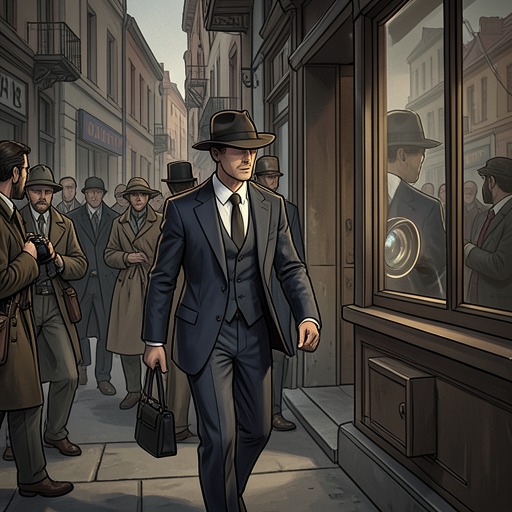
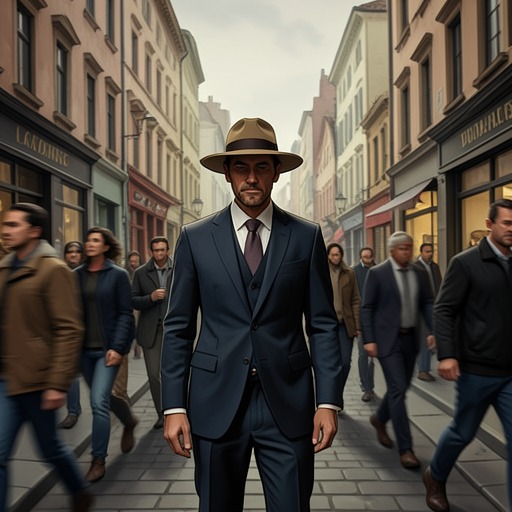
After the call, Warhol went to Sporting World and bought a camouflage hunter’s hat for $27, intending to disguise himself. He also recorded spending $2 on phone calls, then bought further disguises for $15.74. These were immediate, low-tech attempts to make himself less recognizable. They did not remove the threat, and the diary soon registers doubt about whether they would work: people continued to ask him for autographs even as he tried to alter his appearance.
At Park and 18th, Robyn was waiting, and a Detective Rooney, or someone with a similar name, from the NYPD came over. Risa Dickstein, Interview magazine’s lawyer, said she had a detective Warhol could hire. Warhol instead decided to hire Agosto as a bodyguard to accompany him on outings. This was a shift from relying on disguise alone to arranging a person’s presence and assistance; the account does not say whether Agosto had begun work by the end of May 4.
Warhol told Jon Gould that someone was threatening his life. When he finally reached Jon, Warhol recorded that Jon did not care, adding that he laughed. The diary gives no further explanation of Jon’s reaction. Its placement beside the purchases and security arrangements leaves the threat’s emotional as well as physical dimension in view, without suggesting that Jon’s response changed Warhol’s plan.
The deadline and visible security
On Tuesday, May 5—the date named in the note—Vincent Fremont hired security and did not want Warhol to come to the office. Warhol went anyway because he had work to do. Peter Wise advised him to obtain a bulletproof vest and knew where one could be bought. Warhol describes himself as a chatterbox because he was nervous, then records taking a cab to a second-floor shop near 11th Street and University Place.
Christopher Makos had been asked to meet him there and take photographs; a journalist from Stern also accompanied them. Warhol paid $270 for a bulletproof vest. The shopkeeper said business had surged after the attempted assassination of Ronald Reagan and displayed a range of protective clothing, including dresses and coats. Warhol asked him to hold a sports jacket for him to collect later, noting that it seemed warm enough for winter. Asked what else he sold, the shopkeeper declined to say in front of the media. Makos was eager to return and find out. In this encounter, Warhol’s protective measures became a public scene, documented by a photographer and observed by a journalist, while the seller’s refusal left the shop’s other offerings undisclosed.
The vest also created an ordinary physical difficulty: with his backpack, Warhol could not get onto Makos’s bicycle. He called Jay Shriver at the office; Shriver came to meet him around the back of the building, and they went up in the freight elevator. These small logistics give the protection a material presence in the diary. The vest was not merely an idea or a precaution in the abstract: it cost money, affected how Warhol could travel, and shaped his route into the workplace.
A threat without a recorded resolution
At the office, Fremont’s security arrangements had not closed off access. Warhol noted that the rented police officer could not believe the number of people there, and that a new woman at Interview magazine would buzz in anyone. The contrast between hired security and an office where visitors could still be admitted casually shows the limits of the response as Warhol recorded it. The diary does not identify a breach or say that Sutton appeared; it records a crowded workplace and an access practice that seemed at odds with the precautions.
Warhol’s final note about concealment is plain: disguises did not seem to work for him, so he planned to buy a fisherman’s hat the next day, like one Mr. Winters used to wear. The plan extends the attempt to evade recognition beyond the May 5 deadline, while offering no evidence that the hat was purchased or that the danger ended. Across the episode, a dated warning prompts calls, police contact, a prospective bodyguard, multiple disguises, and body armor. Yet familiar demands for autographs, office traffic, and practical obstacles persist alongside those defenses. The entry ends not with reassurance or a report of violence, but with another proposed disguise.