Peter Brant's 1978 Warhol auction
The Andy Warhol DiariesPeter Brant’s 1978 Warhol auction turned a private decision to sell paintings into a public test of their value. Warhol followed the sale from a party, learning by telephone that a large Disaster had brought $100,000 while a medium-sized Mao fetched only $5,000. The results reassured him that the works had sold, but the uneven prices and his later observations about the market gave the auction a more unsettled significance: it registered both the continuing demand for Warhol’s art and signs that the contemporary-art boom was reaching its limit.
Background and stakes
The auction took place amid Warhol’s close involvement with the commercial and social worlds surrounding his work. In 1975 he had bought out Peter Brant’s interest in Interview and become its full owner and publisher, with Fred Hughes serving as president. That magazine deal was separate from Brant’s later sale of Warhol paintings, but it establishes the two men’s connection to the artist’s business life: Brant was both an art collector and a former investor in the magazine.
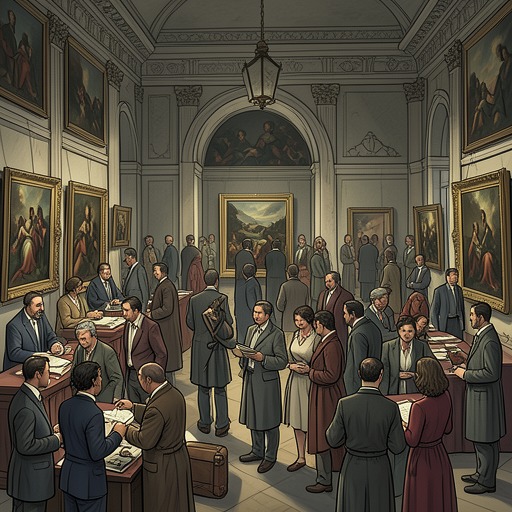
By May 1978, Brant had put a group of Warhol paintings up for auction. The works included a large Electric Chair, a large Soup Can, a large Disaster, a large Mao, and a small Soup Can. The range of subjects and sizes made the sale more than a single-price verdict on Warhol’s work. It placed distinct paintings before buyers at the same event, allowing their differing results to become part of the story.
The auction also unfolded alongside Warhol’s ordinary professional and social obligations. On the day of the sale, he spent the afternoon working on pictures while people around him talked about the coming auction. He was due at a party hosted by Diane von Furstenberg, but Bob Colacello was going to the auction, and neither Colacello nor Fred Hughes had been invited to the party. Warhol therefore expected to attend alone. The divided evening placed the sale and its social consequences in parallel: Colacello would report on the paintings, while Warhol went to a gathering without his usual colleagues.
Prices and immediate response
At the party, Colacello telephoned Warhol with the results. The large Disaster had sold for $100,000, whereas a medium-sized Mao had brought $5,000. Warhol considered the outcome acceptable and said they could continue enjoying the evening. His relief was not abstract: the paintings had sold, and the sale had produced a substantial price for at least one of them. Yet the disparity between the Disaster and the Mao made clear that the auction had not established one uniform value for the group.
Warhol’s account links the financial news to his mood at the party. He had been concerned about how the works would fare, and the report that they had sold eased that concern. The sale’s outcome did not stop him from questioning the conditions of buying and selling art, however. He observed that buyers might be reluctant to purchase at auction because there was little prospect of making a large profit. The comment shifts attention from the prices alone to the expectations behind them: a work’s auction value mattered not only as a payment to its seller but also as a potential investment for its next owner.
A later account identified the buyers of several works. At a fifteenth-anniversary party for Tom and Bunty Armstrong, Leo Castelli told Warhol that the de Menil family had bought paintings from the auction. François de Menil had purchased the Soup Can for $95,000; Mrs. de Menil had bought the Disaster for $100,000; and Philippa had acquired the Funeral for $75,000. These details confirm the Disaster’s reported price and show that the sale’s buyers included members of the same family purchasing several different works. Warhol regarded the information as good news. Brant, meanwhile, appeared pleased to have disposed of the paintings.
Signs of a changing market
Warhol’s later diary entries place the sale within a broader downturn in confidence. In November, he noted that an Elvis painting at a Parke Bernet auction had sold for $85,000, below its estimate of $100,000 to $125,000. He also recorded that a Mao was being bid up to $5,000 by Todd Brassner before another bidder acquired it. Warhol concluded that the market for contemporary art had peaked. These were separate auction results, not further lots from Brant’s sale, but they sharpen the significance of the May prices: the $100,000 Disaster and the $95,000 Soup Can were strong results within a market Warhol increasingly understood as uncertain.
The episode therefore preserves a contrast rather than a simple triumph. Brant’s paintings found buyers, and the de Menil purchases included substantial sums for the Soup Can and Disaster. At the same time, the much lower reported price for a Mao, Warhol’s doubt about auction buyers’ ability to profit, and his later assessment of the market’s peak all resist treating the sale as proof of unbroken growth. The auction mattered as a transaction, as a social report relayed between colleagues, and as one point in Warhol’s continuing effort to read the value of his work through the prices other people were willing to pay.