Warhol’s gallbladder problems
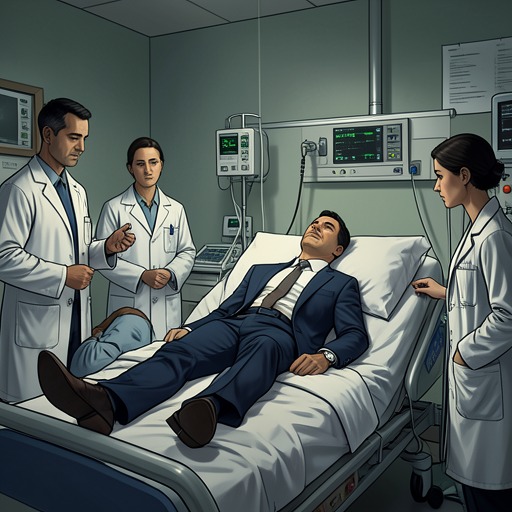
The Andy Warhol DiariesWarhol’s gallbladder problems occupy a strikingly small space in the diary’s account of Andy Warhol’s health: the condition that led to his death in February 1987 is noted retrospectively, while an earlier, ultimately benign scare over a lump in his neck receives an extended, immediate record. The contrast reveals both the intensity of his fear of illness and the diary’s uneven access to what frightened him most.
Health fears and the limits of the record
Warhol’s fear of cancer was persistent and expansive. A headache or a freckle could prompt the possibility of brain or skin cancer, according to the diary’s retrospective account. Yet that account also observes an inverse pattern: when a health problem was genuinely serious, he tended to say very little about it. The gallbladder problem is given as the stark example. It arose in February 1987 and led to his death, but the supplied record does not describe its symptoms, diagnosis, treatment, or final course. That silence should not be mistaken for an absence of illness; it is part of the evidence about how unevenly his health entered the diary.
The 1977 biopsy
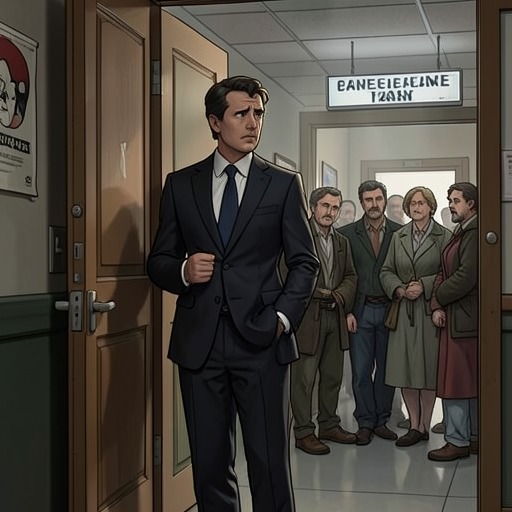
In June 1977, concern about a lump in his neck brought Warhol to Memorial Sloan Kettering Cancer Center for a biopsy. He was taken there by Fred Hughes to see a doctor, received local anesthesia, and underwent a procedure lasting about half an hour. The doctors did not immediately know what the lump was. Warhol’s account dwells on the anxious interval between agreeing to a test and receiving an answer, imagining how quickly a diagnosis could turn into a death sentence.
Four days later, he went back to the doctor and learned that the result was good: the lump was not what they had feared it might be. His neck was swollen and painful after the biopsy, but the immediate cancer scare had passed. He went to church to thank God. The episode makes clear that his health anxiety was not abstract: uncertainty about a specific bodily change shaped his movements, his expectations, and his relief when the feared diagnosis was ruled out.
Illness, uncertainty, and the diary
A later entry shows Warhol remaining alert to health threats even amid uncertainty about what medicine could establish. In 1982, he heard that Robert Hayes’s boyfriend had been told he had what people then called “gay cancer,” while Robert himself said he had been checked and did not have it. Warhol questioned claims about how long the illness took to appear and worried that a practitioner might have used the same needle on him. He decided not to return to her. This episode is not evidence about his gallbladder, but it places his personal fears within a wider atmosphere of incomplete knowledge and alarm about illness.
Retrospective significance
The contrast between the two health episodes is consequential. The 1977 biopsy is narrated from inside the wait for a result: uncertainty, fear, a physical aftermath, and gratitude at the news. The gallbladder problem appears instead as a brief retrospective fact, attached to the outcome of Warhol’s life. The diary therefore preserves the very discrepancy its editor points out: a man who readily feared that minor symptoms might mean cancer could leave his gravest health problem almost unspoken. What can be said is limited—the problem arose in February 1987 and led to his death—but that limit is central to the record, not a gap that can responsibly be filled with invented medical detail.