healing crystals
The Andy Warhol DiariesHealing crystals recur in Andy Warhol’s diary as both material objects and instruments of belief: stones said to hold energy, protect the wearer, diagnose illness, and alter the world around them. Warhol’s account neither treats their powers as established fact nor dismisses them outright. Instead, it follows his participation in increasingly elaborate sessions, his doubts about the practitioners, and his insistence that the crystals themselves work.
From stone to treatment
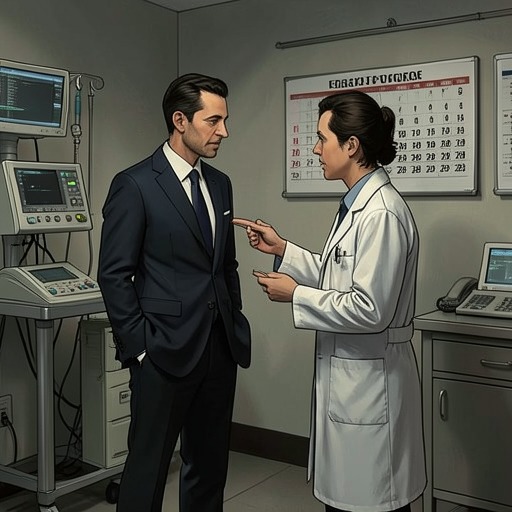
On August 15, 1984, Warhol described a session with a crystal doctor as resembling an exorcism. He lay on the doctor’s table with his eyes closed while the practitioner repeatedly asked whether he knew where he was. When Warhol answered that he was lying on the table, the doctor explained that he had wondered whether Warhol might not know because his eyes were shut. The exchange made the session’s peculiar logic visible: ordinary awareness was treated as something that might need to be checked, while the healer claimed special access to sensations Warhol could not report.
The doctor touched Warhol in different places and, when Warhol felt no reaction, said he was not in touch with his pain. Warhol’s answer was straightforward: it did not hurt. The practitioner attributed this lack of sensation to Warhol’s not yet being sensitive to pain, turning the absence of pain into a problem that required further sensitivity. He then asked Warhol’s crystal how long it would take to be programmed, offering intervals from a minute to a day. At four days, the crystal supplied the answer. The doctor refused Warhol’s suggestion that he simply obtain another crystal sooner; Warhol was to wait, then keep the programmed stone with him and no more than ten feet away while sleeping.
Warhol acknowledged the gap between this procedure and ordinary explanation, calling it hokum-pokum, yet said he believed it helped as positive thinking. He also proposed that gold and jewels, and pearls worn around a stone, could have an effect. The practitioner told him he had negative powers inside him, but did not say how long he would need to keep coming. Warhol found the process abstract while also reporting that he felt better after leaving. The entry thus holds together a stated belief in the benefits of crystals and a clear record of how difficult their promised mechanisms were to explain.
The doctors and their methods
On September 20, Warhol went to see Dr. Bernsohn while Dr. Reese, described as the chief crystal doctor, was in town. At an appointment on 74th Street between Park and Madison, patients paid beforehand and received fifteen minutes before being moved along. The cramped room, unfamiliar practitioners, and rapid examination struck Warhol as uncanny. A doctor ran a hand over him, named supposed openings or holes, and recited strings of code-like letters and numbers. Dr. Bernsohn said Warhol had no feeling; the other doctor called his case extreme, then promised to explain it the following week. Unlike an earlier visitor Warhol had seen entering in a daze, Warhol did not feel spaced out afterward.
The January 25, 1985, entry gives the practice a more personal and protective dimension. At another visit with Dr. Bernsohn, Warhol wondered whether the crystal claims were real. He noted that Dr. Reese came from near Kansas City and, like Dr. Bernsohn, was a chiropractor; the crystals, he had been told, came from Arkansas and were supposed to heal. Warhol wore a Czech cut-glass crystal for protection, calling it a third eye. That small wearable object connected the broad claims made in the treatment room to a daily routine: the crystal was not only something a doctor handled but something Warhol carried on his person.
In April, Dr. Reese’s visit brought an expanded account of the practitioners’ beliefs. At a session arranged through Dr. Bernsohn, Warhol asked how Reese had become interested in crystals. Reese recounted seeing a figure he called Mr. Morning as a baby, when no one else could see him, and later developing an interest in electricity and the body while in the army. He described placing crystals on pyramids and the Wailing Wall. Even coffee and doughnuts, he said, could be cured by passing a crystal over them ten times. These anecdotes joined bodily treatment to a much wider account of crystal energy and spiritual power.
Belief, persuasion, and doubt
The April meeting also tested Warhol’s trust in the people surrounding the crystals. Reese’s assistant hesitated before telling him that his forces were with them and that he had the ability to do great things; she then said he should go with them to Tibet. The conversation turned to the need for people to support their studies. Warhol wondered whether they would ask him for money, and contrasted Reese’s claims with what he saw as Dr. Bernsohn’s materialism, including his new apartment and laser-beam record players. The practitioners also told Warhol he had been Chinese in a previous life and should go to Tibet. He recognized their conduct as ridiculous, yet distinguished his doubts about the people from his belief in the stones: he believed in the crystals and their energy because they had been in the center of the earth.
Warhol’s religious concern further shaped his response. Because Dr. Reese was Episcopalian and believed in Christ, Warhol felt more at ease with him than with the Jewish crystal practitioners; he did not want the practice to conflict with Christianity. The account does not resolve whether this reassurance or the doctors’ demonstrations persuaded him. Instead, it shows belief being negotiated through personal trust, religious compatibility, and questions about money, even as Warhol continued to affirm the crystals’ power.
A week later, Dr. Bernsohn reported that Reese considered Warhol a Janooky, one of the head crystal people, and thought he could become the really big one. The designation extended the earlier praise that Warhol could do great things, but the diary records it as a claim made by the practitioners, not as a status Warhol independently confirmed. Its grandness sits beside his watchful, often comic attention to the people making such claims.
Claims put to practical tests
The crystals’ promised powers were not confined to the treatment room. In June 1985, Warhol reported putting one in the office kitchen to repel cockroaches. The attempt had failed: there were more roaches than before. Dr. Bernsohn said he would consult Dr. Reese, then later told Warhol that the crystal had been reprogrammed to un-reverse itself. Warhol ended the account by waiting to see whether this would provide proof. Here the stone’s supposed force met a concrete, observable test, and its failure produced not abandonment but another adjustment to the explanation.
At the same appointment, Dr. Bernsohn asked his secretary, Judy, to lie on the table and pretend to be Warhol’s dog, Amos. Bernsohn asked what was wrong, and Judy identified a possible crushed vertebra and perhaps an ulcer without having been told about Amos’s condition. She then said she did not want to be a dog anymore and wanted to return to being human. Bernsohn advised giving Amos comfrey for the ulcer. The episode records a striking demonstration of the doctor’s claimed diagnostic method, although it does not establish that a crystal produced the result. Across these entries, the stones remain at once protection, proposed treatment, and an object under scrutiny: their importance lies in the way Warhol keeps using them while recording the doubts, tests, and shifting explanations that accompany them.