
The Soul's Journey
The Art of Racing in the RainThis thread traces Enzo's belief that a dog's life prepares the soul for human life, from his early television discoveries to his imagined return to Denny in another form.
increasing Bearing strength in each event
 decreasing
Bearing strength in each eventdecreasingA Promise from Mongolia
A Promise from Mongolia
A theory of return
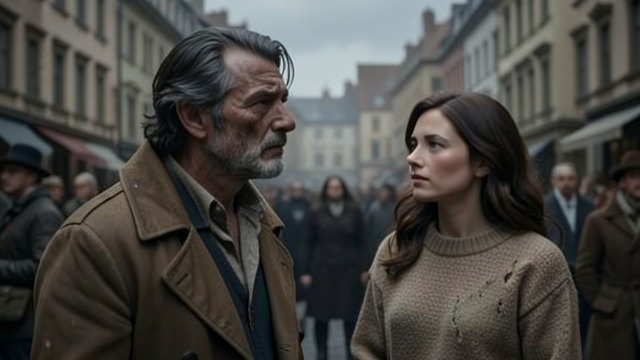
Enzo believes that when a dog has finished living his lifetimes as a dog, his next incarnation will be a man. He bases this conviction on a television program about Mongolia, where a dog's master is said to whisper a wish for the dog to return as a human. The belief gives Enzo a framework for imagining death as transition rather than annihilation.
Memory as preparation
Enzo wants to carry his experiences with the Swift family into that next life, though he knows that memory may not survive the change. He therefore tries to press his understanding deep into his soul: Denny's brilliance, Zoë's trust, and the lessons learned through loss. His longing to become human is also a longing to keep serving the people he loves.
The belief is at once spiritual and practical. It helps Enzo face his failing body without treating his entire existence as a medical decline. He imagines a future in which he can speak, use hands, and meet Denny again, while the present story gradually tests whether the desire for that future has made him overlook the value of being a dog.
Animal Grief
Animal Grief
Breaking from human composure
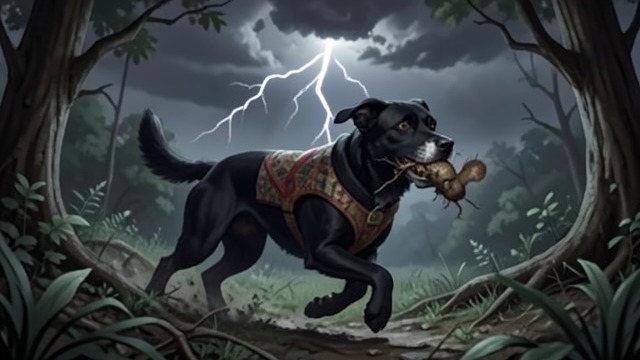
After learning of Eve's death, Denny cries at the park. Enzo, unable to bear the sight, runs into the brush and kills a squirrel. He describes the act as a return to animal nature, a refusal to experience grief only through the human-like restraint he has tried to cultivate.
The cost of returning
The violence does not solve his grief or restore Eve. It gives Enzo a brief, bodily outlet for pain that he cannot express in words, and it delays Denny's arrival at the house where he must face Eve's body. Enzo recognizes that the act is selfish even as he understands why he needed to do it.
This moment complicates his ambition to become human. He has spent years admiring human thought and self-control, but grief draws him back toward instinct. The novel does not rank one nature as morally superior; instead, Enzo learns that feeling may exceed the categories he has built to explain himself.
Senna and the Unfinished Life
Senna and the Unfinished Life
A near-death question
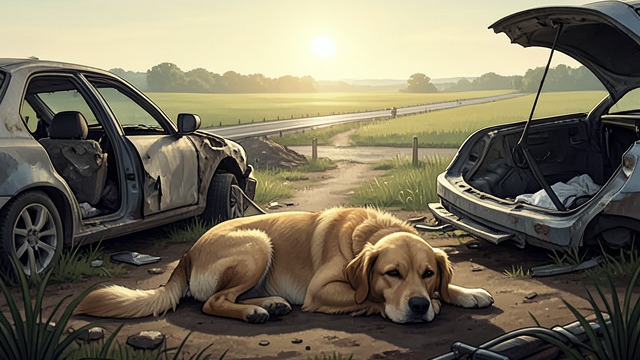
When Enzo lies injured after being hit by a car, he thinks of Ayrton Senna's death at Imola. He considers the claims and uncertainties surrounding the crash, then reaches a spiritual conclusion: Senna's body had served its purpose, and his soul was ready to leave. Enzo uses that belief to ask whether his own life has reached its end.
Work still to do
Enzo decides that he survived because he is not finished. The thought reframes his injury as a sign that his relationship with Denny and Zoë still matters, rather than as evidence that his body is invulnerable. Survival gives him a renewed, if fragile, purpose: he must continue to accompany Denny through the custody struggle.
The comparison with Senna also expresses Enzo's mixture of reverence and fantasy. He interprets a famous driver's death through his own spiritual system, while recognizing that public accounts cannot settle every question. What matters to him is not the disputed mechanics of the crash but the possibility that a life has meaning beyond its duration.
Release from the Body
Release from the Body
The body at its limit
In old age, Enzo's hips, bladder, and strength fail. He fears that Denny may feel obliged to prolong his life through medication and devices, and he wants to spare him the pain of deciding when to let go. Yet when Denny makes pancakes and offers him food, Enzo cannot eat; the body that carried him through the family's history is closing down.
Choosing a direction
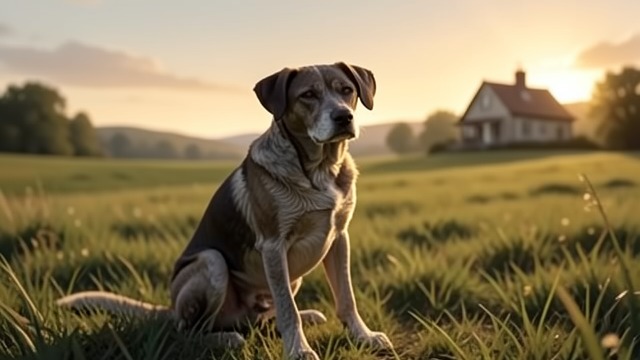
As Denny cradles him, Enzo imagines the open fields where he was born. He wonders whether his desire to become human caused him to neglect the present experience of being a dog. The question softens the certainty with which he once awaited his next incarnation: he wishes to remain himself a little longer, simply running in the world he knows.
Denny tells him he can go, and Enzo imagines his soul moving freely through the fields, wind, rain, and sunlight. Death becomes release rather than a medical endpoint, but the scene remains grounded in the bond between them. Enzo's departure matters because he can finally accept both his own passage and Denny's love without demanding that Denny hold him back.
The Name at Imola
The Name at Imola
A future imagined
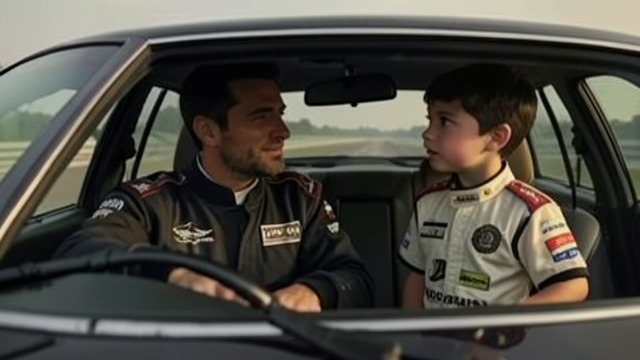
In the coda, Denny sits at Imola after winning the championship, and Zoë brings him a father and a young boy who admire his driving. The boy's name is Enzo, and he says he wants to become a champion. The scene fulfills the old dog's hope in a form that cannot be verified as literal reincarnation.
Recognition without proof
The champion does not recognize the visitors, yet the boy's name and knowledge of racing unsettle him. He gives the child his number and offers to arrange proper instruction when the boy is ready. The gesture resembles the mentorship Luca once offered Denny, turning an earlier gift into a new opportunity for someone else.
The ending leaves spiritual certainty open to interpretation while giving the story a concrete emotional resolution. Denny extends his hand to a child who may remind him of Enzo, and the boy receives a chance to pursue a future in racing. Whether the soul has returned or the scene is a vision, the bond continues through care and generosity.
At the opening when Enzo is old and imagines his next life
The morning Denny tells Enzo that Eve has died
After Enzo is struck by a car on a snowy Seattle night
At the ending when Enzo's body can no longer continue
In the imagined coda after Denny becomes a Formula One champion
