
The Track as a School for Life
The Art of Racing in the RainThis thread follows Enzo's transformation of racing principles into a practical and moral language for enduring uncertainty, making choices, and continuing after setbacks.
increasing Bearing strength in each event
 decreasing
Bearing strength in each eventdecreasingThe Present Moment
The Present Moment
Doing rather than remembering
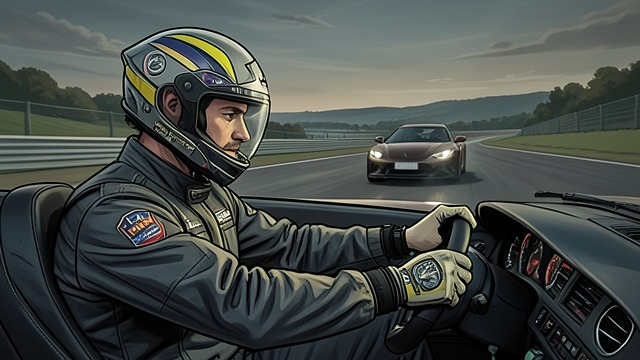
Denny explains that racing demands complete attention to the moment. A driver must act without being trapped by memory of a previous mistake or distracted by reflection while the car is still moving. Video and data can be studied later; in the race itself, thought must become responsive action.
Enzo's borrowed discipline
Enzo is captivated by the idea because it gives shape to a life he cannot control. He studies Denny's races and learns that awareness is not the same as anxious prediction. The driver notices the track, the other cars, and the changing conditions without mentally leaving the present to rehearse the past.
This distinction later informs Enzo's reflections on human suffering. He sees how people can become caught in what has already happened or terrified by what may come. Racing offers no guarantee of safety, but it teaches him that a person can still meet the immediate moment with patience and skill.
The First Corner Rule
The First Corner Rule
A loss without easy blame
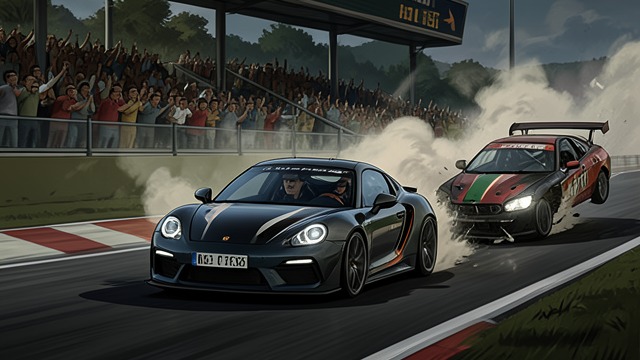
At Phoenix International Raceway, another driver collides with Denny in the first turn, damaging the car's alignment and ruining his result. Eve protests that the incident was the other driver's fault, but Denny says he was responsible for being in a position where he could be collected. He distinguishes accountability from simple blame.
Responsibility as skill
Enzo understands Denny's view as a racing discipline: a driver must study the people around him and make choices with their abilities and aggression in mind. That does not mean Denny caused the collision in a literal sense. It means he accepts that his own placement on track is part of the situation he must learn from.
The principle later becomes emotionally useful when the family faces misfortune that cannot be undone. Instead of spending all his energy on accusation, Denny tries to identify what he can do next. His approach is not passive resignation; it is an attempt to keep agency after a bad turn.
Driving Through Damage
Driving Through Damage
A broken season
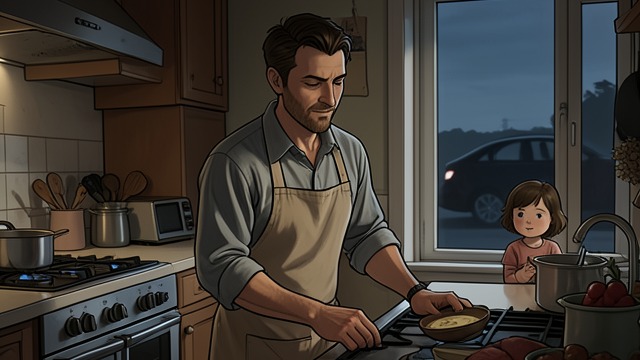
As Eve's illness worsens, Denny changes his work and home life to care for her and Zoë. He gives up the racing season, takes on cooking and household tasks, and reduces the burdens that might intensify Eve's distress. The sacrifice interrupts his professional ambitions, but he does not treat it as the end of his identity as a driver.
The champion's response
Enzo compares Denny's conduct to racers who continue despite mechanical problems. A failed clutch or broken gear can make a race harder without making it meaningless; the driver who adapts may still finish. Denny cannot repair Eve's illness, but he can continue to care for the family and meet the responsibilities still within reach.
The metaphor gives Enzo a way to honor work that produces no trophy. Denny's persistence is measured not in podiums but in ordinary acts of care performed under pressure. Racing becomes more than a pursuit of victory: it becomes a vocabulary for remaining engaged when circumstances have taken away the preferred route.
Recovering Without Overcorrection
Recovering Without Overcorrection
Staying composed on ice
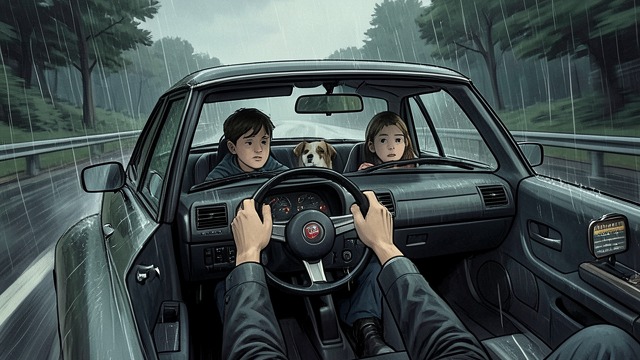
During the freezing-rain journey home from the Methow Valley, Denny drives through treacherous conditions while Zoë and Enzo feel the car slide. His hands grip the wheel too tightly, revealing that fear has displaced the relaxed sensitivity he relies on at the track. The danger is real, and getting everyone home safely requires concentration rather than bravado.
The lesson of the skid
Enzo's account of racing explains how a panicked correction can turn one skid into a faster, more dangerous counterspin. The better driver accepts the initial loss of grip, restores balance gradually, and avoids making a bad situation worse through desperate movement. This becomes an image for responding to crises without demanding instant control.
After the drive, Denny's encounter with Annika creates another kind of instability. Enzo sees the danger in the moment, but Denny ultimately handles it by waking, refusing her advances, and taking the situation seriously. The chapter's racing language joins physical and moral control: composure does not mean ignoring risk; it means responding deliberately.
Finishing Before Winning
Finishing Before Winning
A tempting exit
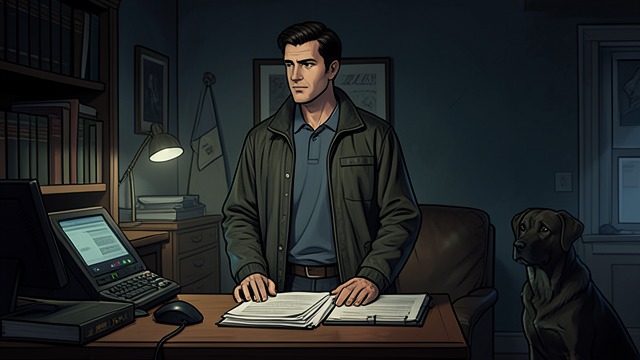
Broke and exhausted, Denny considers a settlement that would limit his relationship with Zoë while easing his financial pressure and reducing the legal threat. Mike believes it is a sensible choice, but Enzo senses that the document would make Denny abandon the struggle he still believes is right. The choice tests whether survival means accepting any available exit or continuing toward a just result.
The refusal to quit
Enzo takes the papers, escapes through a window, and finally urinates on them. His dramatic refusal makes Denny laugh, breaking through a period in which grief and financial exhaustion have left him emotionally shut down. Denny decides he will not sign and will keep fighting for Zoë, even if victory remains uncertain.
The episode crystallizes the racing maxim that finishing is a condition of winning: a driver who crashes out cannot complete the race, but continuing does not promise first place. Denny chooses participation over a guaranteed retreat. His decision is costly, yet it preserves the possibility of a future with Zoë and his own sense of integrity.
During Enzo and Denny's early video-watching routine
After Denny finishes last at Phoenix International Raceway
When Denny withdraws from racing to care for Eve
After the family returns from the dangerous winter drive across the mountain passes
After Enzo stops Denny from signing the custody settlement
