Enzo and Zoë's Companionship
The Art of Racing in the RainEnzo and Zoë's Companionship is a relationship of play, practical care, and steadfast proximity that becomes especially important as illness and bereavement unsettle the family. Enzo is Zoë’s playmate and, in the household’s crises, a companion who stays near when she is lonely or distressed. Their bond is expressed less through explanation than through repeated gestures: running together, offering a ball, and seeking one another out.
Everyday Closeness
Before the family’s routines were reshaped by Eve’s illness, Enzo and Zoë shared ordinary domestic life. Denny cut back his work hours to take Zoë to preschool, read with her, and teach her numbers and letters; Enzo was part of the household in which these daily acts of care took place. When Denny assumed more of the cooking, cleaning, and childcare to spare Eve stress, Enzo also became a source of comfort for her. Denny entrusted Eve to Enzo while he took Zoë out so she would not hear her mother’s cries of pain. Enzo stayed beside Eve when she was in bed or had collapsed on the floor. Care in this period was distributed across the family: Denny carried the practical work, while Enzo’s presence offered companionship close at hand.
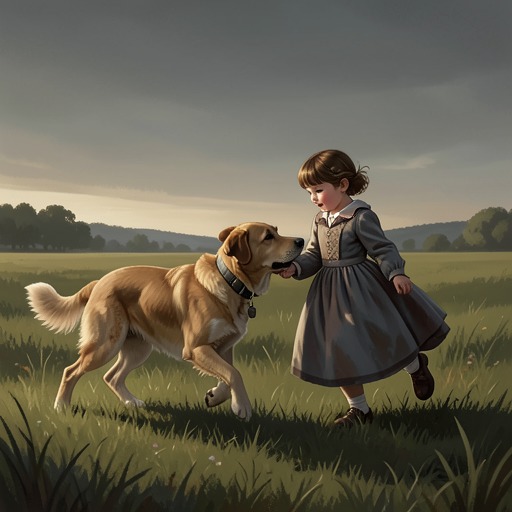
Play was one of the clearest forms of intimacy between Enzo and Zoë. On a Tuesday afternoon after Zoë had spent a weekend with Maxwell and Trish, Denny came home early and took her shopping for sneakers and socks. While Denny cleaned the house, Zoë and Enzo played in the backyard. She wore the bumblebee wings she had used the previous Halloween and a pink ballet outfit; they ran around until her feet were stained with dirt, and she and Enzo danced, laughed, and pretended to be angels. The scene gives their companionship a physical, reciprocal shape: Zoë invents the play, and Enzo joins her in it.
Separation and a Child’s Confidence
Eve’s prolonged hospitalization imposed a regimented pattern on the household. Denny managed Zoë’s meals, summer camp, and bedtime while visiting Eve whenever he could, and Enzo’s walks became infrequent. The narrowing of attention did not erase the bond, but it changed the conditions in which it could be expressed. When Maxwell and Trish offered to keep Zoë for a weekend so Denny could rest, Denny hesitated before letting her go. Afterward, Enzo and Denny were alone, and the change felt strange to them both.
The prospect of Zoë living with her maternal grandparents brought the separation into sharper focus. Denny spoke with her on the terrace steps after dinner about what her mother wanted, and Zoë answered that her grandparents wanted her too. She recognized that Denny was upset despite his efforts to hide it, and reassured him that she knew he would not leave her there forever. Enzo’s account presents her not merely as the object of adult decisions but as a child who understands the emotional stakes and voices her own sense of attachment.
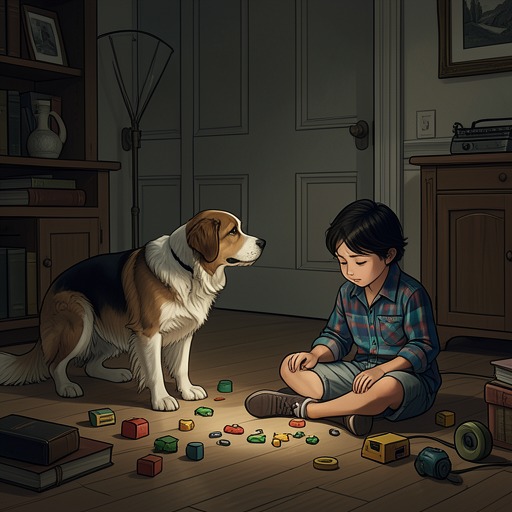
After Eve’s death, Zoë’s grief appeared in the small encounters Enzo witnessed. At Maxwell and Trish’s house, he found her playing quietly alone in a room filled with dolls and toys. He tried to start a game with a ball of socks, first nudging it toward her and then tossing and retrieving it, but she pushed the socks aside. Later, in the emptiness surrounding the family, Enzo picked up an old tennis ball and dropped it at her bare feet. Zoë looked down but did not play. The repeated offer matters precisely because it does not produce the response Enzo hopes for: a familiar invitation cannot make grief disappear.
Separation, Memory, and Reunion
During the summer when Zoë was away from Denny, Enzo registered the loneliness she carried. He describes her as profoundly sad and lonely and recalls her whispered plans for the two of them to escape to Europe and find her father. The imagined escape makes their companionship a source of solidarity in a situation Zoë cannot control, though it remains a child’s whispered plan rather than an action they carry out. Enzo’s closeness lets him notice a private expression of longing that others, including Mike, may not have seen or heard.
When Zoë later sees Denny, her response to Enzo is immediate and physical. She locates him beneath her, squirms free of Denny, and grabs him around the neck, calling his name. Enzo is surprised and pleased, and licks her face. This reunion is not an abstract declaration of loyalty: Zoë moves toward the familiar dog with her whole body, and Enzo answers in kind. Against the earlier scenes in which she ignored his attempts to play, the embrace marks a moment when their connection again becomes openly reciprocal.
Bereavement and the Limits of Comfort
The family’s loss gives Enzo’s companionship a continuing, but limited, role. His narration describes Eve’s death as the end of her painful battle and the beginning of Denny’s; the distinction also frames the changed world in which Zoë and Enzo must remain together. Enzo cannot restore the family’s earlier routines or determine where Zoë will live. He can stay present, make an offer of play, and respond when she seeks him. The old tennis ball that receives no answer and the later embrace therefore belong to the same relationship: one shows that affection cannot compel a grieving child to respond, while the other shows that the bond remains available when Zoë is ready to reach for it.
Enzo and Zoë’s relationship is also shaped by what Enzo can observe and what he can only infer. He notices her behavior, hears her whispered plans, and interprets her silences, but his account does not turn every gesture into a certainty. His attempted comfort after Eve’s death leaves him unsure of his own intention, while Zoë’s reunion greeting is unmistakable in its warmth. That contrast gives the companionship its particular significance: Enzo offers steady presence without claiming that presence can solve the losses or separations around them.