Enzo’s euthanasia plan
The Art of Racing in the RainEnzo’s euthanasia plan is a deliberate, largely unspoken attempt to persuade Denny that he is ready to die. It grows from Enzo’s declining health and his wish to spare Denny the burden of keeping him alive, but its central irony is that the gesture meant to communicate release cannot clearly distinguish intention from physical incapacity. Enzo can plan the signal; he cannot control how Denny understands it—or what his aging body does when the moment arrives.
The Plan and Its Motive
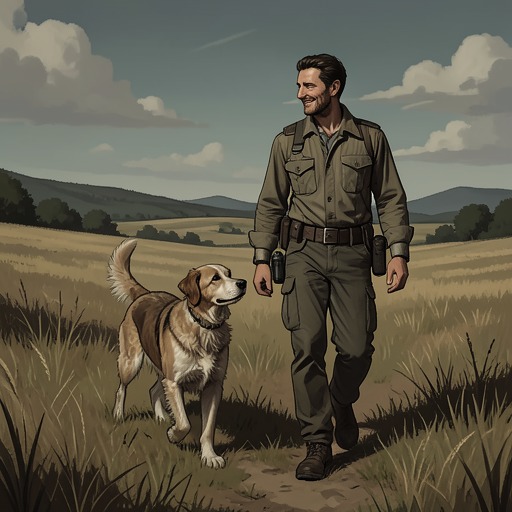
Enzo presents the plan against the realities of old age. He describes pain and impaired mobility, along with medicines intended to make him more comfortable that have not helped enough. He imagines that Denny, out of love, would keep caring for him as his condition worsened. Enzo does not doubt that devotion; he fears what it could ask of Denny. In his view, his own continued decline would leave Denny with more to worry about just as Denny has finally emerged from a difficult period. Enzo therefore casts letting him go as a gift: Denny has cared for him throughout his life, and Enzo wants to return that care by freeing him from responsibility for an increasingly frail companion.
This motive makes the plan an act of attachment rather than a rejection of Denny. Enzo imagines that he and Denny have had a good life together, but he also anticipates missing Denny and Zoë. His willingness to leave is not evidence that those relationships matter less; he believes that love requires him not to prolong Denny’s burden for the sake of his own attachment. The plan’s emotional force rests on that contradiction: Enzo wants to remain with his family, yet thinks he must help them let him go.
A Gesture Denny May Misread
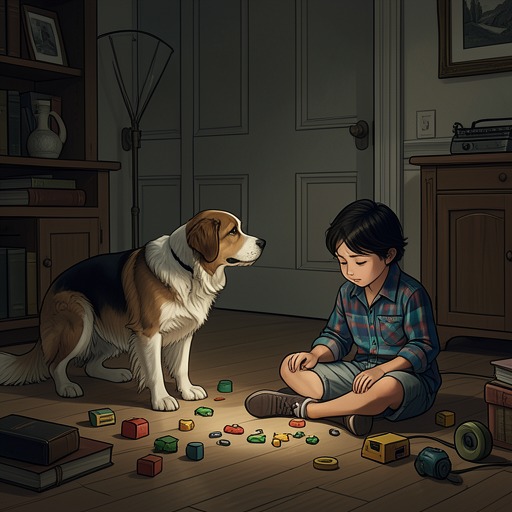
Because Enzo cannot rely on spoken language, he regards gestures as his means of making himself understood. He knows that a gesture may need to be unusually emphatic to carry its intended meaning, and he is prepared to risk seeming melodramatic. When Denny returns home, Enzo suppresses his habitual welcome and stays on the kitchen floor. He deliberately holds back from rising, wagging and pressing close as he normally would. He wants the contrast with his usual behavior to make his condition—and his intended message—plain.
But the performance immediately exceeds Enzo’s control. When Denny asks whether he can get up, Enzo tries. He scrambles and panics as he discovers that he genuinely cannot rise. His attempt to act helpless has become an encounter with actual helplessness: the body supplies evidence that the mind had meant only to stage. The scene does not establish that Enzo’s whole condition is feigned; rather, it shows his intention colliding with a real physical limitation. That shift makes the signal more urgent, but also less legible as a planned message.
Denny’s Guilt and the Vet Visit
Denny responds with concern and care, reassuring Enzo and tending to him. Yet when Denny explains that he was late getting home, Enzo realizes that Denny believes the incident may have happened because of that delay. Enzo had meant to communicate that Denny could let him go, not make Denny feel responsible for what had happened. The gap between the intended gesture and its interpretation is the plan’s most painful consequence: the signal designed to free Denny instead appears to offer him a reason for self-blame.
The question of what to do next gathers around repeated veterinary visits. Enzo and Denny have been seeking different medicines to ease Enzo’s discomfort, without much success. After the episode at home, Denny phones Mike to ask him to cover work because Enzo needs another visit to the vet. Denny pauses, then tells Mike that he is unsure whether it will be a round-trip visit. Enzo understands the implication and is surprised that his plan seems to be working. To Enzo, Denny’s uncertainty suggests that Denny may be considering the final decision Enzo hopes to permit. The exchange gives the plan a possible practical consequence, but it does not make the decision itself simple or show that Enzo can control its outcome.
Communication, Belief, and the Ending Enzo Imagines
Enzo’s understanding of death includes a belief that a dog, after completing his lives as a dog, will next be born as a man. He expects to lose his memories, and wishes he could carry with him what he has experienced with the Swift family. This belief shapes the plan’s imagined aftermath: Enzo pictures himself returning in human form, finding Denny, and letting him know that their shared life has not vanished from his heart. That future is Enzo’s hope, not a certainty established by the events surrounding the plan.
The episode also belongs to a larger pattern in Enzo’s narration: his perceptions can be sharp, while his explanations remain limited by what he can observe and infer. He knows what he intends by staying on the floor, but he cannot make that intention self-evident to Denny. Elsewhere, his interpretation of the moving zebra shifts from an external threat to a symbol of fear and self-destructive impulses within people. That later recognition resonates with the plan’s difficulty: what appears to be a clear sign may conceal a different truth, and meaning depends on interpretation. Enzo’s staged stillness is thus both an expression of love and an imperfect instrument. Its outcome lies partly beyond him, in Denny’s response and in a body that no longer obeys the distinction between acting and being unable to act.