Eve Declares It Her “First Day of Not Being Dead”
The Art of Racing in the RainEve’s declaration that this was her first day of not being dead turns a family dinner into a defiant celebration of life. After months of illness and uncertainty, she appears before Denny and their family dressed for a party, though she needs help to walk. Her joy is neither a promise of recovery nor a denial of what is coming: that night, she dies. The scene holds those truths together, making her brief return to the company of her family an act of presence rather than an escape from mortality.
Background and Gathering
Six months passed, then seven, then eight, and Eve was still alive. On May 1, Denny and Enzo were invited to dinner at The Twins’ home, an unusual Monday-night visit. The empty hospital bed in the living room made Eve’s absence visible before anyone explained it; Trish and Maxwell were preparing dinner, while Eve remained elsewhere in the house.
Enzo wandered down the hall and found Zoë playing alone in her room. The room at her grandparents’ house was larger than her room at home, furnished with toys and dolls beneath clouds painted on the ceiling. When Enzo nudged a sock ball toward her and lowered himself into the familiar posture inviting play, Zoë ignored him. She was occupied with her dollhouse, and the scene hints at the unsettled life around her without explaining it away: she was still a child, but had been speaking to herself about how things change and people must change with them.
Eve’s Entrance and the Party
At last Eve came down the hallway with help from the nurse who had been caring for her. The assistance made the effort of walking plain, but did not diminish the theatrical confidence of her entrance. Eve wore a long navy-blue dress, the freshwater pearls from Japan that Denny had given her for their fifth anniversary, and makeup and hair arranged for the occasion. She was helped through her walk, yet Enzo describes her as taking the runway; Denny answered with a standing ovation.
Eve announced, “Today is the first day I am not dead,” and immediately made the declaration practical: “And we’re having a party.” The words recast the gathering. It was not simply a dinner held while the family waited for bad news, but a celebration organized around Eve’s insistence that she was alive now. Her statement does not claim that illness has ended. Instead, it names a change in how this particular day is to be lived.
The party became festive. Those who were unhappy concealed it so convincingly that the room could share, for a time, in the appearance of happiness. Zoë, too, recovered her usual humor, briefly released from the burden of acting grown-up. The happiness is therefore not presented as uncomplicated or permanent. Its force comes from being made together, in a gathering where grief remains close but does not have the last word over the hours they share.
Private Words and Farewell
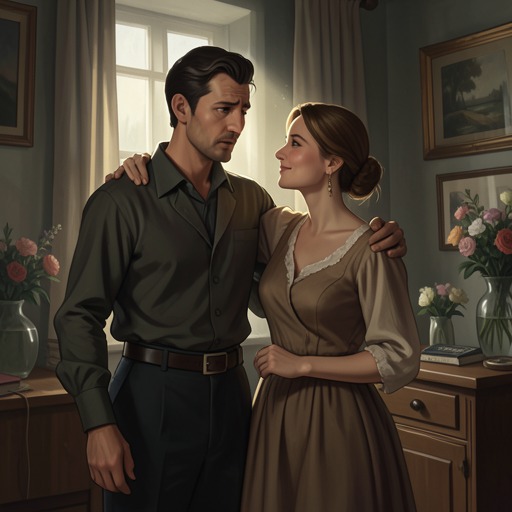
When it was time for Denny and Enzo to leave, Denny kissed Eve and told her, “I love you so much,” before adding, “I wish you could come home.” Eve answered, “I want to come home,” and promised, “I will come home.” The exchange holds their longing for ordinary family life beside the physical reality that she is still living apart from them. Her answer expresses desire and hope, but the events that follow prevent it from becoming a fulfilled promise.
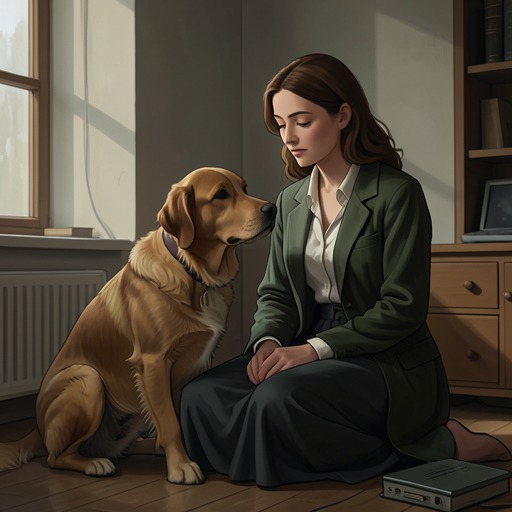
In a later private conversation with Enzo, Eve admitted regret that she had not insisted on going home so the family could be together. She blamed herself for not being stronger, then asked Enzo to take care of Denny and Zoë, whom she described as wonderful together. The request gives her celebration a forward-looking tenderness: even as she claims the day for herself, she is thinking about the people who will have to continue without her. She also told Enzo that she was no longer afraid, and that it was not the end. Her words connect her courage to the care she entrusts to him, not to any belief that the family will be spared loss.
Death and Continuing Significance
Eve died that night. Enzo recounts seeing her soul leave her body in a dream, an account that frames death as release and passage rather than as a medical description. The distinction between her experience and Denny’s is immediate: for Eve, death ends a painful battle; for Denny, it begins one. The party thus stands at a threshold. Its joy is real, but it cannot protect the people who shared it from what follows.
The declaration’s meaning persists in Enzo’s account of the family after Eve’s death. Later, he finds Denny watching an old video of Eve, Zoë, and Enzo at Long Beach, from when Zoë was a toddler. The images recall a time before the family knew it would be separated, giving Denny a way to remain with a shared past even as that past cannot be recovered. Eve’s insistence on being alive for the party and her request that Enzo care for Denny and Zoë likewise keep her presence active in the narrative: not as a reversal of death, but as a continuing bond carried by memory, responsibility, and the family’s time together.