Eve Swift’s death
The Art of Racing in the RainEve Swift’s death marks both the end of her painful battle and the beginning of Denny’s bereavement. Enzo narrates the loss through a dream in which Eve’s last breath releases her soul, then through the next morning, when Denny learns she is gone. The contrast between Enzo’s vision of release and Denny’s sudden, physical grief makes the death a turning point for the family and establishes a pattern of imagining the soul’s journey beyond the body.
Death and Enzo’s Dream
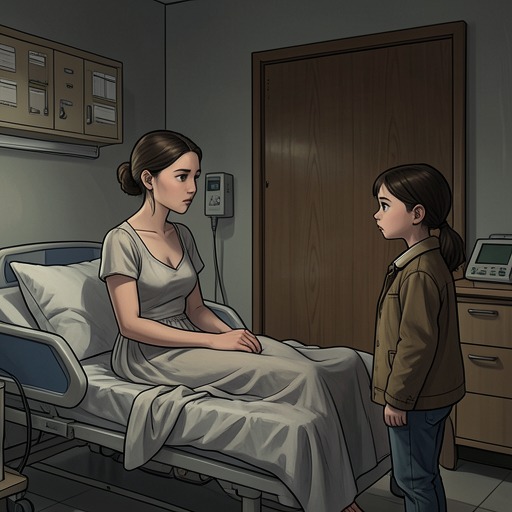
Eve dies during the night after Denny and Enzo have left her. Enzo later recounts that, in a dream, he saw her take her last breath and her soul depart her body. In his vision, death releases Eve from bodily needs and carries her onward to a realm beyond ordinary human comprehension. The account presents her death as more than a medical or domestic fact: Enzo interprets it as a passage into another existence, while acknowledging that the destination exceeds what the living can understand.
That imagined release does not diminish the pain of the loss. Enzo describes Eve’s death as the end of a painful battle, but says that for Denny it is the beginning. The same moment therefore holds two different kinds of finality: an end to Eve’s suffering and the start of Denny’s life without her.
Denny Learns the News
The next morning, Denny does not yet know that Eve has died. He takes Enzo to Luther Burbank Park on the eastern shore of Mercer Island, where the warm spring weather and access to the lake make it a place for throwing a ball and swimming. The ordinary routine continues while the loss has already occurred. Denny tells Enzo that he will bring both Eve and Zoë home that week, unaware that the promise can no longer be fulfilled as he intends.
After throwing the ball, Denny takes a phone call. When he hangs up, he tells Enzo, “She’s gone,” then turns away and sobs into the crook of his arm. The news changes the scene at once: the park’s familiar game gives way to grief, and Enzo runs from Denny for the first time. His response is not an explanation of the death but a bodily reaction to Denny’s anguish. Enzo later says he ran for Eve, linking his action to her and to the force of the moment.
Grief in Family Memory
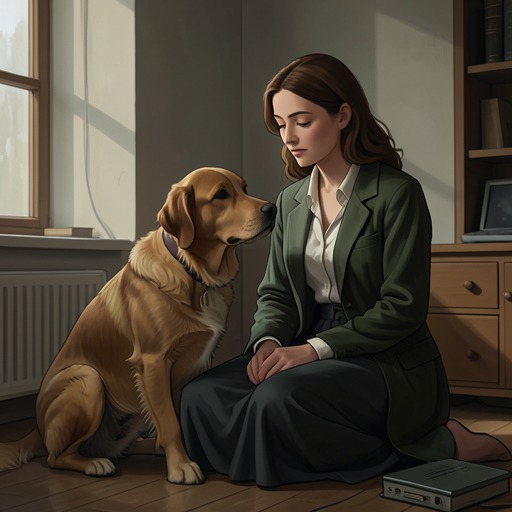
The death continues to shape Denny’s life well after the first shock. Years later, Enzo finds him on the couch watching a video of Eve, Zoë, and Enzo during a family weekend at Long Beach. Zoë is a toddler; the remembered family chases kites across the wide beach. Watching beside Denny, Enzo reflects that none of them then knew how the road ahead would separate them. The footage preserves an earlier family life, but its images also make that life’s loss newly visible.
Denny reaches out and scratches Enzo’s ear as he has always done. The gesture offers no reversal of the death and no spoken resolution; it is a familiar act of affection shared in the presence of the memory. In that scene, family connection persists through the video and through the ordinary touch between Denny and Enzo, even as Eve is absent.
Narrative Significance
Enzo’s dream of Eve’s soul departing anticipates the book’s later attention to what may follow a dog’s death. Near the end of his own life, Enzo recalls a documentary’s claim that a dog’s soul is released to run through the world until it is ready to be reborn. The accounts are not identical: Eve’s soul is imagined gathering among the stars, while the dog’s soul is pictured running through fields, rivers, and rain. Together, however, they make death part of a recurring question about whether life continues beyond the body.
The event also establishes a sharp difference between spiritual interpretation and lived bereavement. Enzo can imagine Eve released from pain, but Denny must face her absence in the ordinary world—in a phone call, an interrupted morning at the park, and a video of the family as it once was. The death closes Eve’s battle without closing the relationships it changes.