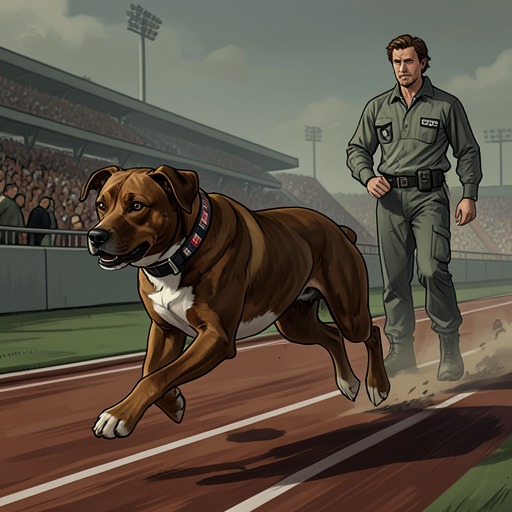
Finish the Race Before You Can Finish First
The Art of Racing in the RainFinish the Race Before You Can Finish First is a racing rule about patience, survival, and the possibility of eventual victory. It holds that no result can be secured by a competitor who fails to stay in the contest: the immediate loss of places may be tolerable, but a crash or a decision to quit makes a later recovery impossible. In Enzo’s account, the principle guides both driving and Denny’s prolonged effort to remain present in Zoë’s life.
Definition and Formulation
The rule appears in two complementary forms. Denny states that “No race has ever been won in the first corner,” adding that many races have been lost there. Enzo gives the broader maxim: “Yes: the race is long—to finish first, first you must finish.” Together, the statements distinguish the short-term appearance of success from the sustained effort required to achieve it. A first turn can shape a race, but it cannot settle the outcome; taking an early risk for a quick advantage may instead remove a driver from the contest.
The rule does not promise that endurance will produce a win, nor does it treat every delay as progress. Its narrower claim is that finishing preserves the chance to compete. That distinction makes restraint an active racing skill rather than mere caution: the driver must accept a disadvantage without turning it into a final defeat. The emphasis falls on staying in motion, maintaining the capacity to respond, and allowing a long contest to remain open.
The First Corner and the Family Video
Denny articulates the first-corner version while watching a video of Eve, Zoë, and Enzo on a family trip to Long Beach. Zoë is a toddler in the footage; the family is chasing kites along the wide Washington coast. Watching beside Denny, Enzo remembers how little they knew then about the separation and hardship ahead. The scene places the racing maxim beside a memory of family life that, in retrospect, could not be assumed to last unchanged.
Denny reaches down to scratch Enzo’s ear, a familiar gesture that accompanies the exchange. He then suggests that if they are going to become a cliché, they should make it a positive one. The moment gives the rule a relational setting: it is not delivered as detached instruction, but amid shared grief and remembered closeness. Enzo’s formulation of the long race follows the conversation, turning the first-corner image into a principle for enduring what cannot be resolved all at once.
The Custody Struggle as a Long Race
Enzo applies the maxim to the first custody hearing’s limited result. The restraining order against Denny is quashed and he wins visitation rights, but Zoë remains in the custody of her maternal grandparents, the Twins, while Denny still faces a felony charge Enzo believes he does not deserve. The hearing is therefore a beginning, not a resolution: one obstacle has shifted, but the central separation remains.
The racing analogy lets Enzo recognize both the gain and its limits without mistaking one for the other. He has seen Denny and Zoë look at each other and giggle with relief, an experience that renews his faith that events may yet come into balance. He imagines Denny entering the next stretch with fresh tires and a full load of fuel, capable of confronting those who challenge him. That confidence rests on Denny’s ability to avoid mistakes and continue, not on a claim that the legal conflict is already won. In Enzo’s reading, visitation is a first turn successfully navigated on a very long course.
Refusing to Quit
The rule becomes a direct decision when Mike tells Denny that Mr. Lawrence can print the settlement papers again for him to sign. Denny refuses. He says he is with Enzo, rejects the settlement, and insists that he did nothing wrong and will not give up. When Mike warns that the opposing side will be angry, Denny answers that he will keep trying to win or run out of fuel on the last lap, but will not quit. He connects that resolve to his promise to Zoë.
This exchange makes persistence more than a private attitude: Denny chooses not to accept an outcome he regards as surrender, despite Mike’s acknowledgment that signing would be the smart course for him. The long-race image gives the choice its terms. Denny does not claim a quick victory; he commits to remaining in the struggle, even if the effort brings him to the last lap with his resources spent. His promise to Zoë supplies the personal obligation behind that commitment.
Recovery, Not Overcorrection
Enzo’s driving example clarifies what endurance requires after a mistake. A driver whose car is in the dirt can overcorrect, snap the steering wheel, spin in front of competitors, and be taken out of the race. The alternative is to accept the position, keep the wheels in the dirt while maintaining the line, and return to the track gradually when it is safe. That recovery costs places and leaves the driver at a disadvantage, but preserves the essential fact that the driver is still racing and still alive.
Enzo therefore defines the rule not as a demand to force a victory at any cost, but as a warning against making a difficult situation terminal through panic. Driving within one’s limits and finishing behind the others is preferable to driving too hard and crashing. Across the racing examples and Denny’s custody struggle, the maxim values continued participation over immediate appearance: a lost position, a delayed resolution, or a painful setback need not be the end, provided the effort to continue remains possible.