
Automation and the Disappearing Manager
The AxBurke interprets his unemployment as part of a technological transition that removes middle managers while leaving society unprepared for the displaced workers.
increasing Bearing strength in each event
 decreasing
Bearing strength in each eventdecreasingA Childhood Question
A Childhood Question
Automation Promised
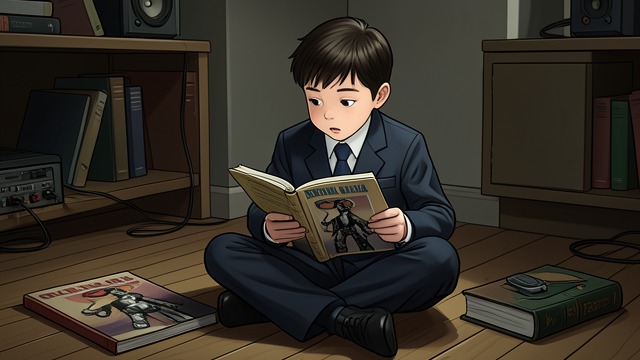
As a boy, Burke reads stories about automation replacing dull and repetitive labor. He wonders what the people who lose those jobs will do to support themselves.
An Unanswered Future
The promise of technological progress is presented as a benefit, but its social costs remain vague. The question follows Burke into adulthood as automation reaches white-collar work.
Robots on the Line
Robots on the Line
The Factory Changes
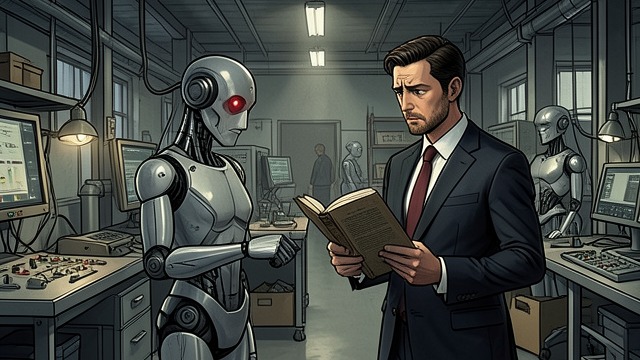
Burke remembers footage of robots working in Japanese automobile plants and the earlier displacement of blue-collar labor. Strong unions and strikes had helped some workers negotiate the transition.
A Different Wave
Burke sees the new technological change reaching managers and supervisors, who lack comparable collective protection. The conflict moves upward through the workplace without becoming less disruptive.
The Computer’s Children
The Computer’s Children
Management Reduced
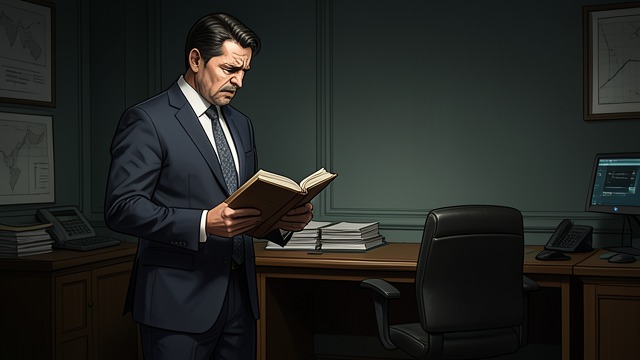
Burke argues that computers can perform information and coordination tasks once handled by many middle managers. Companies retain fewer people to serve the system and remove the rest.
A Shrinking Berth
The jobs that remain become more valuable because fewer positions are available. Burke understands his unemployment as part of a broad transition, yet still experiences each applicant as an immediate competitor.
The Mill Still Needs People
The Mill Still Needs People
Human Work Remains
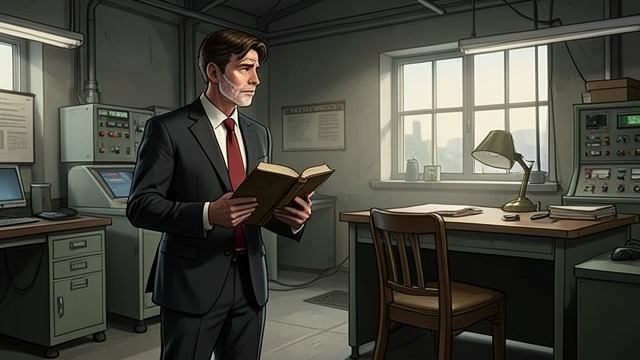
Burke recognizes that a production line still requires some managers who can communicate with workers and keep operations moving. His desired job survives even as other management roles disappear.
Scarcity Concentrates Hope
The continued existence of one suitable job makes the campaign feel, to Burke, narrowly rational. The novel shows how a real shortage can focus desperation without making the resulting violence inevitable.
A Transitional World
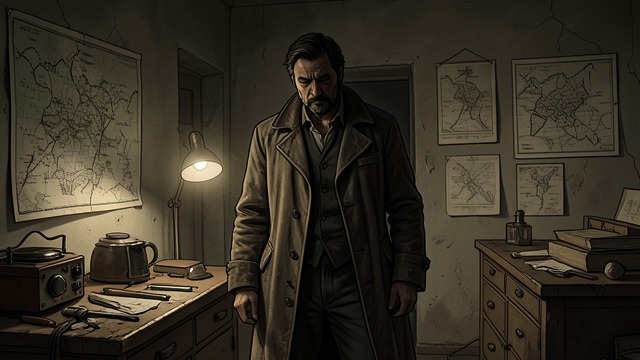
A Transitional World
Every Technology Passes
Burke reflects that canals, railroads, cash, and other systems all become transitional technologies. He sees society as repeatedly remaking its basic arrangements rather than remaining stable.
People Bear the Change
The idea gives historical scale to his uncertainty but also deepens his fatalism. Burke believes he cannot alter the transition, only play his hand better than others.
Burke at age twelve, after the Sputnik launch
Burke’s young adulthood, recalled in May 1997
May 1997, during Burke’s reflections on employment
May 1997, as Burke considers Arcadia
Late May 1997, on the drive toward Lichgate
