
The Ricks Family and the Wrong Suspect
The AxThe Ricks murders create a separate family tragedy in which mistaken identity and an apparently plausible suspect conceal Burke’s role.
increasing Bearing strength in each event
 decreasing
Bearing strength in each eventdecreasingA Daughter’s Affair

A Daughter’s Affair
June’s Relationship
June Ricks is involved with Lewis Ringer, a married literature professor. Her parents disapprove, and the relationship creates a tense domestic situation.
A Private Conflict
The affair supplies a plausible motive for later suspicion. It also gives Mrs. Ricks a frame through which she misidentifies Burke when she encounters him outside her home.
The Mother’s Mistake
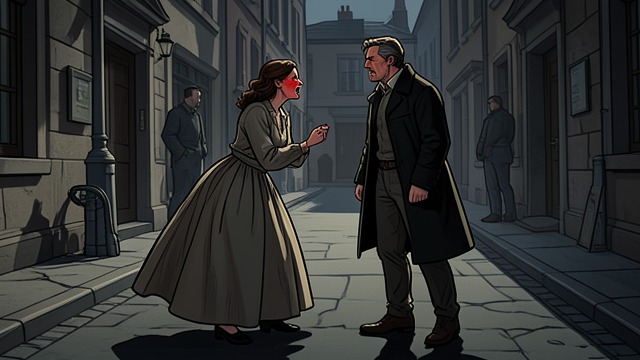
The Mother’s Mistake
An Accusation on the Road
Mrs. Ricks mistakes Burke for the older man involved with June and confronts him. Her accusation turns Burke’s surveillance into an exposed encounter.
Panic Takes Control
Burke tries to deny the identity but cannot make the situation safe. His attempt to prevent discovery escalates into a double murder that has no place in his original plan.
The Case on Television
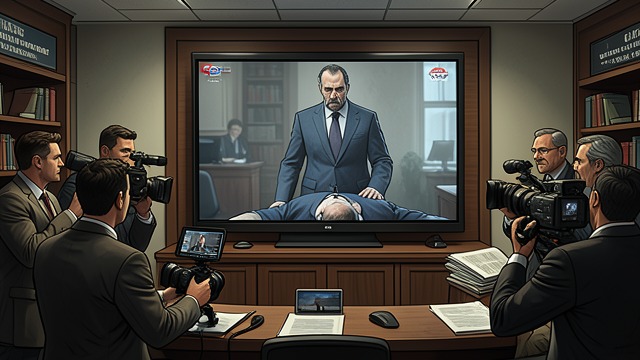
The Case on Television
A Public Narrative
News reports describe the killings as brutal and identify Lewis Ringer as a suspect. The broadcast omits Burke’s panic and presents the scene in the language of calculated violence.
A Family Seen From Outside
The story gives viewers June and Ringer’s wife as fragments of a tragedy. Burke watches from home, disturbed by the difference between the public account and his private knowledge.
Ringer’s Suicide
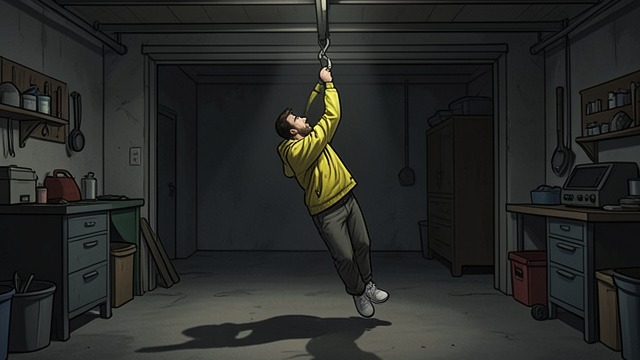
Ringer’s Suicide
A Case Closes Conveniently
After his release, Ringer is found hanged in his garage. Police and media treat his death as confirmation that he killed the Rickses and could not face the consequences.
Certainty Without Proof
The conclusion relieves investigators of further work and gives Burke cover. The novel shows how a plausible ending can become accepted even when the true explanation remains hidden.
Burke’s Unsettling Judgment
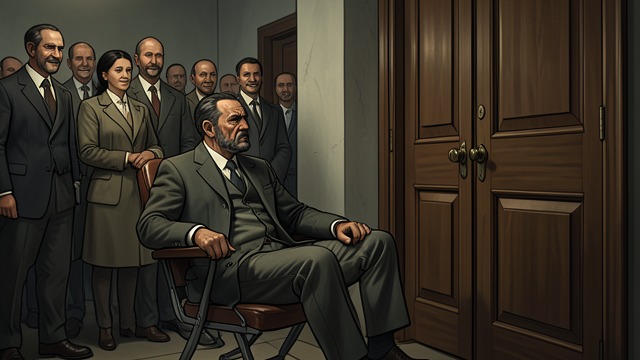
Burke’s Unsettling Judgment
Relief and Disquiet
Burke senses that people are pleased the case is over. The convenient attribution protects him, but he recognizes the ease with which public certainty settles around an incomplete account.
A Victim Reconsidered
Later, Burke wonders whether June and Ringer were themselves shaped by unemployment and family strain. His speculation does not undo the killings, but complicates his earlier tendency to judge them as morally inferior.
Before May 15, 1997
May 15, 1997
The evening of May 15, 1997
Late May 1997
After Ringer’s death, late May 1997
