
Technology as a Moving Ground
The AxHistorical changes in technology and infrastructure echo the novel’s central instability: every system that seems permanent can be replaced.
increasing Bearing strength in each event
 decreasing
Bearing strength in each eventdecreasingSputnik and the Western
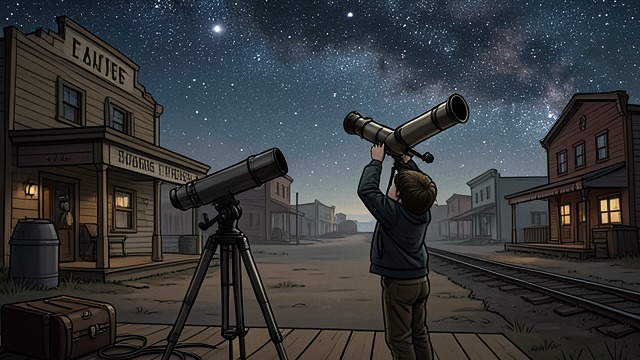
Sputnik and the Western
A Childhood Reorientation
The Sputnik launch breaks Burke’s childhood assumption that space belongs naturally to Americans. He turns from science fiction toward western stories whose outcomes seem more certain.
Certainty as Comfort
The memory establishes Burke’s attraction to worlds with clear identities and predictable outcomes. His adult desire for a stable career carries a similar longing for a world that will hold still.
The Canal’s Old Route
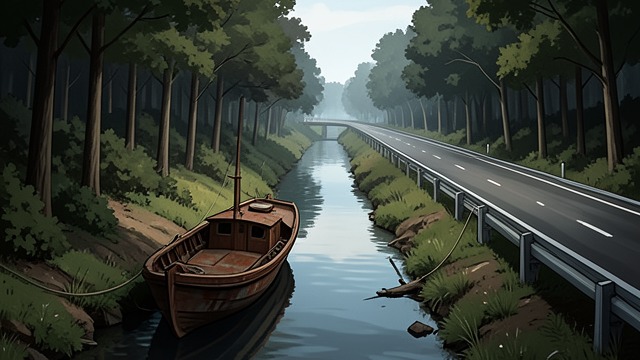
The Canal’s Old Route
A Former Gateway
Burke reflects on the Erie Canal and Mohawk River as once-essential routes connecting New York Harbor to the interior. Their importance depended on a particular stage of transportation and trade.
Infrastructure Becomes History
The old routes remain visible after newer systems replace them. Burke uses them to question the assumption that a technological arrangement is permanent simply because people have invested in it.
The Horse and the Car
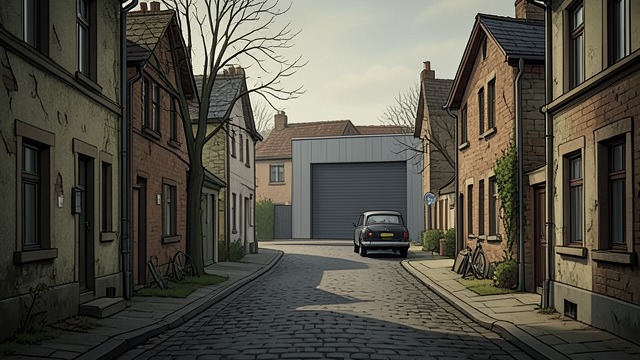
The Horse and the Car
A Street Designed Earlier
Burke notices that Lichgate’s houses and streets were built before automobiles, and that garages arrived later. A town’s shape preserves the needs of an earlier era.
Change Embedded in Place
Even ordinary streets disclose a transition in how people live and move. Burke’s reflections link the built environment to the shifts disrupting modern employment.
Cash and the Motel
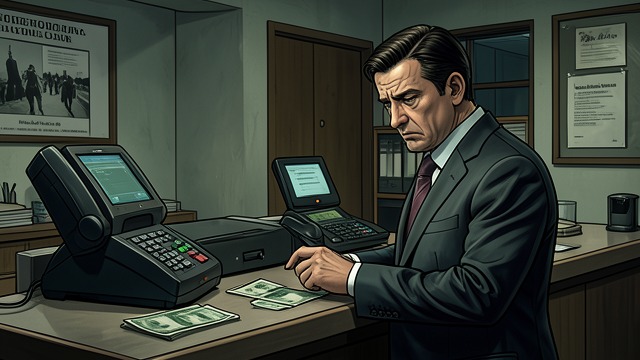
Cash and the Motel
A Preferred Payment
The motel owner prefers cash to credit cards, which Burke calls a transitional technology. The passing of one everyday system mirrors the larger instability he observes.
A World in Revision
The detail briefly makes Burke’s reflection comic, but the idea is serious: systems that seem fixed are temporary. His own employment and family arrangements may be less durable than he once believed.
A Life in Transition
A Life in Transition
No Stable Era
Burke concludes that every technology is transitional and imagines society as constantly changing rather than moving toward a final stable arrangement. The thought explains why familiar certainties have disappeared.
The Individual’s Limited Agency
He accepts that he cannot change the world and can only play his hand better than others. That conclusion is both a sober recognition of change and a rationale for ruthless competition.
Burke at age twelve
Late May 1997, on Route 5
Late May 1997, in Lichgate
Late May 1997, at Dawson’s Motel
Late May 1997
