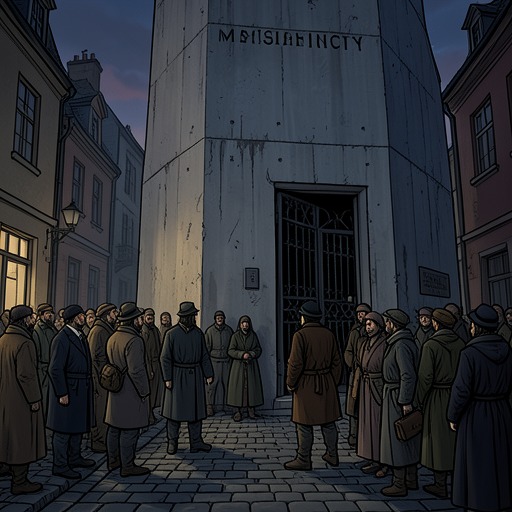
Age of Reason
The AxThe Age of Reason is invoked as a historical example of a society that elevated reason above other values. In a wider reflection on changing moral codes, the reference helps frame the narrator’s argument that what a culture regards as ethical depends on what it most prizes—and that those priorities do not remain fixed.
A Historical Moral Ideal
The narrator places the Age of Reason among different eras and peoples associated with distinct standards of conduct. Honor, grace, reason, emotion, the work ethic, and property values each appear as priorities that have at one time or another been treated as paramount. In this account, the Age of Reason is defined by the elevation of reason to the highest value; the passage supplies no dates, individual thinkers, or further historical detail.
From Reason to Consequence
The reference is part of a contrast between changing moral priorities and the narrator’s claim about the present. He argues that contemporary public morality accepts the principle that an end justifies its means, pointing to government leaders defending their actions by their goals and CEOs explaining downsizing in similar terms. The Age of Reason therefore functions not as the passage’s present ideal, but as one point in a sequence of values that can be displaced by another ethic.
The Narrator’s Application
The argument becomes personal when the narrator applies the same ends-and-means reasoning to his own conduct. He presents caring for his family, contributing productively to society, using his skills, earning his living, and avoiding dependence on taxpayers as worthy ends. He then treats the difficulty of the means as secondary to those goals, aligning his self-justification with the corporate reasoning he has just described. Against that immediate context, the Age of Reason marks a former moral ordering, while the narrator’s rhetoric exposes how readily a person can make a chosen end the measure of what is permissible.