Dawson's Motel
The AxDawson’s Motel is a roadside lodging on Route 8 that frames three sharply different moments in Burke Devore’s story: his preparations to kill Everett Dynes, his collapse after encountering a body in the road, and his decision to write an account of the unemployment and violence that have overtaken his life. Its warm, dated rooms offer no lasting escape. Instead, the motel becomes a temporary shelter in which Burke’s planned return gives way to grief, exhaustion, and the beginning of a written confession.
Setting and Arrival
Dawson’s Motel is about a mile and a quarter south on Route 8. Burke learns of it when a local man points him toward the lodging, explaining that he has not stayed there himself but has heard it is acceptable. The directions place the motel close enough to serve as a practical stop, yet the exchange also establishes Burke as a stranger dependent on other people’s ordinary guidance. When the man asks whether he is looking for work, Burke avoids developing the conversation and leaves with the motel’s name.
The building’s interior is deliberately old-fashioned. Knotty-pine walls, ruffled amber lamp shades, and a dark wood floor give Burke’s room a domestic appearance; the floor squeaks underfoot, and a green paisley curtain closes off the closet in place of a door. Metal hangers hang from a pipe rod. The plumbing is old and noisy. In the bathroom, a clawfoot tub has been fitted with a later shower nozzle and a small ring for a curtain. The curtain’s cold, wet surface touches anyone who moves even slightly while showering, making the room’s dated fixtures tangible rather than merely decorative.
The motel is quiet in the off-season. A rack of skiing brochures stands in the office, though the time of year brings little business. The old man working there welcomes the sight of a customer and, especially, cash; he expresses a dislike of credit cards and resignation about their continued spread. Burke’s observation that cash is transitional technology sits beside the place’s older furnishings, joining a small commercial exchange to the book’s broader attention to changing systems and insecure work.
Preparation and the Expected Return
Burke wakes at 11:30 p.m. to Good Vibrations, a radio alarm he has programmed himself. Before waking, he has imagined floating in a glass boat on a luminous yellow-green sea; the vision is sad, and he describes himself as persistently sad. Awake in Dawson’s Motel, he turns off the radio, goes to the bathroom, and prepares to kill Everett Dynes. The contrast is stark: the motel’s routine comforts contain a private, deliberate plan for violence.
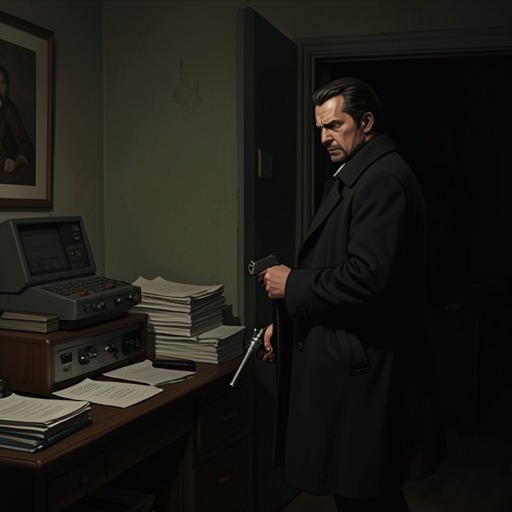
At 11:47, the red digits on the clock-radio mark his departure. Rain falls steadily, washing road dirt into patterns on Burke’s Voyager automobile. He dresses without packing because he expects to return to the same room after the killing. From his overnight bag he takes the Luger pistol and puts it in his raincoat pocket; he also wears a cloth cap much like Everett Dynes’s. The room remains lit behind its curtains, its glow seeming warm and homelike as Burke locks the door with a key. He anticipates coming back, so the motel functions not simply as a place to sleep but as the planned endpoint of an excursion from which he expects to return unchanged.
The parked vehicles outside briefly draw Burke into imagining the lives of other guests. A pickup with Pennsylvania plates suggests to him a blue-collar worker, perhaps a carpenter seeking construction work, though he recognizes that he is inventing a story because it is comforting to make a tribe of the people nearby. This impulse to assign strangers a place in a shared world contrasts with the anonymous, instrumental way he has treated the people whose résumés he collected.
Return and Breakdown
Burke does return to the motel, but not in the state he anticipated. After making a U-turn on Nether Street and carefully driving around a body in the middle of the pavement, he is still weeping when he reaches the room. He can barely steer or press the pedals. The Luger weighs down the right side of his raincoat pocket and bangs against his hand as he searches for the key, turning the weapon he had carried as part of a controlled plan into an obstruction during his disoriented return.
Getting inside becomes a sequence of actions performed mostly by feel: his eyes are blurred by tears, and he struggles to fit the key into the lock. The room he had imagined as warm and homey seems instead to be underwater, cold and wet with his tears. He closes the door, crosses the room, and leaves his clothes where they fall. His sobbing hurts his throat, constricts his chest, and makes breathing difficult; his arms and legs feel heavy and ache as though they had been struck repeatedly with soft clubs. The carefully anticipated homecoming has become a physical and emotional collapse.
He turns to the shower in the old clawfoot tub, hoping that it will help. The motel’s awkward curtain and dated bathroom fittings make this attempted comfort inseparable from the room’s material limitations. Later, his exhaustion lifts and he wakes alert and calm. The shift does not erase what has happened, but it enables a different action: he looks for paper and, finding no stationery, takes the drawer lining from the dresser instead.
Writing at the Motel
The paper from the bottom drawer is stiff and thick, smoother on one side than the other. Burke notices its simple manufacture, and the act of noticing nearly brings his tears back. He chooses the rough side for writing, smooths the sheet on the table, and begins with his name, age, and address in Fairbourne, Connecticut. He records that he is fifty-one and has been unemployed for close to two years, contrasting this period with his employment since his Army service.
His account connects that long unemployment to actions he says he would once have considered impossible. He writes that a false advertisement in a trade journal brought him the résumés of other unemployed people in his field, and that he decided to kill those he feared were better qualified for a particular job. He identifies his desire to work again as the force behind what he calls his own destructive conduct. Dawson’s Motel thus holds the beginning of a written explanation, not a completed resolution: after leaving the room armed and expecting to return from a killing, Burke comes back weeping and eventually turns to the dresser lining to set down how unemployment and competition led him toward murder.