Millennium (year 2000)
The AxMillennium (year 2000) is an approaching date that Burke Devore treats as more than a calendar marker: in his sleepless reflection, it becomes a possible explanation for social upheaval and the corporate decisions that have left him unemployed. The idea’s force lies in its contradiction. Burke knows the numbering is arbitrary and historically uncertain, yet he wonders whether the prospect of reaching the year 2000 has acquired enough psychological power to shape people’s conduct.
Calendar and Historical Uncertainty
Burke begins from the oddity that a change in the year’s number can affect minds, actions, and society. The approaching threshold is roughly two and a half years away from the scene, which he places in 1997. Yet he stresses that the date itself rests on a calculation that may be wrong: even accepting the Christian dating system, he reasons, the birth used to establish the calendar may have occurred four or six years earlier than the date assigned to it. On that reckoning, the present could already be 2001 or 2003, and the millennium might have passed without anyone noticing.
He also acknowledges that other communities count the year differently, naming Chinese and Jewish calendars as examples. Those differences do not cancel the social effect he is considering. For the society around him, the commonly accepted number is approaching 2000, and that shared expectation—not an objectively certain turning point—is what may be making people uneasy. The calendar’s arbitrariness and its cultural authority coexist: a date can be mathematically contingent and still feel momentous to those who organize their expectations around it.
A Threshold Associated with Catastrophe
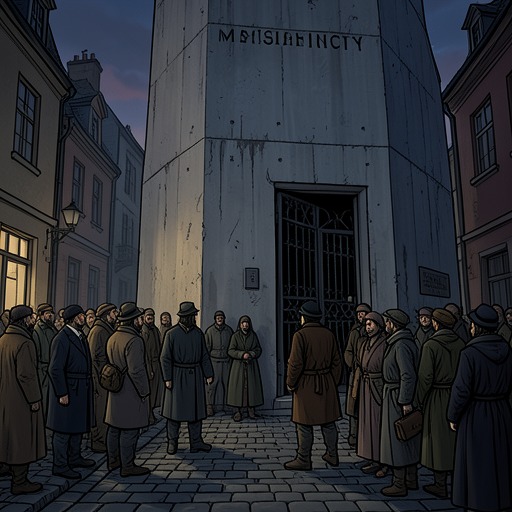
A television program supplies Burke with a historical analogy. It described the approach of the year 1000 as a period associated with strange religions, mass suicides, migrations, and crowds milling, pushing, and jostling. Burke places this beside the approaching year 2000, treating the earlier episode as evidence that a millennium can provoke collective behavior even when the number itself has no inherent power. He further observes that centennial anniversaries may have a lesser effect, likening their influence to that popularly attributed to a full moon, while the thousand-year marker carries the stronger charge.
The program’s proposed explanation is not simply that people consciously fear a date. Burke considers the possibility that even intelligent, educated, and sophisticated people may instinctively believe the millennium means the end of the world. In this imagined fear, the world might explode, vanish, melt, or somehow leave the solar system. Burke connects that expectation to what the program described as growing religious fanaticism, strange cults, and group suicides. The threshold thus operates in his thinking as a pressure that is both irrational and consequential: a high-pitched disturbance that can unsettle people without their acknowledging its source.
Unemployment Recast as a Symptom
Lying awake, Burke extends the theory from public behavior to corporate life. He does not claim that the television program explained layoffs this way; he marks the connection as his own new speculation. Perhaps executives making brutal decisions, dismissing workers from healthy companies, and stripping businesses down are acting under an unrecognized conviction that the world is nearing its end. If the future seems likely to stop, he imagines, managers might try to make their organizations as neat and efficient as possible before it does.
This theory recasts his unemployment as part of a wider madness rather than an isolated personal failure or a rational response to an individual company’s circumstances. Burke focuses on the destruction of productive people, careers, and companies, and on the human cost that such decisions disregard. He sees the new style of management as unprecedented and treats the year 2000 as a possible hidden cause. The explanation offers him a pattern in place of the justifications he believes have been offered for his dismissal. It remains speculation, however: the passage establishes Burke’s suspicion about executives’ motives, not their actual belief in an imminent apocalypse.
Narrative Significance
The millennium joins an abstract measure of time to Burke’s immediate material crisis. His meditation moves from calendar arithmetic, through a televised account of earlier millennial anxiety, to the experience of being out of work. Each step enlarges the scale of his explanation, until a personal loss appears to him as evidence that humanity itself has lost its reason. The movement also preserves a tension between skepticism and belief: Burke calls the year number arbitrary, but takes seriously the possibility that people may act as though it foretells catastrophe.
The thought brings his restless nighttime reflection to a temporary close: he falls asleep after deciding that millennial panic could explain the damage done to working lives. It does not resolve his unemployment or verify his theory. Instead, the coming date gives shape to his sense that productive careers are being abruptly dismantled, while leaving the cause uncertain. In that unresolved space, the millennium is both a social symbol and Burke’s attempt to make a brutal, apparently senseless change in his own life intelligible.